
Journal Records

 
By admin , 9 August, 2026

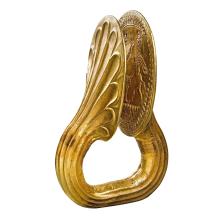
The Arjan Ring of Power is a mysterious ancient artifact dating back to around the second millennium BCE and the Middle Elamite period. It was discovered at the historical site of Arjan (Argan) in Behbahan County, Khuzestan Province, Iran, and is currently preserved in the National Museum of Iran.

By admin , 3 August, 2026

Modern nation-states are composed of diverse populations whose members differ in culture, ethnicity, language, religion, historical experience, and political belief. Because of this diversity, political statecraft—the art and practice of governing—cannot be sustainably designed according to the exclusive philosophy of a single religious sect or partisan ideology. While sectarian traditions may contribute valuable ethical perspectives to public discourse, they cannot legitimately serve as the sole foundation of state institutions in societies containing multiple communities. This article argues that political legitimacy arises from the collective will and equal citizenship of the population rather than from the doctrines of any particular sect. Consequently, a just political order must protect the rights and freedoms of all individuals, regardless of their affiliation, and prevent any single sectarian worldview from overriding the rights of others.

By admin , 12 November, 2025

In the digital era, where businesses and individuals rely heavily on interconnected systems and data-driven processes, security is no longer an afterthought—it is a foundational necessity. As cyber threats grow more, organizations must adopt structured approaches to protect their assets, users, and reputations. This is where digital security design frameworks come into play.

By admin , 25 October, 2025

Before Likud existed, its ideological seeds were planted in Revisionist Zionism, a movement founded by Ze’ev Jabotinsky in the 1920s. Over five decades, Likud’s ideological centre of gravity has shifted markedly rightward—from a nationalist-liberal bloc into a populist-ethno-nationalist movement intertwined with religious extremism.

By admin , 25 October, 2025

The Muslim Brotherhood (Arabic: al-Ikhwan al-Muslimin), founded in Egypt in 1928 by Hassan al-Banna, is one of the most influential Islamist movements in modern history. While the organization initially presented itself as a social and religious reform group, its evolution over nearly a century has revealed a deeply ideological and political agenda. Beneath its calls for “Islamic revival” lies a rigid, theocratic vision that rejects secular governance, modern pluralism, and democratic values. The Brotherhood’s history, ideology, and tactics illustrate how extremist interpretations of Islam can evolve into dangerous political movements that threaten social stability, global security, and human progress.

By admin , 1 June, 2018

In today's hyperconnected world, security is an essential aspect of any computer system. Whether you are an individual user or a corporation, ensuring the safety of your data and protecting your system from potential threats is crucial. FreeBSD, a highly respected open-source operating system, is well-known for its robust security features and focus on stability. In this article, we will explore the various security measures FreeBSD offers, enlightening readers about the steps they can take to enhance the security of their FreeBSD systems.

By admin , 4 April, 2004

Mithra is one of the most significant and enduring divine figures to emerge from the ancient Persian religious tradition. Originating in the Indo-Iranian religious heritage and later becoming a central deity in the Persian world, Mithra represented concepts of covenant, justice, truth, and cosmic order. Over more than two millennia, the worship of Mithra evolved from early Indo-Iranian beliefs into an important component of Zoroastrian theology before influencing religious traditions far beyond the Persian plateau, including the Roman mystery cult known as Mithraism. Despite similarities in name and certain symbolic elements, the Persian Mithra and Roman Mithras developed within distinct historical and theological contexts.

By admin , 25 August, 2026

The Anahita Temple of Kangavar, after years of neglect and damage caused by construction activities, has entered a new phase of protection, archaeological investigation, and site management. With the completion of infrastructure projects, plans for an archaeological museum, and the continuation of excavation and conservation work, the site is now being prepared as part of the proposed “Parthian–Sasanian Archaeological Landscape from the Temple of Anahita to Taq Kasra” nomination.

By admin , 22 August, 2026

An impactful life is not necessarily a celebrated life; it is a life that leaves the world, after we are gone, a little wiser, kinder, more prosperous and brighter than we found it.

By admin , 10 August, 2026

Arshtat (Avestan: arštāt) is a female yazata, or divine being worthy of worship, in Zoroastrianism, embodying the principles of rectitude, justice, truth, and righteousness. The name arštāt derives from the Avestan root meaning "upright" or "straight," signifying both the divinity and the principle of rectitude. She represents an abstract moral force that supports ethical order (asha) and is invoked alongside other deities to promote cosmic and human harmony.