VENUSFEATURED RECORDSNEWS MAGAZINEPUBLIC EVENTSHISTORICAL PUBSPODCAST MEDIA |
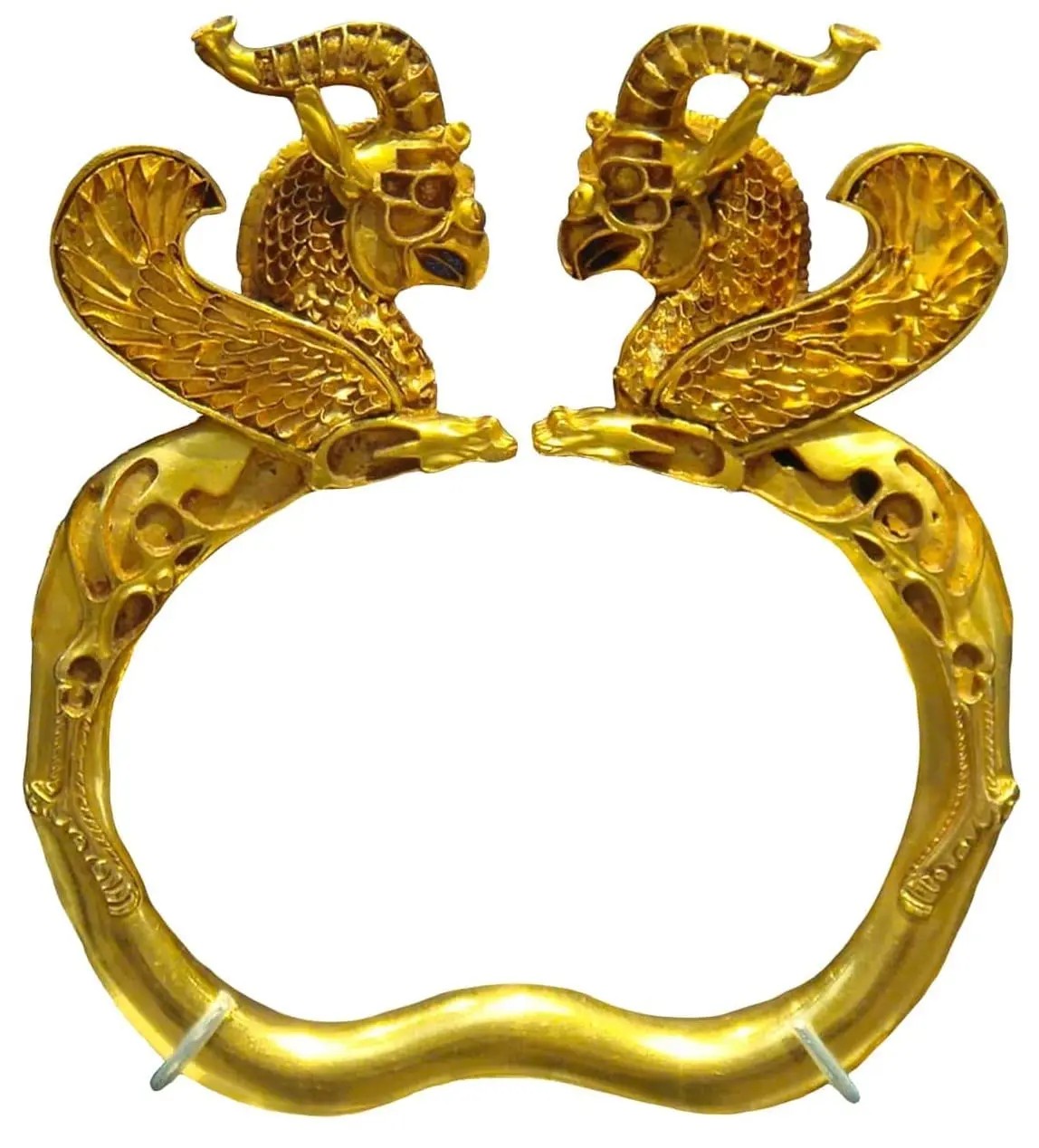 |
The Golden Shirdal Bracelet is an ancient artifact from the Achaemenid era. It is decorated with two mythical griffins standing symmetrically facing each other. The Achaemenid Golden Shirdal Bracelet was adorned with precious stones and jewels that were dug out of it. The bracelet is one of hundreds of artifacts from the Amu Darya Treasure. The Amu Darya Treasure is a collection of 170 gold and silver pieces and 200 coins from the Achaemenid era found in southwestern Tajikistan. The treasure is now housed in the Victoria and Albert Museum and the British Museum. These artifacts date back to the 5th and 4th centuries BC, when the powerful Achaemenid kingdom had raised its banner over lands from the Indus Valley to the Nile River. The treasure was discovered on the banks of the Oxus River in present-day Tajikistan, most likely from the ancient Takht-e Kabad hill, a pass on the northern bank of the river, between 1877 and 1880 during non-scientific excavations. Many of the artifacts may have been scattered or even melted. The artifacts probably belonged to a temple from the Achaemenid period and were placed there as gifts or votive offerings by the people of the region. The lion is considered an important figure in ancient Eastern thought and art. The eagle and the lion each had magical powers and were rulers of their own realms. When they were combined, they became invincible guardians of the temples.
 |
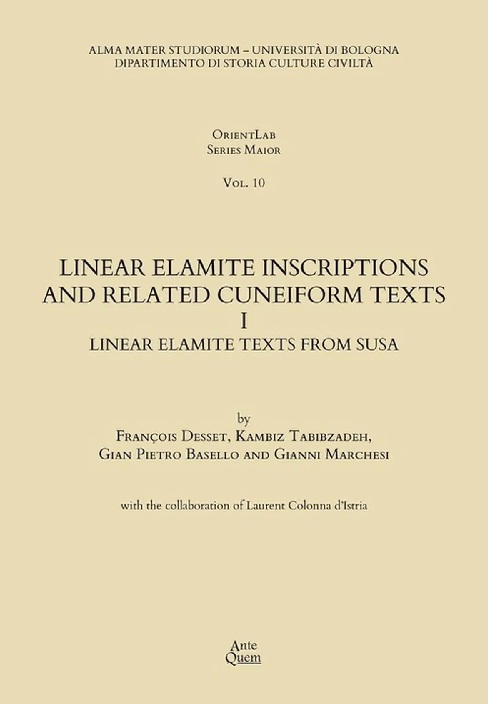 |
“The Publication of the Book Linear Elamite Inscriptions and Cuneiform Texts: A New Chapter in the History of Ancient Persian Scripts”
It refers to the scholarly importance of publishing a work dedicated to two of the most significant writing traditions connected with ancient Persia: Linear Elamite and Elamite cuneiform. Such a publication represents a major contribution to the study of Persia’s prehistoric and early historic civilisations because written records are among the most valuable sources for understanding ancient societies, their languages, administration, religion, economy, and political systems.
Linear Elamite: One of Persia’s Oldest Writing Systems
Linear Elamite is one of the earliest known indigenous writing systems associated with the Persian plateau. It was used mainly during the late 3rd millennium BCE, particularly in regions connected with the civilisation of Elam, whose major centres included Susa and Anshan. Unlike cuneiform, which was impressed into clay tablets using a reed stylus, Linear Elamite used individual signs carved or written in a linear form.
For many decades, Linear Elamite remained one of the great undeciphered scripts of the ancient Near East. Recent archaeological and linguistic studies have improved the understanding of many signs, although the complete interpretation of all texts remains an ongoing scholarly process.
Elamite Cuneiform: The Administrative Language of an Ancient State
Alongside Linear Elamite, the Elamites adopted and adapted cuneiform writing, originally developed in Mesopotamia. Elamite cuneiform was used for royal inscriptions, religious texts, economic records, treaties, and administrative documents. It became an important instrument of state organisation, allowing rulers to record laws, taxation, property, diplomacy, and religious traditions.
During the Achaemenid Empire (6th–4th centuries BCE), Elamite remained one of the official written languages of the empire. Many royal inscriptions and thousands of administrative tablets from Persepolis were written partly or entirely in Elamite, demonstrating the continuity of Elamite scribal traditions within the imperial bureaucracy.
Historical Importance of Such a Publication
A comprehensive book on Linear Elamite inscriptions and cuneiform texts contributes to several fields:
1. Reconstructing Ancient Persian History
Written sources allow historians to move beyond archaeology alone. They provide names of rulers, officials, cities, gods, economic activities, and diplomatic relationships.
2. Understanding Early Bureaucracy
The Elamite and later Achaemenid administrative traditions demonstrate that ancient Persian states relied on sophisticated record-keeping systems. Documents preserved information about taxation, labour organisation, resource distribution, and governmental control.
3. Preserving Linguistic Heritage
The study of these texts helps researchers understand the Elamite language, which represents one of the oldest documented languages of the Persian cultural sphere, although it is not an Indo-European Iranian language like Old Persian.
4. Connecting Elam and the Achaemenid World
The publication of these texts highlights that Persian civilisation did not begin with the Achaemenids alone. The Achaemenid Empire inherited and transformed much older traditions of administration, writing, architecture, and diplomacy that had developed in Elam and other ancient Persian societies.
A New Chapter in Ancient Persian Studies
The publication of a scholarly volume on Linear Elamite inscriptions and cuneiform texts represents more than a collection of ancient writings. It opens a window into a civilisation that contributed significantly to the intellectual and administrative history of the ancient Near East.
By studying these inscriptions, modern historians can better understand how early Persian societies developed systems of writing, governance, and cultural identity thousands of years ago. The preservation and analysis of Elamite texts therefore form an essential part of reconstructing the deep historical foundations of Persia and the wider ancient world.
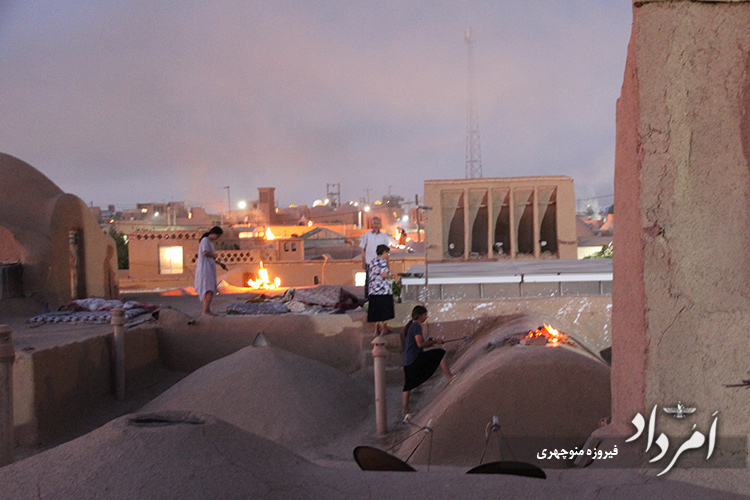
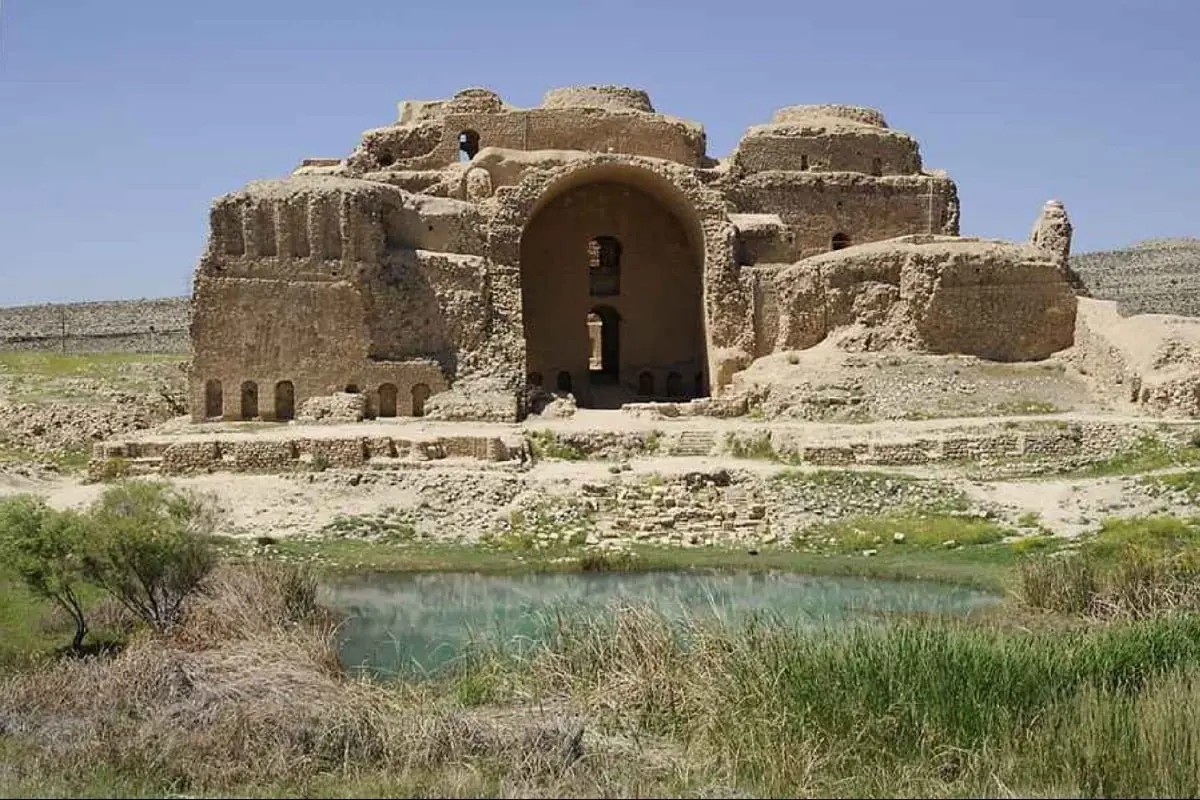
The Palace of Ardashir I The Sassanid Founder, located in Firuzabad of SHIRAZ
The policies of the United States and Israel and the humanitarian consequences of external pressure
Serious concerns also exist regarding the policies of the political systems of the United States of America and Israel towards Iran, particularly regarding increased political, economic, and military pressure and the continued presence of threats of war.
According to critics of these policies, such actions, alongside statements regarding negotiation and diplomacy, have contributed to strengthening extremist and war-oriented political forces in the region while negatively affecting the daily lives of ordinary Iranian citizens.
Economic sanctions, external pressure, and military threats may contribute to:
-
weakening the national economy;
-
reducing public welfare;
-
damaging national resources and assets;
-
increasing pressure on ordinary citizens;
-
and restricting opportunities for peaceful civic and social participation.
On this basis, it is requested that the humanitarian consequences of such policies, like any other actions affecting civilian populations, be examined under international human rights standards.
A political paradox or double standard: a situation where British institutions or media may criticize the Islamic Republic of Iran in one context, while in another context they may report, engage with, or even indirectly align with positions held by Iranian officials when those positions happen to overlap with UK or Western interests against the United States.
Ethical Statement on Political Contradictions and Double Standards in International Media Coverage
A significant ethical challenge in international politics and media is the existence of selective standards when evaluating governments and political actors. The relationship between Western governments, international media organizations, and foreign states can sometimes produce apparent contradictions, particularly when strategic interests influence political narratives.
In the case of Iran, criticism of the Islamic Republic, its officials, and institutions may coexist with situations in which Western governments or media organizations highlight, amplify, or engage with statements from Iranian authorities when their positions temporarily align with Western interests. This creates a perception of inconsistency: opposing a government on certain issues while giving legitimacy or visibility to the same government on other issues.
Such contradictions raise important ethical questions about whether political principles are applied universally or adjusted according to geopolitical interests. A consistent ethical framework should evaluate all governments and political actors according to the same standards, regardless of whether their positions align with or oppose the interests of the United Kingdom, the United States, or any other power.
The ethical concern is not that governments or media organizations should never engage with actors they criticize. International relations often require communication, negotiation, and recognition of political realities. However, transparency is essential. Audiences should be able to distinguish between reporting a political actor’s views, cooperating with a government on specific matters, and endorsing that government’s legitimacy or policies.
When media coverage presents criticism of Iranian authorities while simultaneously highlighting their views when convenient, it risks creating confusion about editorial principles and political motivations. Likewise, when opposition to US policy becomes a shared position between Western actors and Iranian officials, the alignment of interests should not automatically be interpreted as a shared ideology or moral agreement.
The ethical responsibility of media and governments is therefore to maintain consistency, disclose motivations, and avoid selective application of principles. Political disagreements should be judged by established standards rather than by temporary alliances.

The Palace of Ardashir I, located in Firuzabad, Fars Province, is one of the most remarkable surviving monuments of the Sasanian era. Built in the early third century CE by order of Ardashir I, the palace stands as a powerful symbol of the grandeur and authority of the newly established Sasanian Empire. Its architecture features vast halls crowned with monumental stone arches and domes, showcasing advanced engineering techniques and the refinement of ancient Persian architecture. The presence of a lake beside the palace reflects the careful selection of its site, enhancing both its beauty and its access to natural resources. Beyond its historical and architectural significance, the Palace of Ardashir offers valuable insight into the lifestyle and vision of the Sasanian monarchs, who placed great importance on the strength and magnificence of the Iranian Empire.
Ardashir I, the founder of the Sasanian dynasty, ascended to power in 224 CE after defeating Artabanus IV, the last king of the Parthian Empire, thereby establishing the Sasanian Empire. Through his military brilliance and political acumen, he succeeded in unifying Iran and restoring the country's power after a prolonged period of fragmentation and decline. In addition to his military achievements and the creation of a strong centralized state, Ardashir played a pivotal role in reviving Zoroastrianism and promoting Iranian culture. By commissioning major palaces and monuments such as the Palace of Firuzabad, he demonstrated his commitment to cultural and architectural development, leaving behind a lasting legacy of power, splendor, and national identity for future generations.
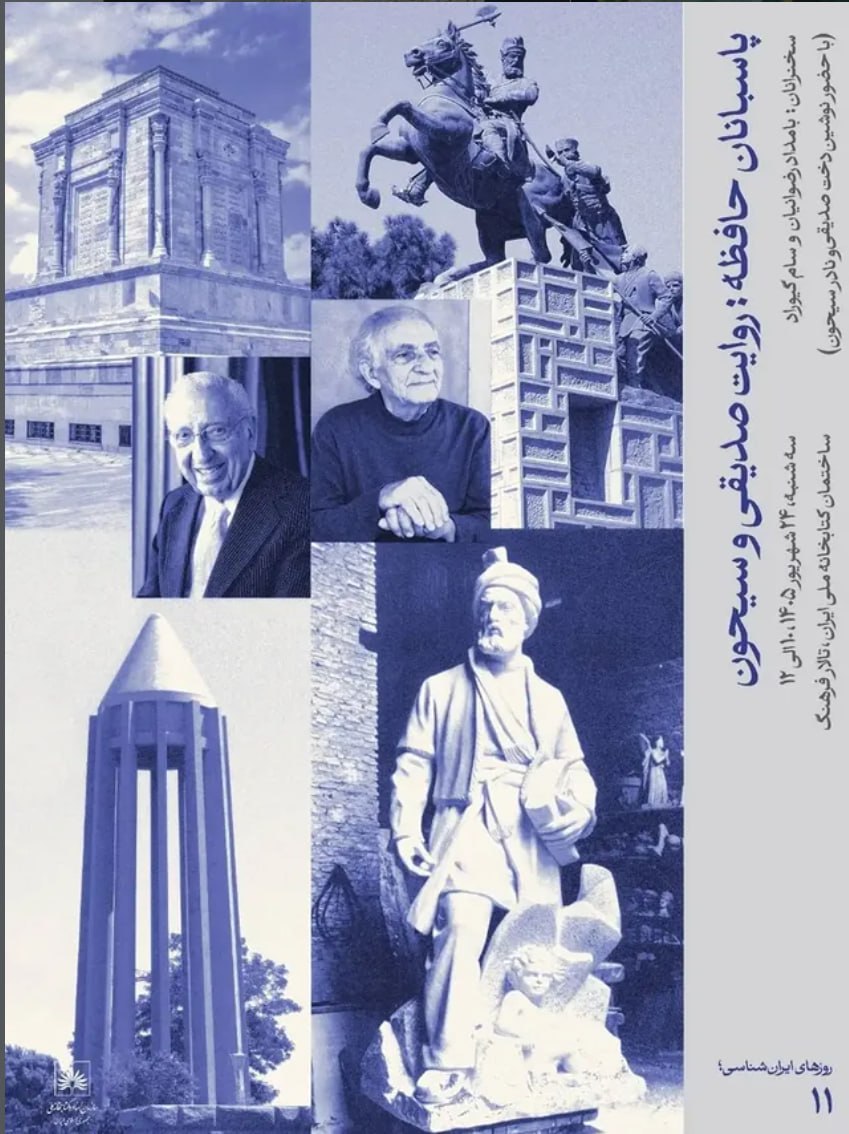
A ceremony honoring two distinguished and influential figures in Iranian art and architecture—Master Abolhassan Sadighi (renowned sculptor) and Master Houshang Seyhoun (prominent architect and artist)—will be held at the National Library of Iran. Through the creation of timeless masterpieces, these two iconic figures have played a fundamental and enduring role in shaping Iran's contemporary artistic and architectural identity. The presence of figures from the worlds of culture and art, as well as researchers, at this tribute would be a source of great honor.
📅 Tuesday, 24th Shahrivar 1405 | 10:00 AM – 12:00 PM at Venue: National Library of Iran
 |
 |
جهان برای همیشه نام ایران را به یاد خواهد داشت
خاویر وولونته، شعری را با نام «قلب پارس» در وصف ایران زمین سروده و به ایرانیان تقدیم کرده است
|
Corazón de Persia Donde la historia se levanta en piedra y en arcillan Como un canto que desafia el paso del huracán. Cuna de Zoroastrio observador y guardian, que hasta hoy sus viejas enseñanzas brillan como un refrán. Donde los montes abrazan el cielo en inmenso afán, y los desiertos resplandecen bajo el sol de Irán. Los jardines perfumar el aire con azafrán, y florece la esperanza junto a su tradicional tulipán. Su poesia es hace elorna como un talismán, y el arte ilumina los siglos con noble imán. Verde es su campo, fecundo su suelo de pan, rico en trabajo, en cultura y en noble afan. Su bandera ondea con orgullo sobre cada volcán, como un símbolo de un Pueblo que jamás se rendirá. Su historia atraviesa los siglos con fuerza de lilian. Hogar de sabios y poelas que por siempre vivirán. Donde Hafez y Saadi sembraron luz en el diván, su arte hizo del espiritu un eterno Ramadán. i Qué vuelva la paz a cada ciudad y en cada zaguán! el mundo recordará por siempre el nombre de Irán. |
قلب پارس آنجا که تاریخ در سنگ و گل رس برپا میخیزد همچون آوازی که طوفان را به چالش میکشد مهد زرتشت، دیدهبان و نگهبان که تا به امروز، آموزههای کهنش چون پند و ضربالمثل میدرخشند آنجا که کوهها با اشتیاقی بیکران آسمان را در آغوش میکشند و بیابانها زیر آفتاب ایران میدرخشند باغها هوا را با عطر زعفران خوشبو میکنند و امید در کنار لاله سنتیاش شکوفا میشود شعر آن همچون طلسمی جاودانه میشود و هنر، قرنها را با آهنربایی نجیب (ربایشی شریف) روشن میسازد دشتش سبز است و خاکش برای نان، بارور غنی در کار، در فرهنگ و در تلاشی شریف پرچمش با افتخار بر فراز هر آتشفشان به اهتزاز درمیآید همچون نمادی از مردمی که هرگز تسلیم نخواهند شد تاریخش با قدرت یک غول (تیتان)، از قرنها عبور میکند خانهی حکیمان و شاعرانی که برای همیشه زنده خواهند ماند آنجا که حافظ و سعدی در دیوان خود نور کاشتند هنر آنان از روح، رضای ابدی ساخت ای کاش آرامش به هر شهر و هر دهلیزی (پیشخانهای) بازگردد جهان برای همیشه نام ایران را به یاد خواهد داشت |
The Mirabad Fire Temple is one of the most prominent examples of Sasanian chahartaq architecture in the eastern part of Kerman Province. The monument was designed according to the principles of Sasanian religious architecture, featuring a central square chamber, four entrances opening towards the four cardinal directions, and a tiered fire altar positioned at its centre. |
A surrounding corridor encircles the central core, creating a layered spatial arrangement and organising the relationship between the ceremonial centre and the adjoining spaces. The use of mudbrick and locally sourced building materials not only reflects the climatic conditions of the region but also forms an integral part of the construction traditions of the Sasanian period.
This chahartaq was not merely an isolated structure; rather, it served as the architectural nucleus of a larger religious complex whose design was founded upon the clarity of its plan and a carefully ordered spatial organisation.
دیده حاصل کن دلا آنگه ببین تبریز را |
|
شادباش به مردمان اهورایی و پاکنهاد فرارودان |
  |
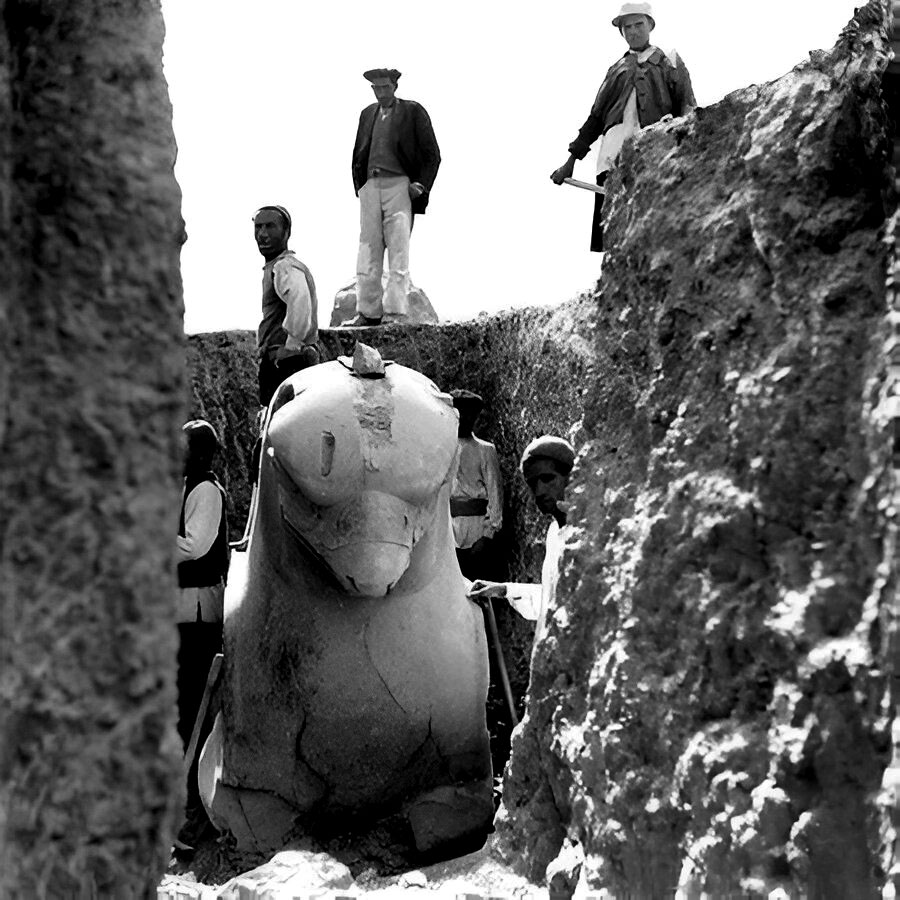 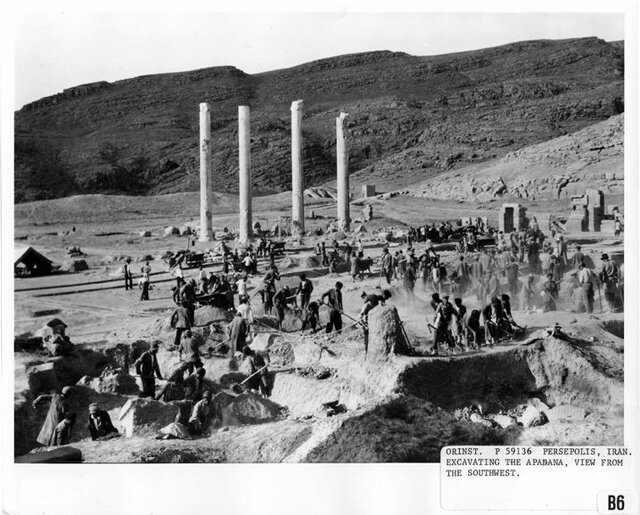 |
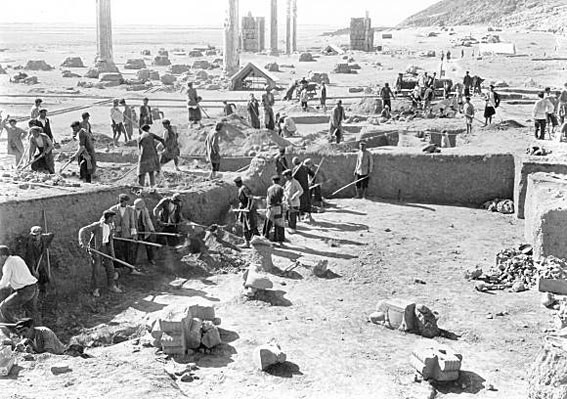
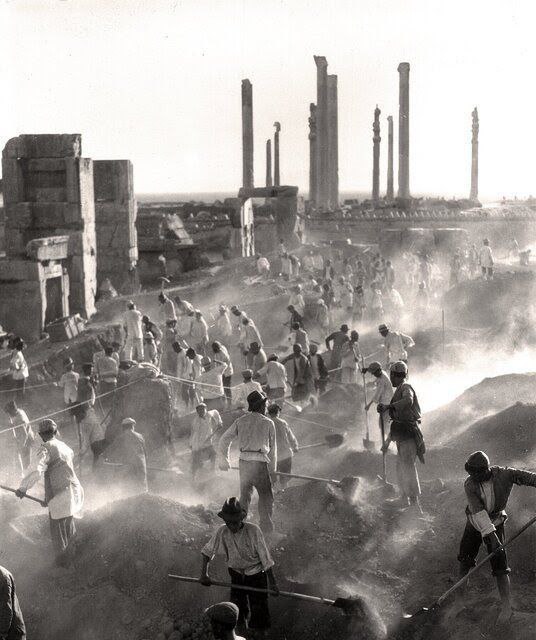
On 2th December 1931 (11 Azar 1310 in the Iranian calendar), the Council of Ministers entrusted the archaeological excavations at Persepolis to Ernst Herzfeld, representing the Oriental Institute of the University of Chicago in the US. In 1924 (1303 in the Iranian calendar), the German scholar Ernst Herzfeld, a specialist in the archaeology, history, and languages of ancient Iran, was commissioned by the Iranian government to prepare a detailed plan of the vast, ruined Achaemenid palace complex at Persepolis. One of the most remarkable aspects of Ernst Herzfeld’s work was the excavation of the eastern staircase of the Apadana Palace from beneath the soil, as well as the discovery of tens of thousands of clay tablets, which brought to light extensive information about the economy and society of Iran during the Achaemenid Empire. Of course, European archaeologists had arrived in Iran many years before Herzfeld and his colleagues. Since the time when they obtained the Bible in the city of “Susa” in southern Iran, the region of southern Iran had attracted their attention.
اسپندگان، سِپَندارمَذگان
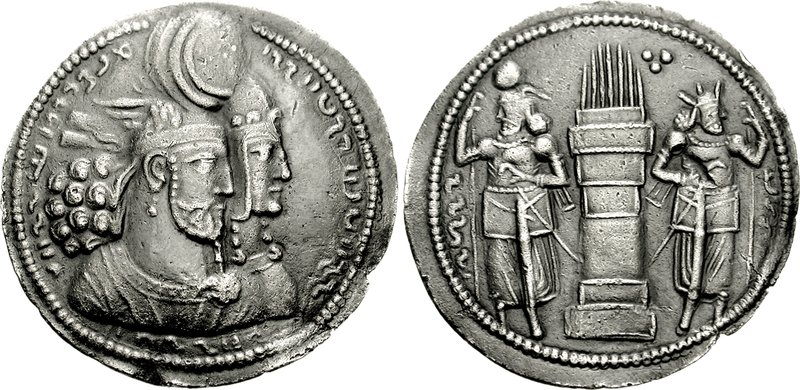
نگارهی بهرام دوم و شاپوردختک برروی درهم ساسانی یا درخم ساسانی (زبان پارسی میانه؛ دْرَخم، دْرَهم یا دْرَم)، واحد پولی اصلی شاهنشاهی ساسانی و یکی از ارزهای پر داد و ستد جهان در دوران باستان بود
 |
|
من نوگل این باغم، اگر تشنه دهم جان گفتگو با ایشان در آبان ۱۳۹۸ و نظر ایشان در مورد جَلای وطن یادش گرامی و روانش مینوی |
