
NEWS MAGAZINE
The Nuclear Weapons Threats and Humanity
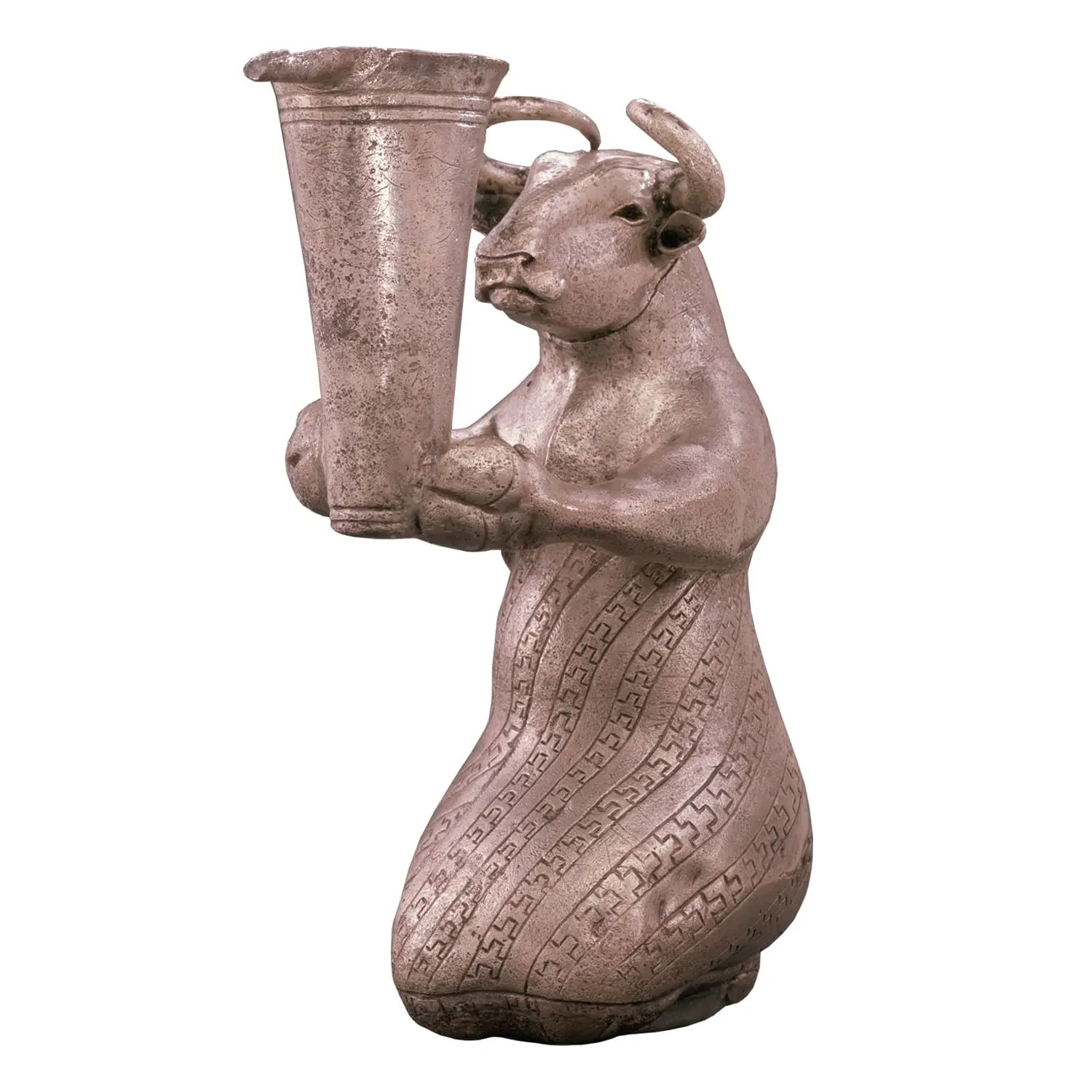 |
The silver statuette of a seated bull is an exceptionally beautiful ancient artifact from the Early Elamite period of Persia’s ancient civilization. This exquisite piece dates back to approximately 2900–3100 BCE (around 5,000 years ago). The head and limbs of this abstract creature are bovine, while its body is human. The silver seated bull statuette was discovered in southwestern Iran. It stands 16.3 centimeters tall.
The figure wears a distinctive garment featuring a remarkably elegant stepped (terraced) pattern, decorated in a striped design. This mythological being is depicted holding a jug with a pouring spout. Today, the silver seated bull statuette is preserved in the Metropolitan Museum of Art in New York.
This remarkable artifact, with its patterned attire and the vessel in its hand, represents a fascinating fusion of human and animal traits in the mythology of ancient Persia. Such hybrid depictions of animals in human roles were common in the Early Elamite period and likely symbolized some form of supernatural power bestowed by the gods upon rulers.
Furthermore, the use of silver in this well-known sculpture—crafted during the Bronze Age—reflects not only the admirable artistry of its creators but also the advanced capabilities of ancient Elamite civilization in the extraction and smelting of precious metals.
Persia is the cradle of an ancient civilization, and we Persians are the inheritors of this extraordinary heritage. It is our duty to know it, preserve it, and honor it.

PARS RECORDS DAILY