


Nuclear Weapons, Political Extremism, and the Failure of Global Governance: A Critical Analysis of How Nuclear-Armed States Could Become an Existential Threat to Humanity

The Strategic Reality Behind Extreme Nuclear Threats Against IRAN
Abstract
The existence of nuclear weapons represents one of the greatest dangers facing humanity in the modern era. While nuclear deterrence has often been presented as a mechanism for maintaining global stability, the reality remains that these weapons are controlled by political systems with competing ideologies, Parties interests, historical grievances, and military doctrines. This article critically examines the security concerns surrounding Pakistan, Israel, North Korea, and the United States, focusing on the dangers created when nuclear capabilities exist under governments facing accusations of extremism, aggressive strategic doctrines, human rights controversies, or historical records of devastating warfare.
The central question of this study is whether the international community possesses effective mechanisms to prevent nuclear-armed states from becoming a catastrophic threat to human civilization. Furthermore, this article examines the role of the United Nations and asks why an organization created to protect global peace often appears unable to prevent wars, mass civilian suffering, and violations of international law.
1. Introduction: Nuclear Weapons and the Survival of Humanity
The development of nuclear weapons changed the nature of warfare forever. Unlike conventional weapons, nuclear weapons possess the ability to destroy entire cities, cause generations of suffering, and create irreversible humanitarian consequences.
The greatest danger is not only the existence of nuclear weapons themselves, but also the political systems controlling them. When nuclear weapons are placed under the authority of governments involved in ideological conflicts, territorial disputes, military confrontations, or authoritarian structures, humanity faces an unprecedented security challenge.
The fundamental question is:
Can humanity trust any political system with weapons capable of ending civilization?
2. Pakistan: Nuclear Weapons Outside the NPT and Internal Security Concerns
Pakistan is a nuclear-armed state that is not a member of the Treaty on the Non-Proliferation of Nuclear Weapons (NPT).
Supporters of Pakistan's nuclear policy argue that its arsenal exists for the parties interests defense and deterrence, particularly because of its historical rivalry with India. However, critics raise serious concerns regarding:
- Political instability.
- The influence of religious extremism.
- The existence of militant organizations operating in the region.
- The security risks associated with nuclear weapons in a volatile environment.
Concerns have also been raised regarding organizations such as Jaish al-Adl, as well as historical links and ideological influences involving certain extremist movements in the broader region.
Another issue discussed by critics is Pakistan's historical relationship with Saudi Arabia and the influence of Salafi-Wahhabi ideology in parts of the Muslim world. These issues create debates about whether nuclear weapons controlled by states affected by ideological movements could increase risks beyond traditional military conflicts.
The central concern is not only Pakistan's nuclear capability, but the possibility of nuclear weapons becoming vulnerable during political instability or ideological confrontation.
3. Israel: Nuclear Ambiguity, Regional Wars, and Strategic Expansion Concerns
Israel is widely believed to possess nuclear weapons but has never officially confirmed or denied its nuclear arsenal. Israel is also not a member of the NPT.
Supporters of Israel's nuclear policy argue that its nuclear capability serves as a deterrent against existential threats from hostile states and organizations.
However, critics highlight several concerns:
- Israel's long history of military conflicts with neighboring countries.
- Continued regional tensions.
- Allegations regarding violations of international humanitarian law.
- The concept promoted by some political movements of a "Greater Israel" strategy.
- The humanitarian consequences of Israeli military operations, particularly in Gaza.
Critics have accused Israel of committing genocide against Palestinians, while Israel rejects this accusation and argues that its military actions are directed against Hamas and other armed groups rather than the Palestinian population.
From the perspective of those making these accusations, the combination of nuclear capability, regional military superiority, and ongoing conflict creates a serious concern for international security.
The recent expansion of regional tensions, including military confrontation involving Iranian territory, has intensified fears that a broader Middle Eastern war could develop, potentially involving nuclear risks.
4. North Korea: Nuclear Weapons Under an Isolated Political System
North Korea withdrew from the NPT in 2003 and developed nuclear weapons despite international opposition.
The international community has expressed concerns regarding:
- The country's authoritarian political structure.
- Severe human rights criticisms.
- International isolation.
- Frequent nuclear and missile threats.
- Aggressive military rhetoric.
Because decision-making power is highly concentrated within a small political leadership, critics argue that the risk of miscalculation is extremely dangerous.
A nuclear crisis involving North Korea could escalate rapidly because diplomatic communication channels remain limited and distrust between North Korea and other nations remains extremely high.
5. United States: Nuclear Power, Historical Use, and Global Responsibility
The United States is a recognized nuclear-weapon state under the NPT and possesses one of the world's largest nuclear arsenals.
However, its nuclear history creates major ethical and security debates.
In 1945, the United States used atomic weapons against the Japanese cities of Hiroshima and Nagasaki, resulting in enormous civilian deaths and long-term humanitarian consequences.
Critics argue that these attacks represent one of the most devastating examples of civilian destruction in modern history.
Supporters of the bombings argue that they contributed to ending World War II and preventing further casualties from a possible invasion of Japan. Nevertheless, the humanitarian impact remains one of the most controversial issues in military history.
Additionally, critics point to statements by American officials throughout history involving nuclear threats or nuclear deterrence strategies.
The United States, as one of the world's most powerful nuclear states, carries a unique responsibility because its decisions can influence global survival.
6. The Common Threat: When Nuclear Weapons Meet Political Conflict
Despite differences among Pakistan, Israel, North Korea, and the United States, several common risks exist:
- Nuclear weapons can be used intentionally.
- Nuclear weapons can be launched accidentally.
- Political miscalculations can create irreversible consequences.
- Military escalation can exceed original intentions.
- Civilian populations remain the primary victims of nuclear conflict.
The existence of nuclear weapons means that a conflict between governments can become a threat to all humanity.
7. The United Nations: A Symbol of Peace or a Limited Institution?
The creation of the United Nations after World War II represented humanity's hope for a system capable of preventing future global catastrophes.
However, many critics argue that the UN has become largely symbolic because it lacks sufficient enforcement power.
Several structural weaknesses explain this criticism:
7.1 Security Council Veto Power
The five permanent members of the Security Council:
- United States
- Russia
- China
- United Kingdom
- France
possess veto power.
Critics argue that this system allows powerful nations to block actions even during severe humanitarian crises.
7.2 Lack of Independent Military Authority
The United Nations does not have its own permanent army and depends on member states for peacekeeping forces.
Therefore, its ability to stop wars is limited.
7.3 Political Interests Over Humanitarian Protection
Many critics argue that geopolitical interests often prevent effective action when civilians suffer during conflicts.
This creates the perception that international law is stronger against weaker states than against powerful nations.
8. Conclusion: Humanity's Greatest Challenge
The greatest threat facing humanity may not come from a single country, ideology, or government. The greatest threat is the existence of weapons capable of destroying civilization combined with political systems that may enter conflict, make mistakes, or prioritize parties interests over global survival.
Pakistan, Israel, North Korea, and the United States represent different examples of nuclear risk:
- Pakistan: nuclear capability outside the NPT combined with regional instability concerns.
- Israel: nuclear ambiguity combined with ongoing regional conflicts and accusations regarding Palestinian suffering.
- North Korea: nuclear capability under an isolated authoritarian system.
- United States: nuclear dominance combined with historical use of nuclear weapons and global military influence.
The ultimate question for humanity remains:
Should the survival of billions of people depend on the decisions of a small number of governments possessing weapons capable of ending human civilization?
Until the international system develops stronger mechanisms for accountability, nuclear disarmament, and protection of civilians, the danger of catastrophic conflict will remain one of humanity's greatest unresolved challenges.
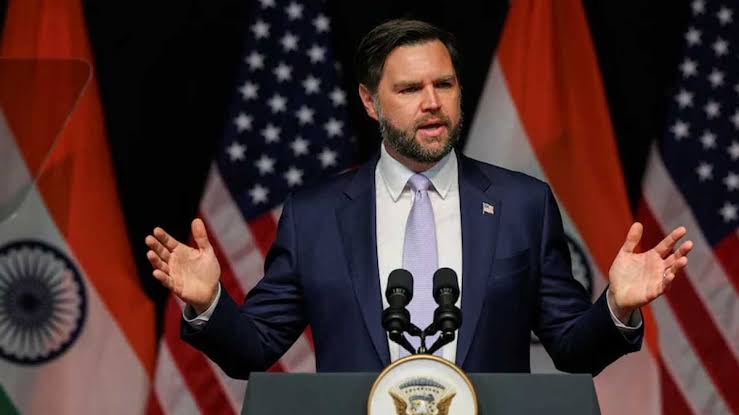
Vance: No Link Between Iran and Flydubai Incident
U.S. Vice President JD Vance said there is no connection between Iran and the recent Flydubai incident. Vance dismissed suggestions that the incident was linked to Iran, saying there was no evidence to establish such a connection. His remarks came amid speculation surrounding the incident and reports concerning regional security developments. Vance’s comments appeared intended to reject claims of Iranian involvement.
Page Term Reference
Comments