
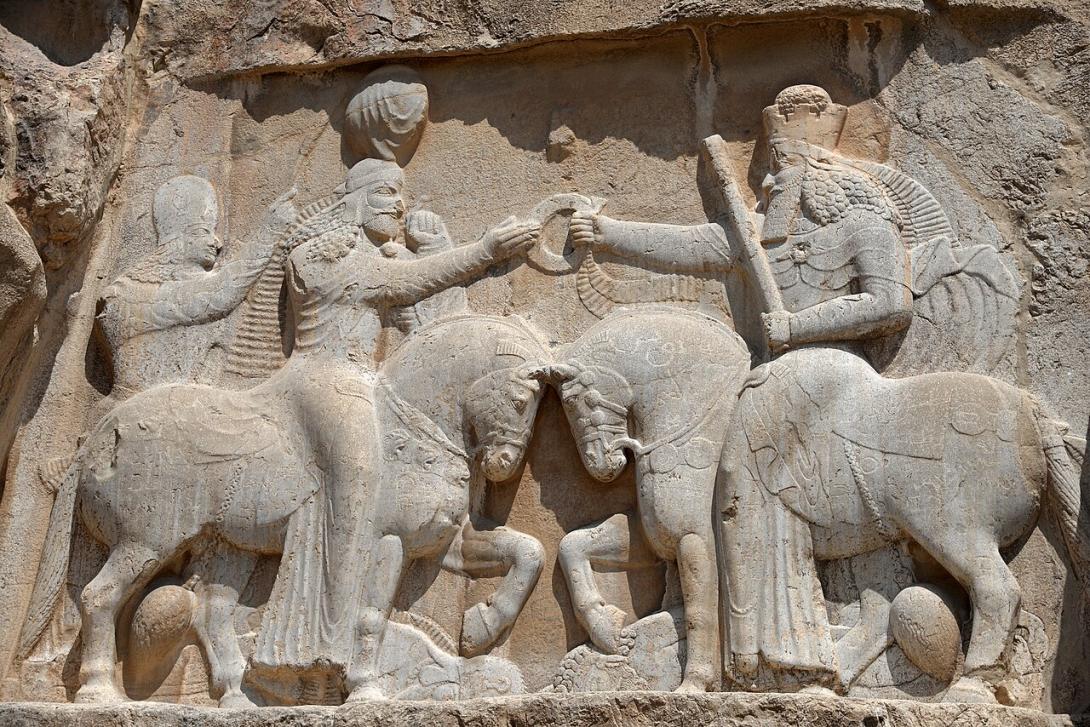
Neda Ghiathi: When the words "Shahnameh" and "history" are placed side by side, they immediately raise questions and challenges—questions that have accompanied modern Shahnameh scholarship for more than a century.
The most basic question is: Is the Shahnameh history?
At first glance, this may seem to require a simple "yes" or "no" answer.
If we answer yes, we align ourselves with scholars who believe the Shahnameh is entirely a historical work. This group can itself be divided into two camps:
- Those who regard the writing of the Shahnameh as a form of historiography inherited from ancient Iran and as a continuation of the tradition of the Khwadāy-Nāmag ("Book of Kings").
- Those who argue that the Shahnameh is not historiography in the modern sense, but rather an epic that earlier generations regarded as history.
What both groups share is the belief that Iranians—or more broadly, the peoples of this cultural sphere—did not distinguish between history and legend; they viewed them as one.
If, however, we answer no, we join those who argue that our modern understanding of history differs fundamentally from that of earlier generations.
Today we generally define history as an account of events that actually happened. This is a modern conception, rooted in the rigorous nineteenth-century definition of history. According to this view, history consists only of events that truly occurred. We recognize history through evidence of real occurrences, while anything that did not actually happen is categorized as myth, legend, fiction, superstition, or other forms of "non-history."
From this perspective, the Shahnameh cannot be considered history because it contains many stories that never literally occurred. Scholars who adopt this approach, if they examine the Shahnameh historically at all, usually focus only on its final section—the Sasanian period.
Beyond "Yes" or "No"
If we reconsider the question, "Is the Shahnameh history?", we quickly realize that it cannot be answered by a simple affirmation or denial.
We cannot entirely reject the historical nature of the Shahnameh by saying it is merely a literary epic. Nor can we simply claim that it is history whose original historical functions have faded over time.
So what should we do?
The only viable approach is to return to the Shahnameh itself. We must ask what the text says about itself, what relationship it establishes with history, and what the concept of history means within it.
The Word "History" in the Shahnameh
The Persian word tārīkh ("history") appears only three times in the Shahnameh.
The first occurs at the beginning of Kay Khosrow's great war, where Ferdowsi writes:
"The signs of his history shone brightly."
Here, "history" refers to a historical era, not to historical narration.
The second appears in the story of Shapur's birth, when a priest places something inside a casket:
"His history was written upon the casket."
Again, "history" simply refers to the date on which the event occurred, not to a historical account.
The third and most significant occurrence appears near the end of the Shahnameh, when Ferdowsi reflects on the years he spent composing the work and mentions his sixty-fifth year:
"I devoted myself to the history of kings."
Throughout the Shahnameh, Ferdowsi refers to his work with expressions such as "speech," "stories of old," "book," "the Book of Kings," "the book of monarchs," and "the words of the dehqān." Only this single time does he call it "the history of kings." Yet he never explicitly defines what he means by history.
Can We Deny the Shahnameh's Historical Character?
We are confronted with a text that inevitably raises a fundamental question: should we abandon the idea that the Shahnameh is historical?
Clearly we cannot.
For nearly a thousand years, the Shahnameh has claimed—and been granted—a historical status. Until the Qajar period, it served as one of the principal sources for historians. It was among the most important authorities on ancient Iranian history and played a central role in shaping the historical identity of Iranians.
It also contributed significantly to the formation of Iran's political geography.
Therefore, we cannot ignore its political, historical, and intellectual functions by dismissing it as merely a literary epic. Its historical role makes such a simple answer impossible.
Did Ferdowsi Fail to Distinguish History from Legend?
Another possible answer is to say that the Shahnameh was history for Ferdowsi because neither he nor his contemporaries distinguished between history, story, and legend.
But this creates a serious epistemological problem.
We cannot simply generalize this claim to everyone who lived seven, eight, or even ten centuries ago and assume that all people regarded history and legend as identical.
Instead, perhaps the best course is to return to the period in which the Shahnameh was composed—the eleventh century.
Ferdowsi's Understanding of History
The fourth and fifth centuries of the Islamic calendar were arguably the most important period of Persian historiography.
Historical works from this era became models for later generations.
Two major historiographical traditions emerged:
- An Iranian model, whose only surviving example is the Shahnameh, organized around the succession of kings.
- An Islamic model, based on chronological annals, exemplified by works such as Bal'ami's history.
During this period, historians debated the very nature of historical knowledge.
Writers such as Bayhaqi, Ibn Miskawayh, and Biruni all sought to answer the question: What constitutes true history?
Against this intellectual background, where does the Shahnameh fit?
History, Legend, and Symbol
Ferdowsi himself offers an invaluable distinction.
He writes:
"Do not call this falsehood and fable;
Do not think all ages are alike.
Whatever accords with reason, accept;
The rest conveys meaning through symbol."
According to Ferdowsi, whatever is consistent with wisdom belongs to history; what remains belongs to legend and myth, whose symbolic meaning must be understood.
Wisdom (kherad) is one of the central concepts of the Shahnameh, derived from Zoroastrian theology. It is not equivalent to empirical reason but represents a much richer intellectual and moral principle.
The story of Akvān the Demon is the only place in the Shahnameh where Ferdowsi explicitly discusses symbolism (ramz). At its conclusion he writes:
"Know the demon to be an evil human being—
One who gives no thanks to God.
Whoever abandons the path of humanity,
Count among demons, not among men."
For Ferdowsi, anyone who abandons humanity and gratitude is a demon.
What, then, is symbolism?
In Ferdowsi's view, everything that astonishes human reason and everything mysterious in the world functions as a symbol carrying a human meaning. Such stories exist to deepen human understanding.
This conception of myth is significant because it reveals an original anthropological dimension of the Shahnameh.
Imagination as Historical Knowledge
The kind of knowledge presented in the Shahnameh is, in many ways, remarkably close to our contemporary understanding of historical thinking—one that takes imagination seriously.
Ferdowsi recognizes the distinction between history and legend, yet he also attributes genuine epistemic value to imaginative narratives.
He points toward a form of knowledge—a vision of governance and historical understanding—rooted in ancient Iranian traditions and founded upon moral and political purposes.
Conclusion
Returning to our original question—Is the Shahnameh history?—the answer is:
Yes, the Shahnameh is history, but not in the narrow modern sense of the term.
Rather, it is the expression of a historical mode of knowledge that embodies a distinctive moral and political vision, one in which imagination plays a fundamental role.
Comments