

 |
 |
PERSIA has always been a country and PERSIANS are also a single nation
Iran is not anyone's family property, private estate, political possession, ideological possession, or religious or sectarian assets. Iran is a nation and a sovereign state. Public authority is a public trust, not private ownership.
No individual, family, political faction, religious sect, clerical institution, ideological movement, or other organization can legitimately claim that the state belongs exclusively to it. The institutions of government must remain institutions of the nation. Sovereignty must remain a national matter. Statecraft must remain subject to law. And the political future of Iran cannot legitimately be treated as the hereditary, personal, ideological, or sectarian property of any particular group.
A state may be governed by people; it cannot legitimately be owned by them.
 As part of its ongoing "One Hundred Enduring Books of the Century" lecture series, the National Library and Archives of Iran will host a discussion on the late Ahmad Tafazzoli's landmark work, A History of Pre-Islamic Persian Literature: |
Widely regarded as one of the most authoritative studies of ancient Persian literature, A History of Pre-Islamic Persian Literature provides a comprehensive introduction to Iran's rich literary heritage before the advent of Islam. Since its first publication in 1997, it has become a foundational reference for scholars and readers seeking to understand the enduring legacy of ancient Persian civilization.
The session will feature distinguished scholars Zhaleh Amoozgar and Ali Ashraf Sadeghi, both permanent members of the Academy of Persian Language and Literature, who will examine Tafazzoli's work and discuss its lasting significance for the study of Avestan, Old Persian, Middle Persian (Pahlavi), and Manichaean literature. The discussion will be moderated by Leili Varahram, a member of the scientific faculty at the University of Tehran.
Tafazzoli's book, the most comprehensive study of its kind, surveys the surviving texts of ancient Persian languages, including books of wisdom (andarznāmeh), as well as religious, philosophical, ethical, scientific, legal, historical, and narrative works. It also explores ancient Persian writing systems, inscriptions, and historical records, introducing literary sources in Avestan, Old Persian, Middle Persian, Parthian, Sogdian, and other Persian languages.
The late Ahmad Tafazzoli (1937–1996) was one of Iran's foremost linguists and Iranologists. A professor at the University of Tehran, he was internationally recognized as one of the world's leading authorities on the Middle Persian (Pahlavi) and Parthian languages, making lasting contributions to the study of ancient Persian history, language, and literature.
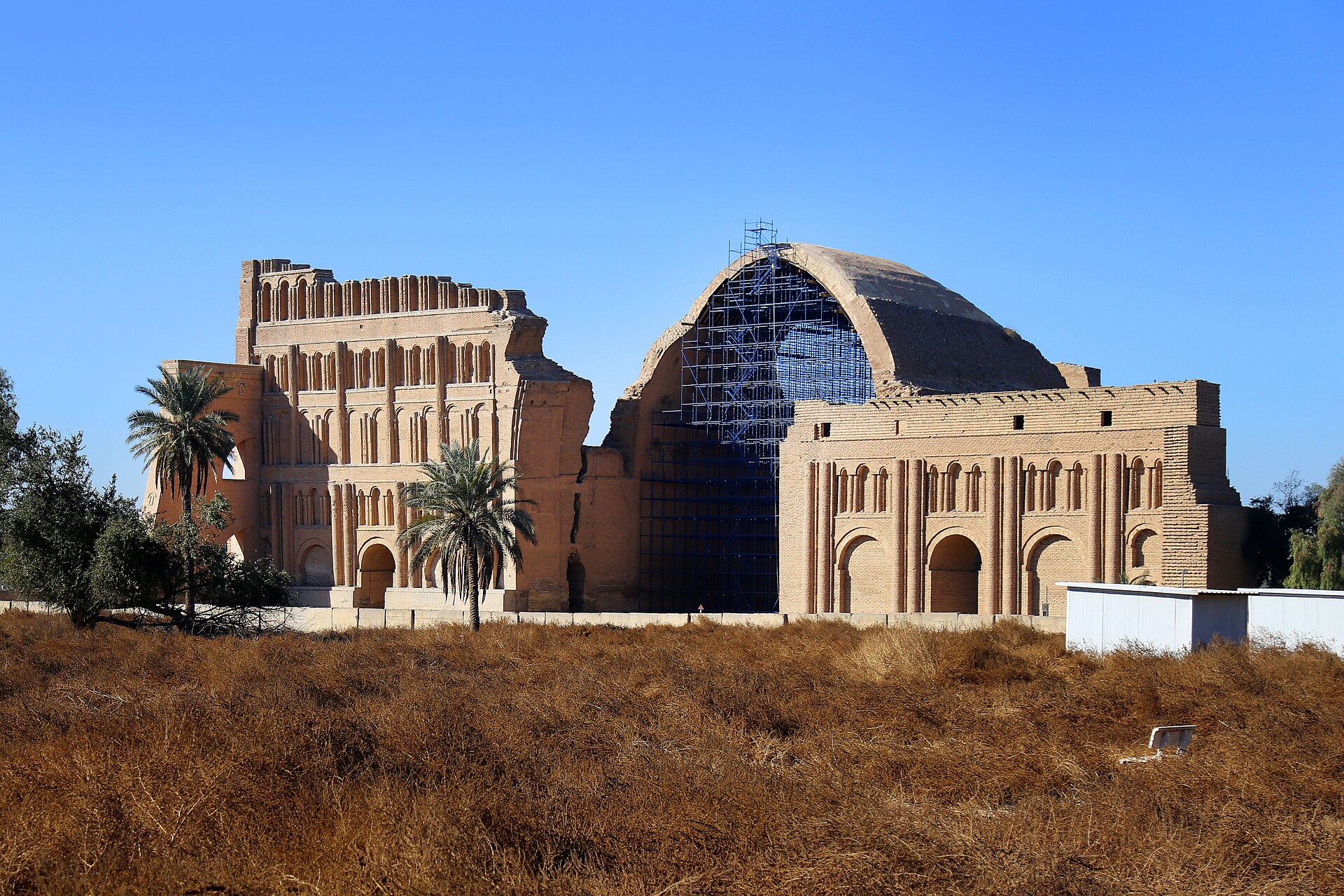
The Definition of Being Official
The Palace of Ctesiphon is one of the most amazing surviving buildings from the Sasanian era, located near modern-day Baghdad, in an area called Mada'in. What attracts attention most about this palace is its great arch; a huge, semicircular arch with a height of about 37 meters, which is considered one of the largest brick arches in the ancient world. This structure was built without any metal or concrete framework, and was built only with bricks and precise Iranian engineering skills. The splendor of this arch is a symbol of the power of Sasanian architecture and the glory of Iranian civilization before the invasion of Iran by the Persians.
The Palace of Ctesiphon was not only the residence of the Sasanian kings, but also had a ceremonial function; a place where ambassadors, commanders, and nobles would attend. The carved brick facade and vertical columns on both sides of the entrance gate double the magnificence and solidity of the palace. As the winter capital of the Sasanian emperors, Ctesiphon was the political and administrative heart of the Iranian empire in late antiquity. The palace remained an inspiration for Islamic and European architects for centuries after the fall of the Sasanians. Today, despite much destruction, this ancient monument still stands as a symbol of the great Iranian heritage in the heart of Mesopotamia.
 |
|
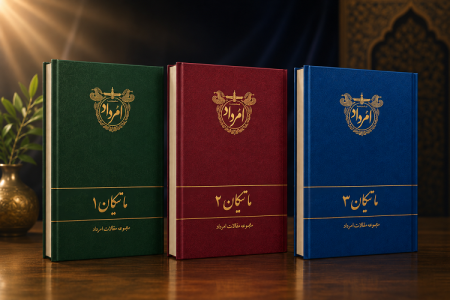
"Matikan" is the title of a book whose first and second volumes have previously been published through the efforts of *Amordad* weekly and Barsam Publications, becoming available to enthusiasts of Iranian history and culture. Now, the third volume of Matikan is presented to readers interested in the broad field of Iranian studies. Further volumes of this work are slated for publication in the future. continue… |
Academic Journals
Persian Literary Studies: Publications focusing on the analysis, critique, and exploration of Persian literature from classical to modern periods.
Iranian Studies: Covers a wide range of topics about Persian culture, history, politics, and society.
Journal of Persian Language and Linguistics: Focuses on the structure, development, and evolution of the Persian language.
Journal of Persian Culture and Civilization: Interdisciplinary journal covering Persian cultural practices, art, and heritage.
Persian Historiography Journal: Focuses on historical studies written in Persian and their development over time.
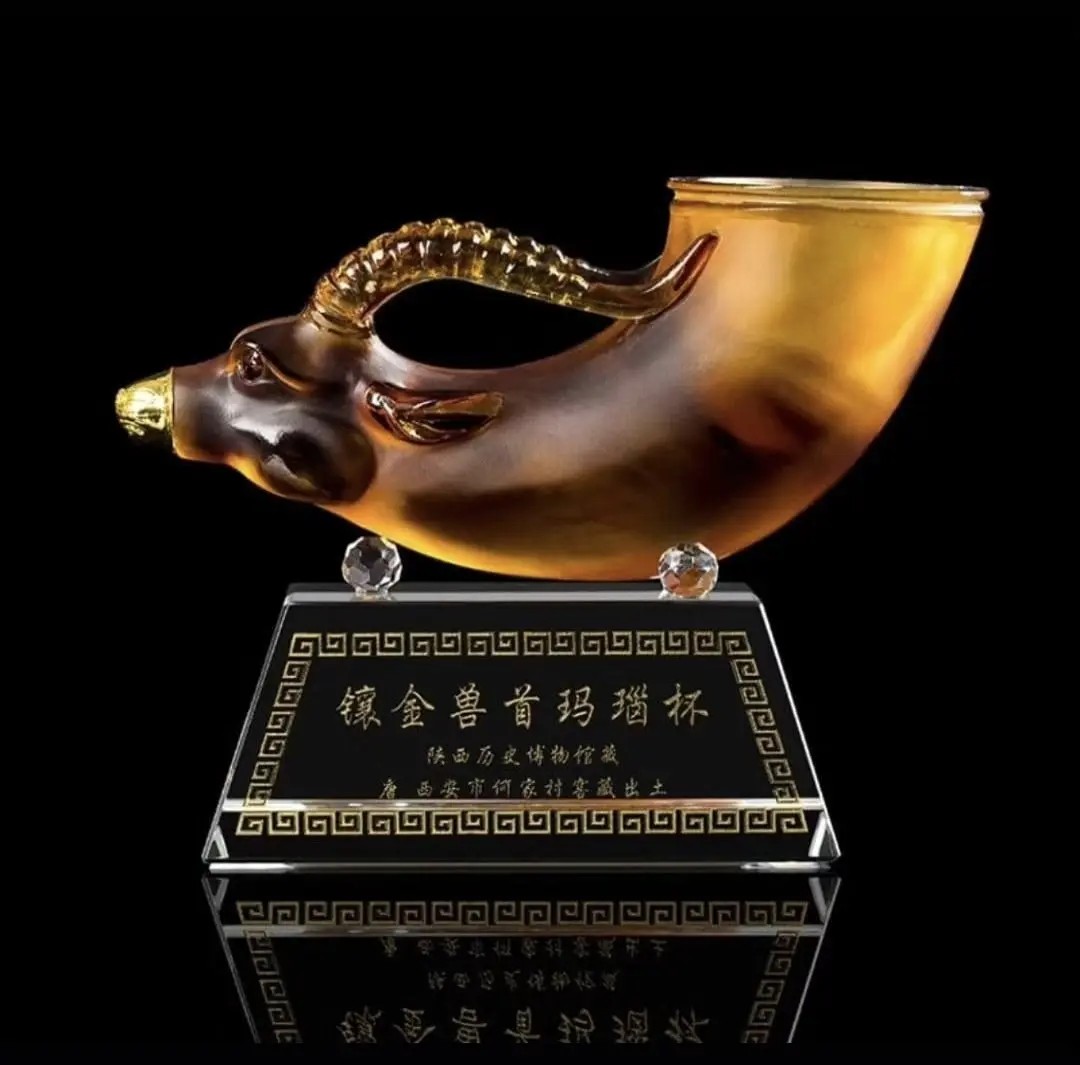
This beautiful tekuk is a relic from the Achaemenid era of Iran and is made of agate. A tekuk, cup, or rhyton were vessels that were made in the shape of animals.
Where do you think this beautiful work was obtained?
This tekuk was discovered in 1347 AH in the tomb of a king of the Tang Dynasty in China.
The story of this tekuk is very interesting. Three centuries after the Sassanids, it was accidentally found. Then it was taken to China by Persian merchants (or perhaps Chinese merchants who had come to Iran).
In China, this tekuk was given as a gift to the king of the Tang Dynasty. After the king's death, this precious work was also buried with him until about 55 years ago, when it was discovered during archaeological excavations in the tomb of the king of the Tang Dynasty.
Wherever we look in the world, we see the radiance of Persian culture and history.
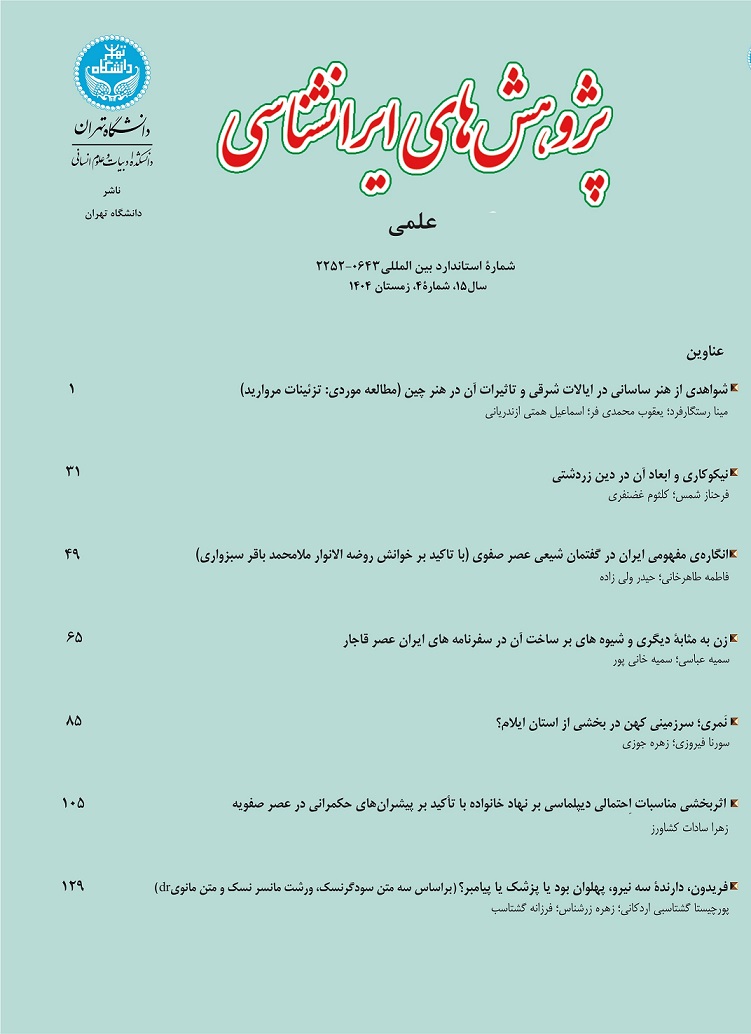
Evidence of Sasanian art in the eastern provinces and its influences on Chinese art
Pearl is one of the most frequent decorative elements and one of the symbols of the Fareh-Izadi spirit in Sassanid art. The expansion of all-round communication during this period led to the transfer of cultural concepts and themes of Sassanid art to other lands. The study of aspects of the influence of Sassanid culture and its popularity in China along the land route of the Silk Road is one of the main objectives of this research, and in the following, answers to important questions such as: By studying pearl motifs, what aspects of the influence of the artistic and religious thought of the Sassanid court on Chinese civilization can be examined? Was the use of pearl motifs in Chinese artworks conscious or is it a mere imitation in compliance with Sassanid court art? The geographical area under discussion, for the purpose of comparing the works, includes the eastern provinces of the Sassanid Empire and then in China. The nature of the present research is fundamental and its approach is descriptive, analytical-comparative and its collection method is library. The pearl decorative elements used in Buddhist temples, Sogdian tombs, or Manichaean sources are not simply imitations of the Sasanian aesthetic concept; rather, they are a conscious choice of its original concept and then the application of this art in a new religious and cultural context. It seems that the main factor in introducing Sasanian culture to neighboring nations was trade along the Silk Road, in contrast to the presence of numerous ambassadors and the sending of various gifts from the Sasanians to the Chinese court.
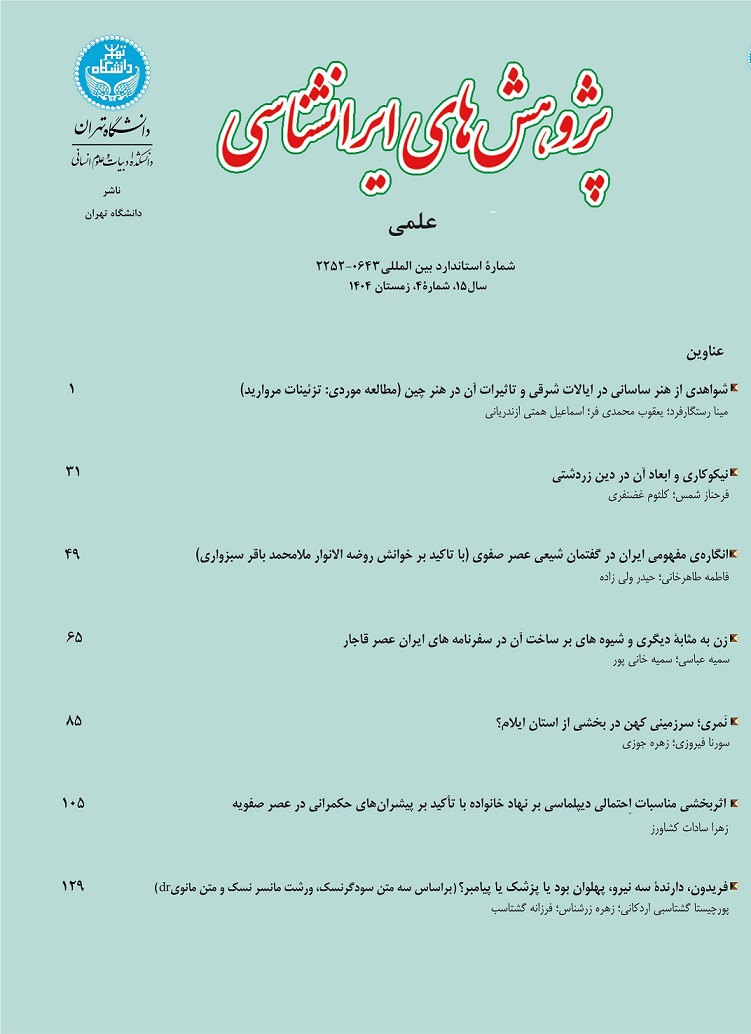
Charity and its dimensions in Zoroastrianism
One of the important concepts in Zoroastrianism is charity, which has significant teachings on it and has received special attention. Charity has a wide scope and dimensions, and understanding its examples, limits, and mechanisms can further clarify its individual, social, spiritual, and cultural functions. Considering the impact of charity on the psyche and life of individuals and society, explaining this concept and understanding its dimensions can clarify the perception and perspective of society and individuals towards it. The purpose of this article is to examine charity and its dimensions in Zoroastrianism, emphasizing Pahlavi texts that were organized and codified in the Sassanid period or the early Islamic centuries. Considering the time when these texts were written, we can become somewhat familiar with the definitions and activities of people, religious institutions, and the government apparatus in this field, which required interaction between them in this regard. Studies show that the interests of the individual and family, society and religious community have been considered in the discussion of charity. Among the important concepts in the Zoroastrian religion is charity, which has significant teachings on it and special attention has been paid to it. Charity has a wide scope and dimensions, and understanding its examples, limits and mechanisms can further clarify its individual, social, spiritual and cultural functions. Considering the impact of charity on the psyche and life of the individual and society, explaining this concept and understanding its dimensions can clarify the perception and perspective of society and individuals towards it.
Books & Monographs
Persian Poetry: Collections or scholarly works analyzing classical and modern Persian poetry (e.g., works of Hafez, Rumi, or modern poets)
Persian Philosophy: Books that explore the development of philosophical thought in the Persian-speaking world, from ancient to contemporary philosophers.
Persian History: Monographs detailing significant periods or events in Persian history, such as the Safavid, Qajar, or Pahlavi periods.
Iranian Religious Studies: Books focusing on Persian religious texts, Zoroastrianism traditions in Iran, and other religious influences in the region.
Persian Art and Architecture: Academic works that explore the development of Persian art, architecture, and design throughout history.
The Importance of Cypress in Persian History and CultureThanks to Sogol Nazari |
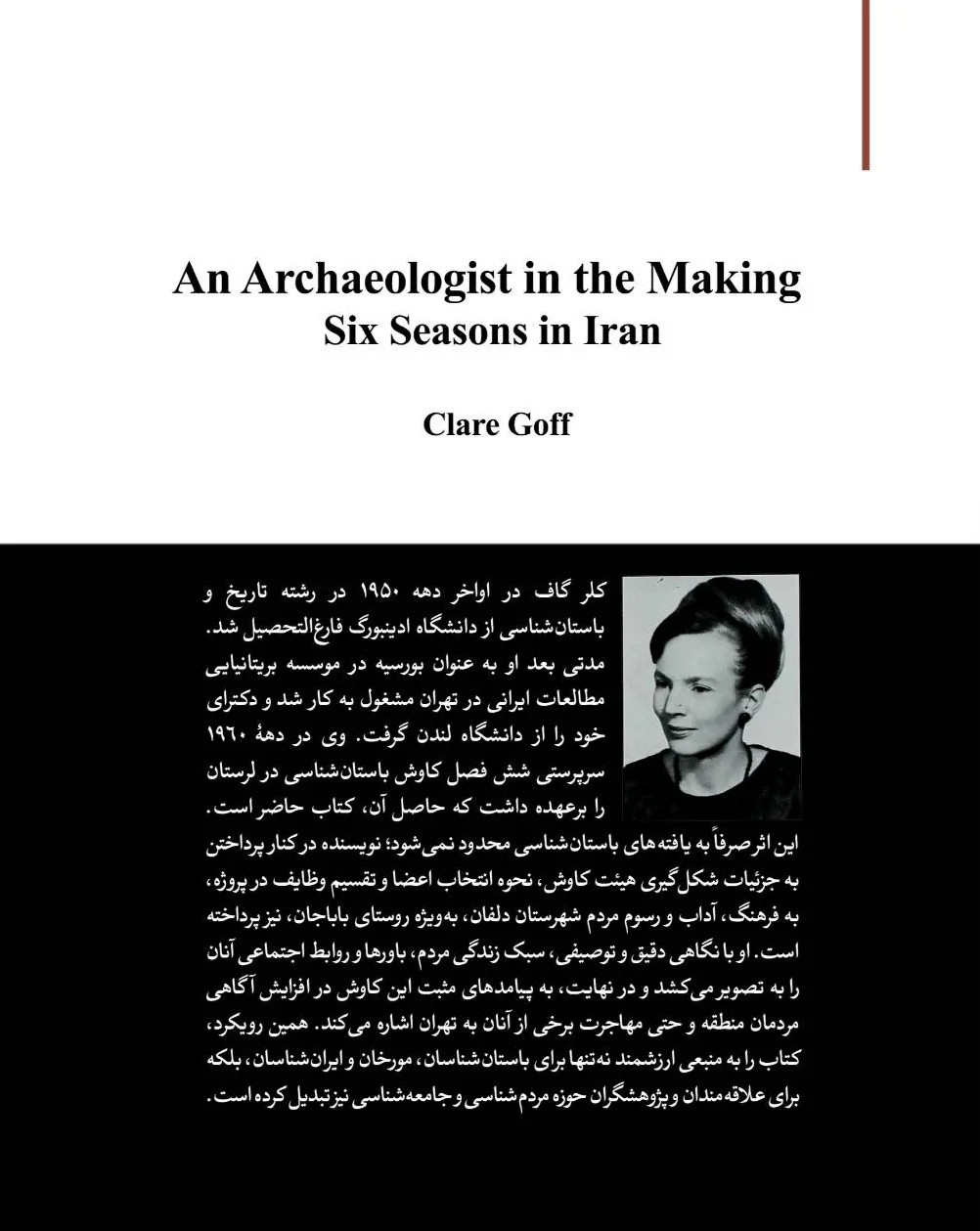 |
Six Seasons of Archaeology in Iran from Iranology Publication A Narrative of the First Excavations at Babajan Hill in Delfan by Claire Goff Translated by Parviz Hossein-Talaei in 358 Illustrated Papers |
Claire Goff, a graduate of history and archaeology from the University of Edinburgh, worked as a scholarship holder at the British Institute of Iranian Studies in Tehran and received her doctorate from the University of London. In the 1960s, she supervised six seasons of archaeological excavations in Lorestan Province, the result of which is the present books. This work is not limited to archaeological findings; in addition to discussing the details of the formation of the excavation team, the selection of members, and the division of tasks in the project, the author also discusses the culture, customs and traditions of the people of Delfan County, especially the village of Babajan.
Magazines & Periodicals
Persian Heritage: A magazine that covers the broader cultural and historical heritage of Iran, including traditions, customs, and Persian arts.
Iranian Literary Review: A periodical focusing on the works of Persian authors, poets, and playwrights from ancient times to contemporary works.
Cultural Iran: A general-interest magazine about Persian culture, offering insights into food, festivals, music, and other aspects of daily life.
Modern Persian Studies: Covers the intersection of contemporary Persian literature, social movements, and political studies in Iran.
Iranian Journal of the Arts: A magazine focusing on Persian visual arts, cinema, and performance.
Achaemenid Ruins in Turkey and Sassanid Ruins in Turkey
How the Turkish Language Came to Azerbaijan
Art and Literature: The Safeguard of Local Languages
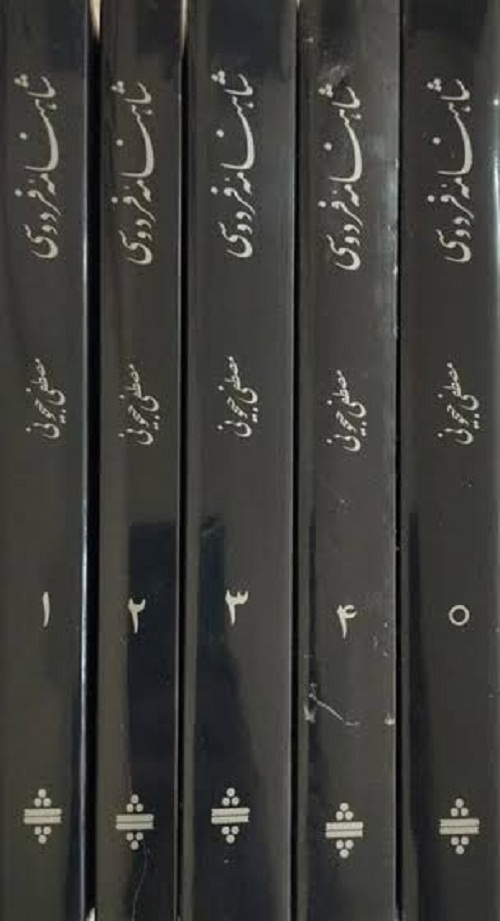
A cultural decision in defence of public access to Ferdowsi’s legacy; the story of a 12yr scholarly edition that, after more than two decades, has found its way to researchers and Shahnameh enthusiasts at the editor’s own request and insistence. At a time when the sharp rise in the cost of books has made access to the Shahnameh and specialised research increasingly difficult for many enthusiasts, the decision by Mostafa Jeyhuni, a renowned Shahnameh scholar and editor, to make his critical edition of this monumental work publicly accessible represents a noteworthy event in Iran’s cultural and academic landscape. Rather than being merely an act of publishing a book, this decision can be seen as a sign of a responsible approach towards literary heritage and the necessity of making foundational texts of Iranian culture available to the public.
 |
 |
The Arabs have stated somewhere that an Arab cannot have a Shahnameh. It should be stated that writing a Shahnameh requires having a nation, and if a nation turns into an ummah; then it will no longer be possible; there would be a Shahnameh. Not only can the Arabs not have a Shahnameh, but they will not have Hafez and Saadi either. Hafez is the expression of our national myth. We are an unseen nation, and Hafez is the language of the unseen because it is the language of a nation. The concept of Iranshahri and the thought of Iranshahri are, in fact, an attempt to explain that the Iranian nation is a different nation. Our logic is different from the logic of the nation, and we are a nation, with a specific history and a diversity of different ethnicities and dialects.
Javad Tabatabai was a prominent Iranian philosopher, political scientist, and historian. He served as a professor and vice dean of the Faculty of Law and Political Science at the University of Tehran, and was widely known for his extensive critique of political tradition, modernity, and the history of political ideas in both Europe and Iran.
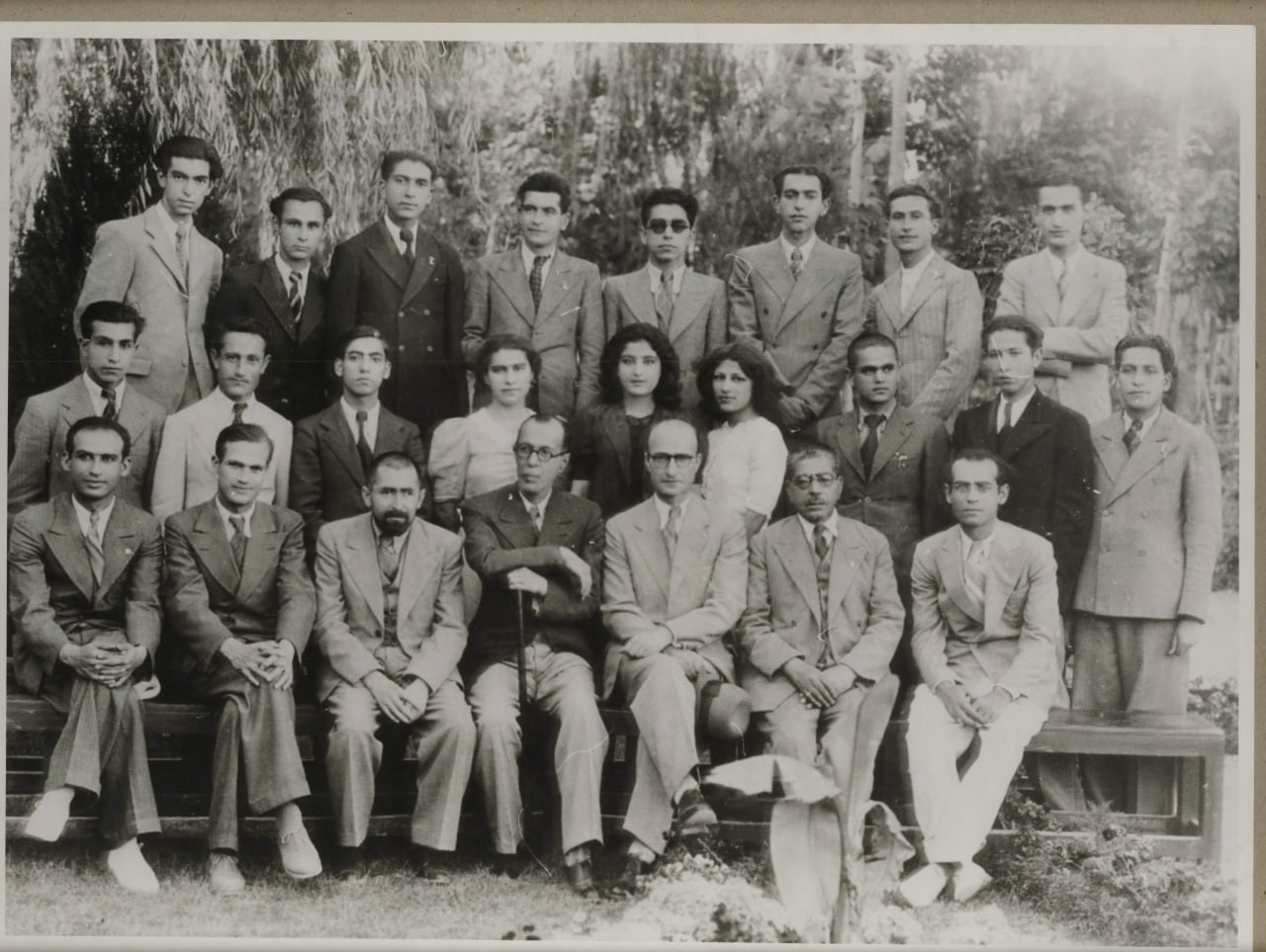
From the Central Library's archival photos: Dr. Ali Akbar Siasi, Professor Malek al-Shu'ara Bahar, and Dr. Badi'ez-Zaman Forouzanfar

University of Tehran, The History Documents Elaborated by Dr. Susan Asili
Iran Studies is a scientific-research journal affiliated with the Faculty of Literature and Humanities of the University of Tehran, which aims to expand and advance knowledge in the fields of Persian history, culture, language, literature, and civilization. This quarterly journal publishes a maximum of four issues annually and provides a platform for publishing original and innovative research in various fields of Iran Studies. The articles in this journal analyze and examine various aspects of “Cultural Iran” such as history and archaeology, Persian literature and linguistics, ancient languages, philosophy, mysticism, religion, art, anthropology, folklore, subcultures, handicrafts, and local customs and traditions. This quarterly journal was published during a period under the supervision of the late Dr. Mozaffar Bakhtiar and the management of the late Dr. Iraj Afshar, and with the support of a group of prominent domestic and international professors. Among the internal members, we can mention Dr. Haeri, Dr. Zaryab Khoei, Dr. Sotoudeh, Dr. Shahidi, Dr. Navabi, Dr. Farmanfarmaian, Dr. Mohaghegh, Dr. Minovi, and Dr. Negahban. Also, the participation of external members such as Dr. Nasr, Dr. Roimer, Dr. Erzi, Dr. Scarchia, Dr. Boyle, Dr. Sivari, and others was effective in enriching it. Subsequently, by the decision of the officials of the faculty and University of Tehran publications and in order to improve the quality and specialization of publications, the Faculty of Literature Journal was separated into several specialized journals. One of these journals is the Quarterly Journal of Iranological Studies, which continues to independently carry out its mission. In accordance with the letter No. 100159 dated 15/06/1391 of the Scientific Publications Commission of the Ministry of Science, Research, and Technology, this journal has a scientific-research rank. The Quarterly Journal of Iranological Studies seeks to familiarize the scientific community with the latest research achievements in the field of Iranological Studies; to help preserve and recognize Iran's cultural heritage; Providing a specialized platform for researchers to exchange views; this journal, relying on its rich scientific and historical background, always welcomes credible and original research articles in fields related to Iranology.
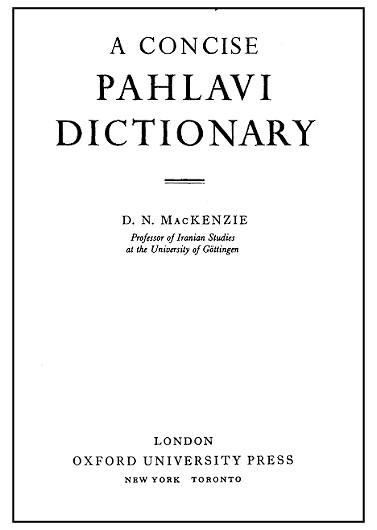 |
Iranophobia in the Historiography of Tsarist Russia |
Translation & Anthologies
Persian Poetry Translations: A series of books featuring English (or other languages) translations of classical and contemporary Persian poets.
Anthology of Iranian Fiction: Collections of short stories or novels from Persian authors, translated into multiple languages.
Persian Literature in Translation: A journal or series dedicated to translating and publishing Persian literary works into other languages.
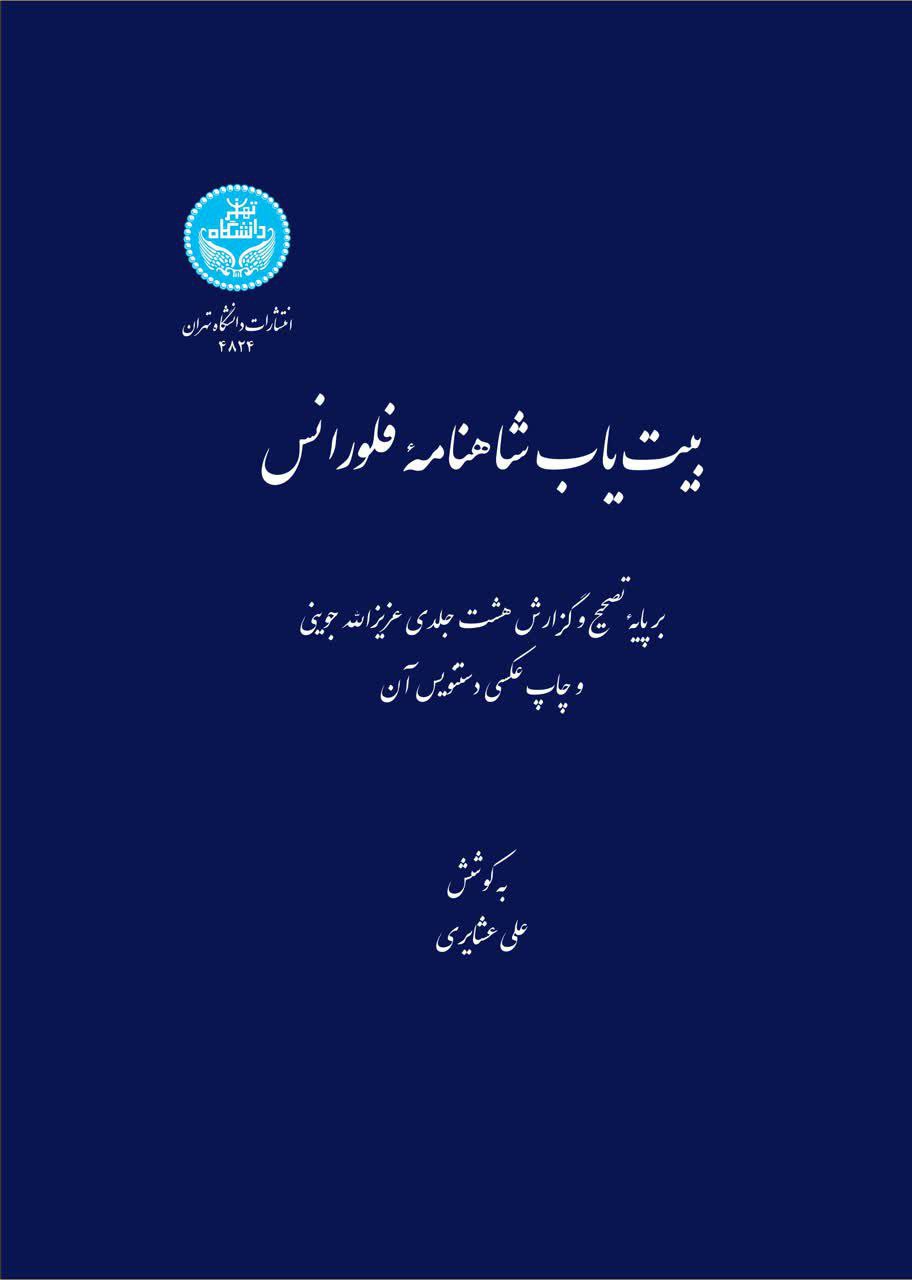
The book "The Finder of the Verses of the Shahnameh of Florence, Based on the Correction and Eight-Volume Report of the Late Dr. Azizollah Juveini and a Photocopy of its Handwritten Copy," was published by the University of Tehran Publishing Institute through the efforts of Ali Ashayeri, a PhD student in Persian Language and Literature at the University of Tehran.
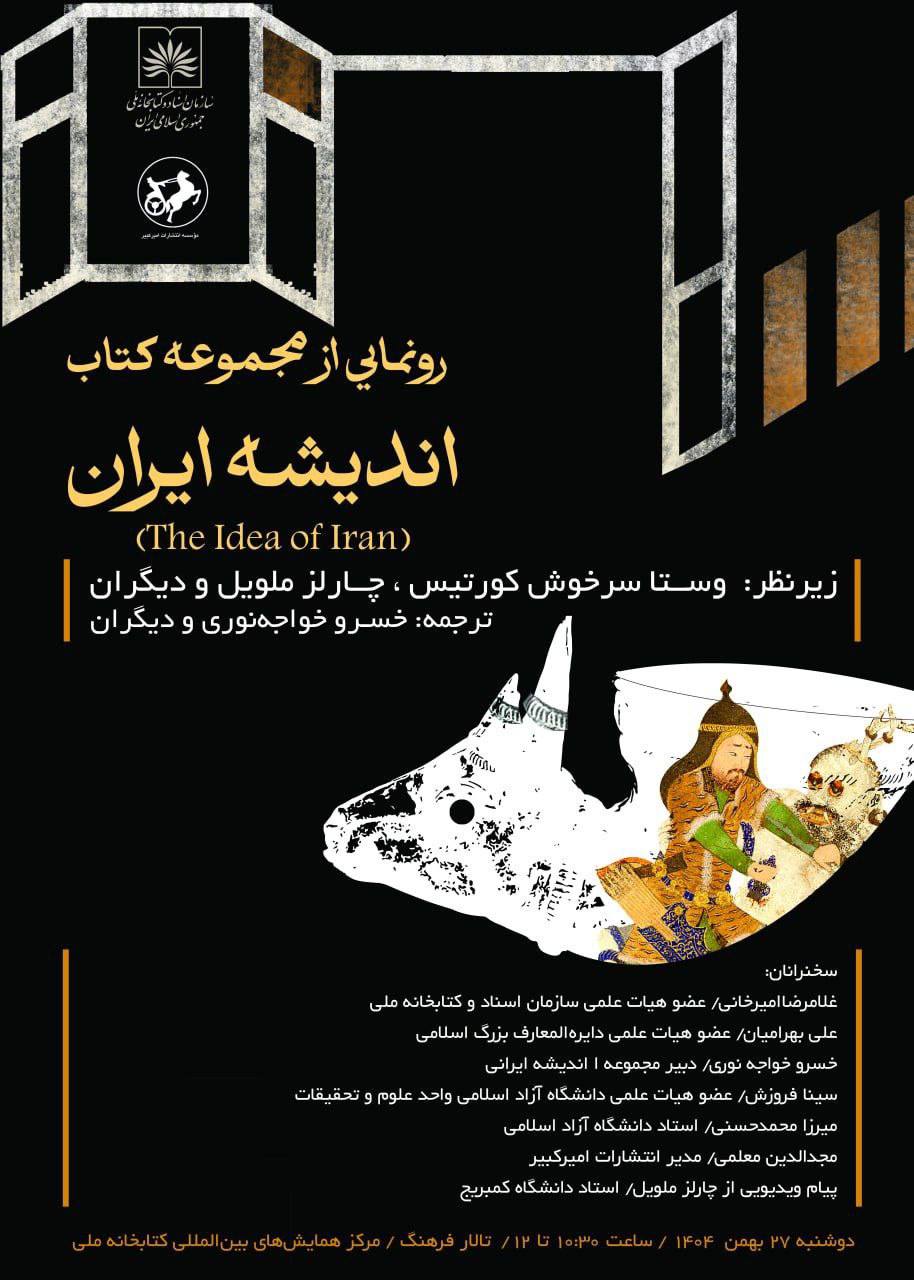
The "Iranian Thought" series is an interdisciplinary and international research project, compiled in 11 independent volumes, examining the history of Iran from ancient Iran to the Safavid period. In this series, "Iran" is studied not only as a political entity, but also as a historical, cultural, and civilizational idea.
The 11-volume "Iranian Thought" series is published by I.B. Tauris (a Bloomsbury subsidiary) and is recognized internationally as one of the leading projects in contemporary Iranology.
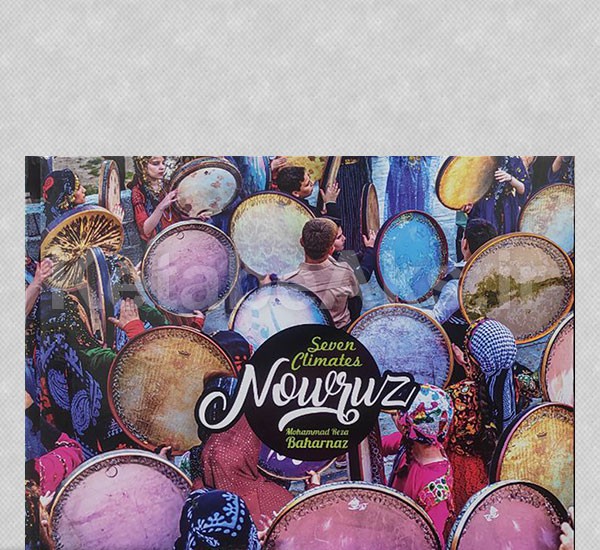
According to the Iranian Artists' House News Office, the first volume of this collection is dedicated to Nowruz rituals in Iran in 240 pages. In addition to examining the classic Nowruz, including Haji Firuz, Chaharshanbeh Souri, Eid shopping and Sizde Bedar, this volume also documents the indigenous rituals of the six provinces of Mazandaran, Tehran, Gilan, Kerman, Kurdistan and Hormozgan. The Nowruz ritual among Zoroastrians in the cities of Yazd, Kerman and Tehran has also been thoroughly examined.
The second volume of this book deals with the Nowruz rituals in 9 countries in the Nowruz cultural area where this celebration has been registered worldwide, including Tajikistan, Turkmenistan, Kyrgyzstan, Kazakhstan, India, Azerbaijan, Iraq and China (with a focus on the Uyghurs).
The author of this work has been present in different regions every year during Nowruz and has collected these works during the years of research.
Textbooks & Educational Materials
Introduction to Persian Language: Textbooks for learners of Persian, ranging from beginner to advanced levels.
Persian Grammar & Syntax: Scholarly books detailing the rules and structures of the Persian language.
Persian Calligraphy: Guides and textbooks on the art and techniques of Persian script and calligraphy.
Persian Folklore and Mythology: Educational materials about Persian folklore, myths, and legends.
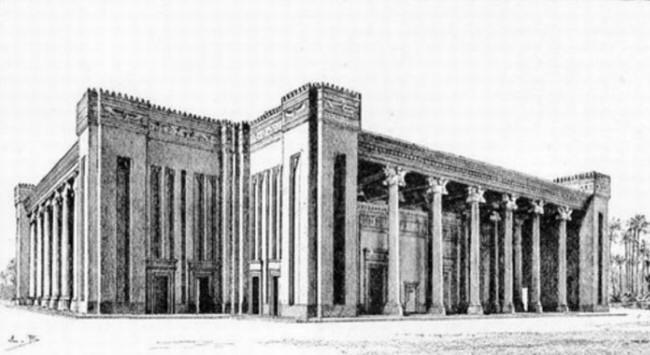
From Median to Achaemenian Palace Architecture
Author(s): Dietrich Huff
The Achaemenian Apadana-type palace appeared under Darius I. (522486 BC) in its fully developed shape and continued to be built basically unchanged throughout the Achaemenian period. The question of its formation remained open despite repeated discussions. A serious problem for the solution of the question is a certain incompatibility with its historically secured predecessors, the palatial buildings of Cyrus in Pasargadae. The basic problem however, seems to be the limitation of research to formal developments. Architecture cannot be understood as an art-historical phenomenon alone. It is the result of an entirety of habits of life, of functional, practical, technical, emotional traditional and esthetical factors.
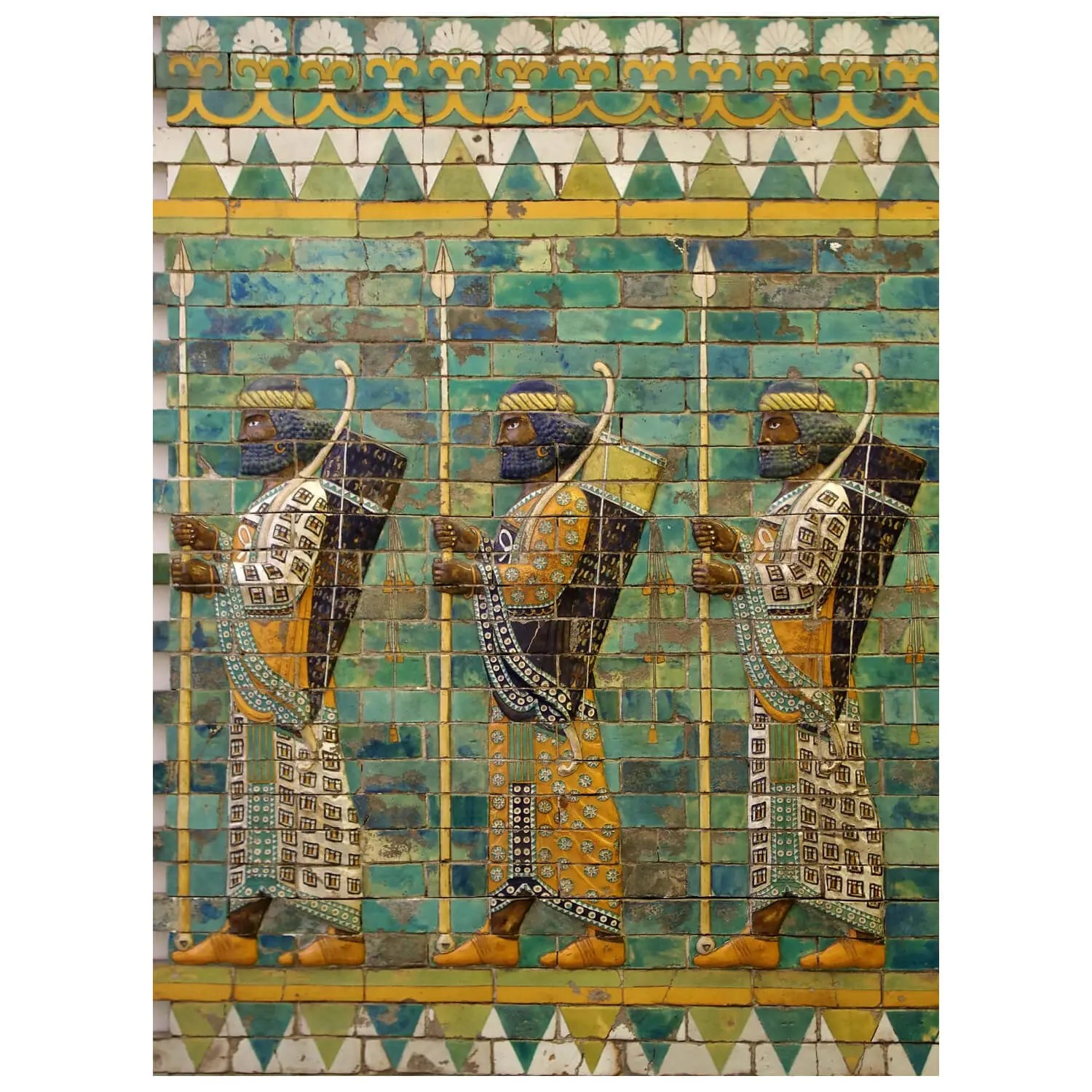
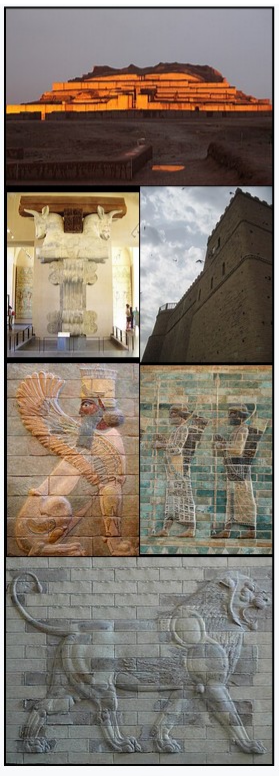
The Immortal Guard Soldiers' Relief is a unique ancient artifact discovered in the Apadana Palace of Susa in Khuzestan Province, Iran. The prominent relief of the three spearmen and archers of the Immortal Guard is made of glazed colored bricks. The relief shows three soldiers of the Immortal Guard of the Achaemenid Empire standing back to back, each holding a spear. The Immortal Guard, the most elite fighting force in the world at the time, was part of the vast Achaemenid army, numbering exactly 10,000 and their main job was to guard and protect the emperor. The relief is kept in the Pergamon Museum in Berlin.
|
The Mandaeans, followers of John the Baptist, celebrated the beginning of their year 445,395. According to this tradition, which marks the New Year as coinciding with the creation of Adam, the year begins at the end of Tir (the month of 'Dulla'). Followers call the first two days 'Dehwa Rabba' (the Great Feast); after performing baptism rituals along the banks of the Karun River, they begin a 36-hour period of retreat. |
|
|
Susa is located in the south-west of Iran, in the lower Zagros Mountains, the property encompasses a group of archaeological mounds rising on the eastern side of the Shavur River, as well as Ardeshir’s palace, on the opposite bank of the river. The excavated architectural monuments include administrative, residential and palatial structures. Susa contains several layers of superimposed urban settlements in a continuous succession from the late 5th millennium BCE until the 13th century CE. The site bears exceptional testimony to the Elamite, Persian and Parthian cultural traditions, which have largely disappeared. |
800 years old chess of Neyshabur
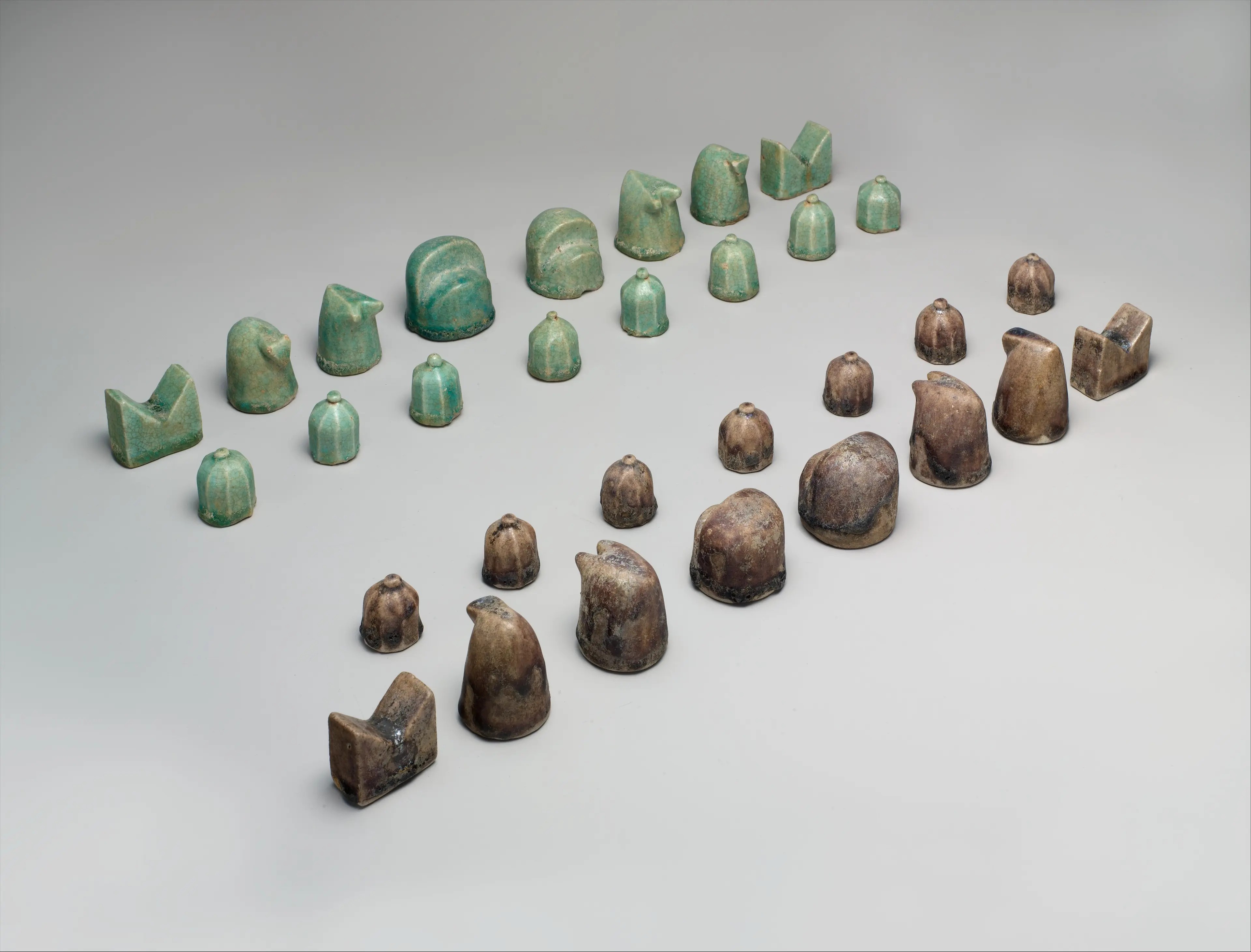
This fragment is from an 800-year-old pottery chess set discovered in the historic region of Nishapur and now housed in the Metropolitan Museum of Art in New York. The pieces are made of glazed pottery and plain earthenware, and unlike modern chess pieces, they have simple, abstract, and symbolic forms. The colors used are a combination of turquoise green on one side and brown on the other. The creation of such a set is a sign of the spread of chess in Iran after the Tazyan invasion; a period when Nishapur was considered a leading metropolis in the Seljuk Empire, which had earlier been a major center of Zoroastrianism (Mazdayasna). The abstract form of the pieces, especially the king, queen, rook, and knight, shows that Persian artists paid more attention to the meaning and position of each piece in the game than to realistic representation. In addition to its historical value, this chess is a reflection of the Persian cultural understanding of entertainment, thought, and art in the Middle Ages.
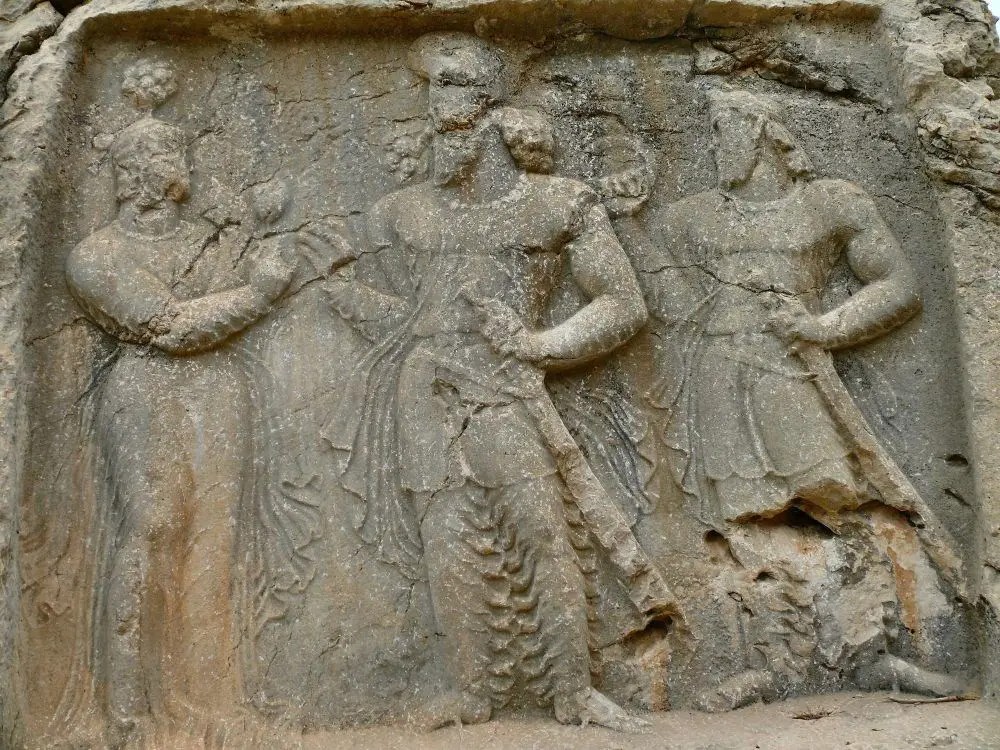 |
This bas-relief is one of the most beautiful works of Sasanian Iran, depicting the wedding of King Bahram II and Queen Shapurdukht. The work reflects the splendor and glory of the Sasanian court with artistic precision. In the center of the bas-relief, the King is seen with a strong figure and a dignified face, whose formal dress and royal jewelry indicate his status and power. On the left, Shapurdukht, with a silk wedding dress and decorated hair, is holding the King’s hand or presenting him with a symbol such as a flower or a ring, which in a way indicates a marriage contract and alliance. On the right side of the image, a member of the King’s royal family is also present, symbolically showing the power and support of this alliance.
The details of this bas-relief demonstrate the skill of Persian artists in the Sasanian period in combining realism and symbolism. The carved lines on the clothes show the meticulous attention to the texture and design of the fabrics of that period, which is considered to be a reflection of the wealth and splendor of the royal family. In addition, the facial expressions and gestures clearly show the emotional connection between the emperor and the queen. This work is not only a historical scene but also an artistic document of the values, rituals and role of the royal family in Persian culture during the Sassanid dynasty.
This work, also known as the Tang Qandil relief, is located in the city of Chenarshahijan, Fars Province, in the village of Qandil.
Online Blogs & Digital Publications
Persian Studies Blog: A digital publication focused on current developments in Persian studies, including literature, linguistics, and culture.
Digital Persian Literature Archive: An online platform that preserves and shares Persian literary works in digital formats.
Persian Language Learning Resources: Websites, podcasts, or digital newsletters for learning Persian as a second language.
|
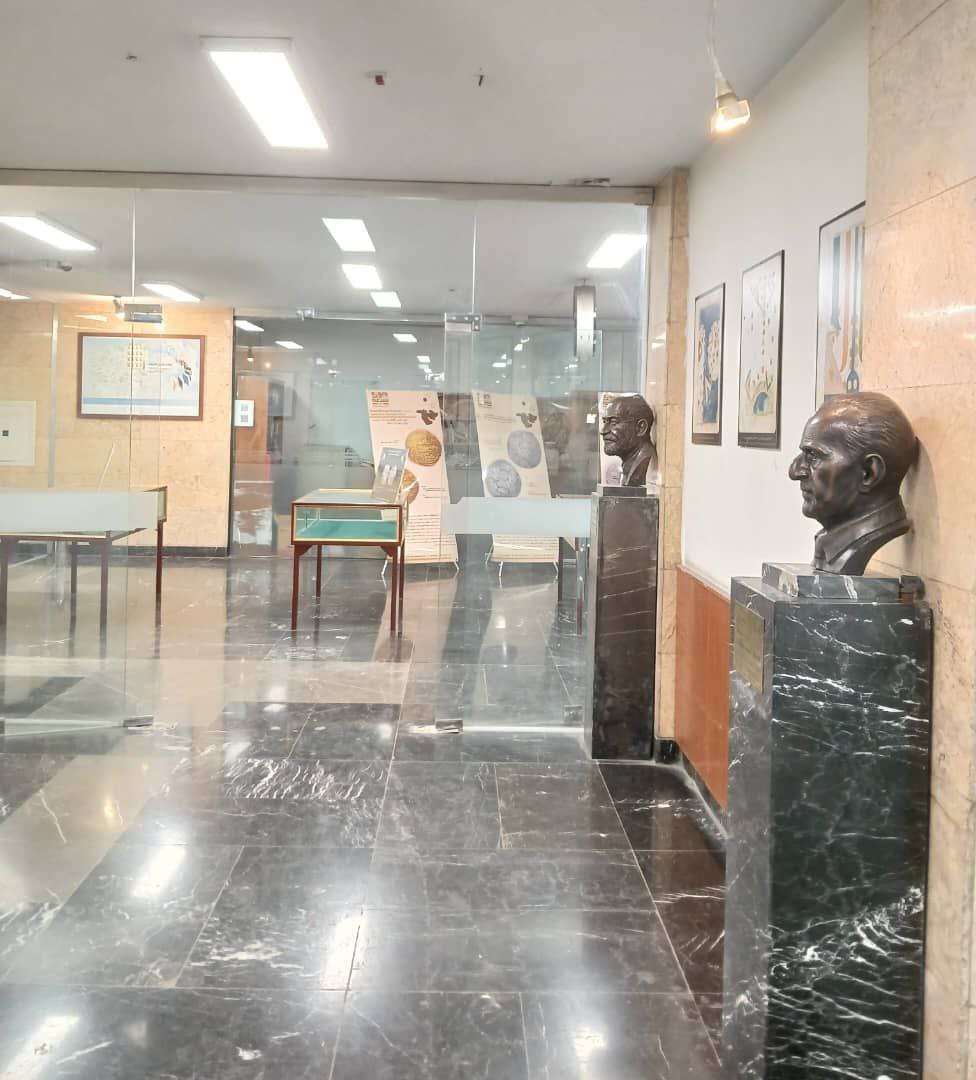
The bust of Professor Pourdavoud is located on the ground floor of the Central Library. Ebrahim Pourdavoud (20 Bahman 1264 – 26 Aban 1347) was a modern Iranian scholar, the first Avesta specialist and a professor of ancient Iranian culture and the Avestan language at the University of Tehran.
|
An Ancient Prayer for the Unity and Freedom of Our Motherland, recommended in these difficult days by the learned Vada-Dasturji Saheb Firoze Kotwal: |
Dasturji Kotwal is one of the most distinguished contemporary Parsi Mobeds in India, a scholar who, alongside his priestly duties, has devoted decades of his precious life to the study and teaching of Pahlavi and Avestan texts, as well as the ancient rituals and traditions of the Zoroastrian faith. He has taught and conducted research for many years at universities and centers of Persian studies around the world, and has authored numerous valuable works and articles on religious traditions and texts. For this reason, he is regarded in academic circles as a “living encyclopedia of Zoroastrianism,” and many Zaratustis and Parsis consider his status comparable to that of the Mobedān Mobed of the Sasanian era.
Vada Dasturji Kotwal, due to his humility and kindness, is also a well-known and inspiring figure among young Parsis and Zoroastrians especially in Iran. He is a spiritual guide who consistently speaks with compassion about preserving religious traditions and embodies them beautifully in his own life.
He is among those Mobeds who, since the beginning of the recent events in Iran, has remained attentive to the condition of fellow believers, and with the intensification of violence and the shadow of war, has continually expressed his sympathy and spiritual support. Recently, in response to an email sent by one of the community members regarding the situation in Iran and requesting prayers for the people, he offered a profound and guiding reply, which has been shared with us with his permission.
More Resources:
 |
Avesta.org Zoroastrianism Basics |
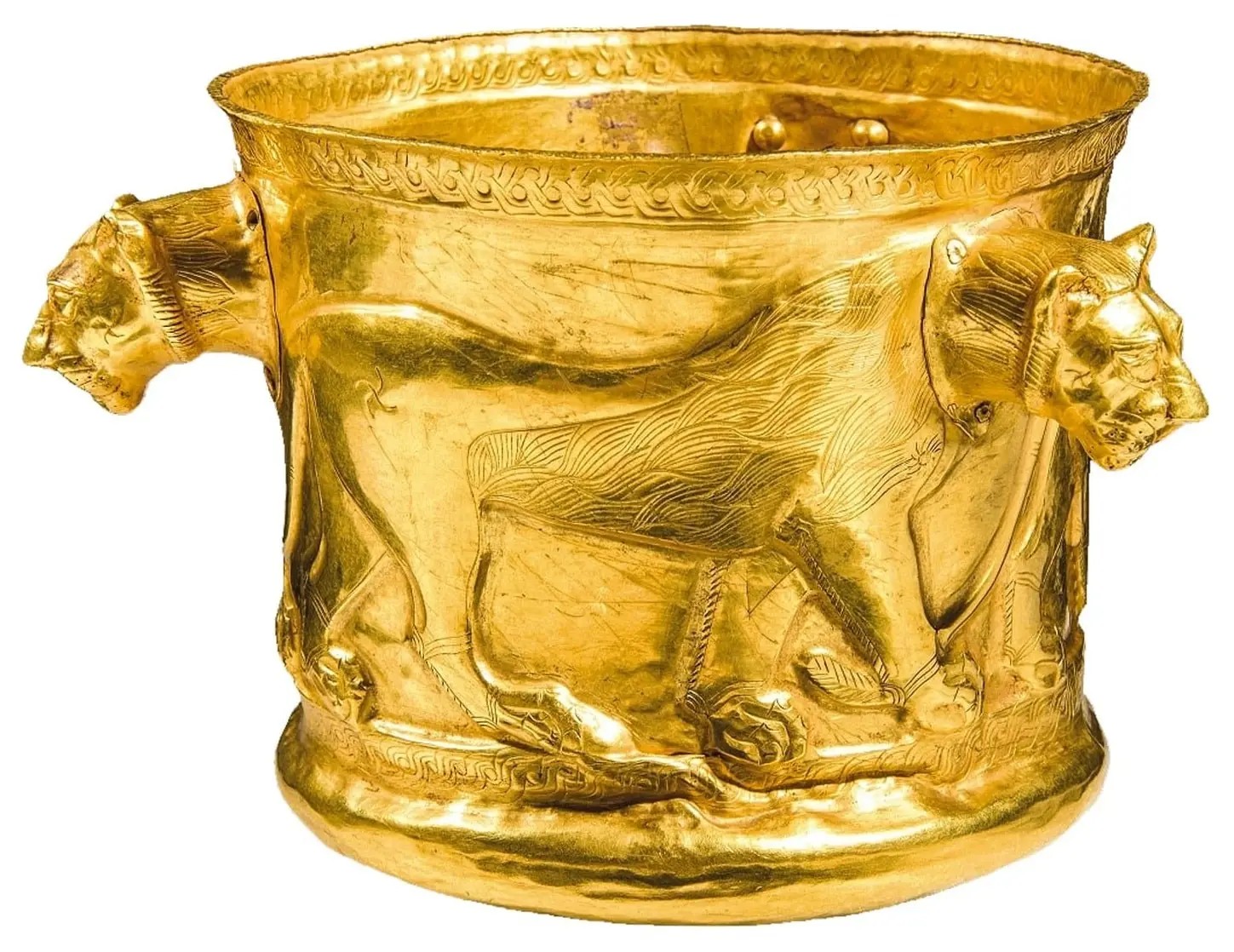
The Golden Cup of Lions, also known as the Kelardasht Cup, is a unique ancient artifact discovered in the Kelardasht region of Mazandaran Province, Iran. It is currently preserved in the National Museum of Iran in Tehran. Based on its artistic style, the cup is dated to a period between 1000 and 600 BCE.
In 1934, during the construction of the Ajabit Summer Palace on the Kelardasht Plain, Iron Age burial sites were uncovered. The objects recovered from these tombs became known as the “Kelardasht Treasure” and include weapons and vessels made from precious metals.
The Kelardasht Golden Cup stands 10 centimeters tall and features a row of lions in relief. The lions’ heads were crafted separately and riveted to the sides of the cup. Swastika symbols are depicted on the lions’ cheeks and haunches, while solar-wheel motifs appear on their chests. The upper and lower edges of the cup are decorated with a chain-pattern border. On the base of the cup is a geometric medallion enclosed within a chain band, inside which six-petaled flowers are engraved.