
Maritime Power, Imperial Strategy, and the Origins of Persian Naval Organization
Abstract
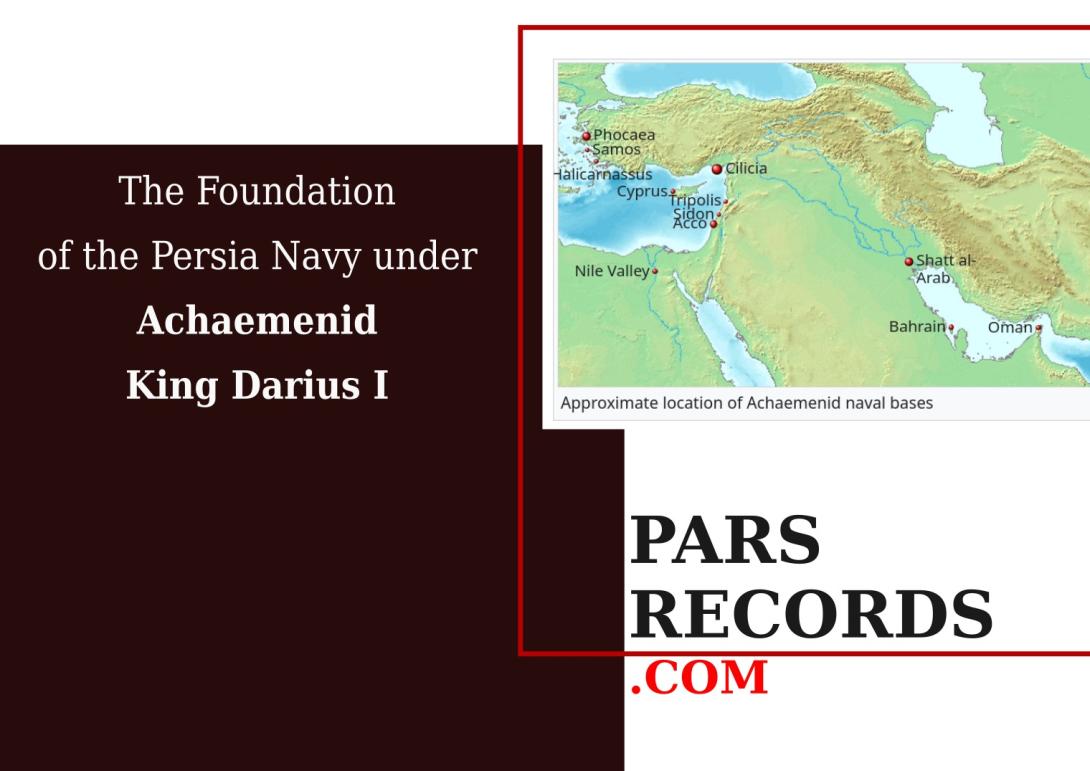
The establishment of a structured naval force under the Achaemenid Empire represents one of the most significant developments in the history of Persian maritime power. While maritime activities in the Persian world predate the Achaemenids by millennia, the reign of King Darius I (r. 522–486 BCE) marked a decisive transformation from regional seafaring traditions into an organized imperial naval system. Through the integration of Persian, Egyptian, Phoenician, Ionian, and other maritime traditions within the empire, Darius created the foundations of a multinational navy capable of supporting military campaigns, securing trade routes, and projecting imperial authority across the eastern Mediterranean, the Red Sea, and the Persian Gulf. This article examines the origins, structure, strategic role, and historical significance of the Achaemenid navy, arguing that Darius’s naval reforms constituted the first large-scale state-sponsored maritime organization in Persian history.
 |
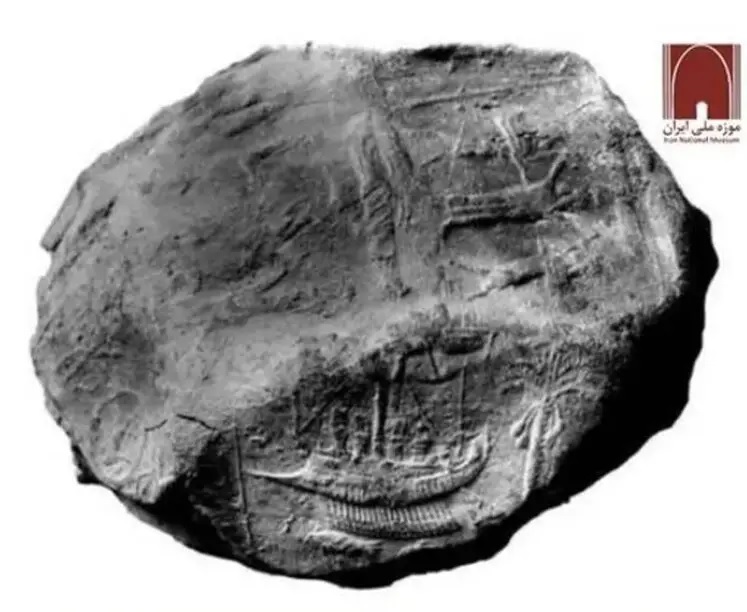 |
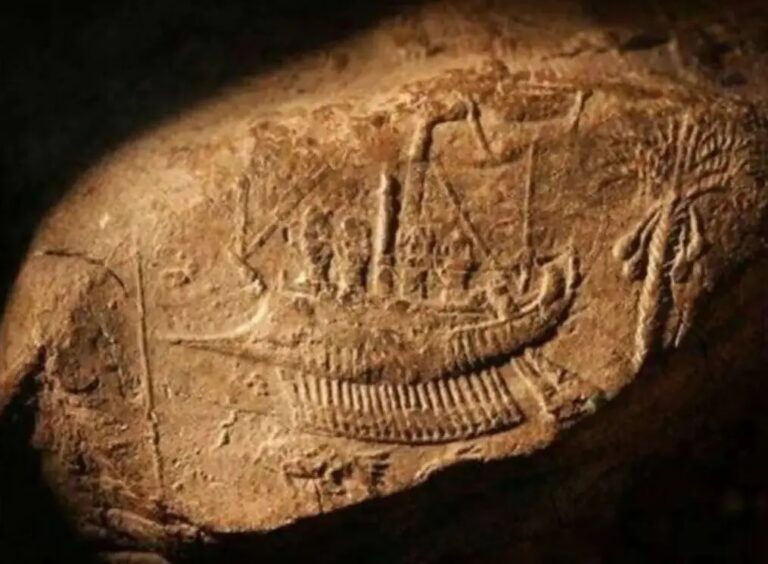
Object: Seal impression depicting a warship
Cultural Period: Achaemenid, approximately 492–460 BCE
Discovery Site: Persepolis Treasury
Image Dimensions: Approximately 2.5 cm
Inventory Number in the National Museum of Iran: 1921/58 (Excavation number: PT4 704)
Introduction
Iran’s maritime history extends far beyond the establishment of the Achaemenid Empire. Archaeological evidence from sites such as Chogha Mish in southwestern Persia suggests that communities in ancient Khuzestan engaged in maritime activities as early as the sixth millennium BCE. The waters surrounding the Persian plateau — particularly the Persian Gulf and the Gulf of Oman — served as important corridors for commerce, migration, and cultural exchange long before the emergence of imperial states.
However, the transformation of maritime activity into a systematic instrument of state power occurred during the Achaemenid period. Under King Darius I, the Persian Empire developed naval capabilities on an unprecedented scale. Although the empire inherited maritime traditions from earlier civilizations, including Mesopotamia, Elam, Egypt, and coastal communities of the eastern Mediterranean, Darius organized these resources into an imperial naval framework.
The Achaemenid navy was not simply a military institution; it was an essential component of imperial administration, economic expansion, and geopolitical strategy. Through naval organization, Darius extended Persian influence from the Persian Gulf to the Red Sea and the Mediterranean world.
Early Persian Maritime Traditions before the Achaemenids
The maritime history of Persia is closely connected to the geography of the Persian Gulf. Ancient settlements along the Persian coast participated in networks of trade linking Mesopotamia, the Arabian Peninsula, the Indian subcontinent, and East Africa.
Archaeological discoveries demonstrate that early inhabitants of southwestern Persia possessed knowledge of watercraft and maritime transportation. The site of Chogha Mish, located in modern Khuzestan, has produced evidence interpreted by some scholars as among the earliest representations connected with seafaring. These findings indicate that maritime technology and navigation were embedded in Persian civilization long before the rise of imperial Persia.
During the Bronze Age and Iron Age, coastal regions of Persia maintained connections with neighboring civilizations. Trade in goods such as metals, textiles, ceramics, and luxury products encouraged the development of increasingly sophisticated maritime skills. Nevertheless, these activities remained primarily commercial and regional until the rise of the Achaemenid Empire.
Darius I and the Creation of an Imperial Naval System
Darius I inherited the largest empire of the ancient world, stretching from Central Asia and the Persian plateau to Egypt and the Aegean coast. Governing such a vast territory required not only land armies but also effective maritime transportation and naval forces.
Unlike earlier regional powers, the Achaemenids approached naval power as an imperial necessity. Darius incorporated the maritime expertise of conquered peoples, particularly the Phoenicians, Egyptians, Cypriots, and Greeks of Asia Minor. Rather than replacing existing naval traditions, the Persian state brought them together under imperial command.
Ancient sources, especially the works of Herodotus, describe the Persian fleet during the reign of Darius and his successors as a multinational force. Ships were supplied by various regions of the empire, with Phoenician and Ionian sailors among the most skilled maritime personnel.
The Achaemenid navy consisted primarily of triremes and other oared vessels, supported by transport ships and specialized craft. These fleets allowed Persia to move troops, supplies, and officials across maritime zones that were impossible to control through land forces alone.
The Persian Navy and the Expansion of Imperial Power
One of the clearest demonstrations of Darius’s maritime strategy was his campaign against the Scythians around 513 BCE. According to Herodotus, Persian forces crossed the Bosporus using a bridge of ships constructed by engineers under Darius’s authority. This operation demonstrated the ability of the Achaemenid state to coordinate large-scale maritime engineering and logistics.
The navy also played a crucial role in the Persian campaigns against Greek city-states. During the Ionian Revolt (499–494 BCE), Persian naval forces helped suppress rebellion among Greek coastal territories. The Battle of Lade in 494 BCE, where the Persian fleet defeated the Ionian rebels, illustrated the effectiveness of the Achaemenid maritime system.
Although later Persian defeats in Greece — particularly at Salamis in 480 BCE during the reign of Xerxes I — are often emphasized in classical narratives, these events should not obscure the fact that the Achaemenid navy remained one of the most powerful maritime forces of the ancient world.
Darius, the Red Sea Canal, and Maritime Connectivity
Beyond military purposes, Darius recognized the economic and strategic importance of maritime infrastructure. One of his most ambitious projects was the improvement of the ancient canal connecting the Nile River with the Red Sea.
The canal, which followed earlier Egyptian attempts at connecting these waterways, created a strategic maritime route between Egypt and the Red Sea. Inscriptions discovered in Egypt record Darius’s role in completing and promoting this project.
This canal had major implications:
- It strengthened communication between Egypt and the Persian heartland.
- It facilitated trade between the Red Sea, Arabia, and the Indian Ocean.
- It allowed Persian officials and merchants to move more efficiently across the empire.
Through this project, Darius demonstrated an understanding that naval power depended not only on warships but also on infrastructure, ports, and commercial networks.
The Persian Gulf and Achaemenid Maritime Strategy
Although much historical attention has focused on Persian naval activity in the Mediterranean, the Persian Gulf remained a vital maritime zone for the Achaemenid Empire.
The Gulf connected Persia with Arabia, India, and East Africa. Ports along the Persian coast served as centers of commerce and administration. The empire’s control over these waters enabled the movement of resources and strengthened economic integration among distant provinces.
Achaemenid maritime policies also influenced later Persian traditions of navigation. The long history of Persian Gulf sailing, shipbuilding, and maritime trade can be viewed as part of a broader continuity extending from ancient Persia through later Persian coastal societies.
The Legacy of Darius’s Naval Organization
The significance of Darius I’s naval reforms lies not only in the ships constructed or battles fought but in the creation of a governmental approach to maritime power.
The Achaemenid navy represented several historical innovations:
- State organization of naval resources: Maritime forces became part of imperial administration rather than local initiatives alone.
- Multicultural integration: The Persian Empire combined the naval expertise of many peoples into a unified imperial system.
- Strategic use of maritime infrastructure: Ports, canals, and sea routes became instruments of political and economic control.
- Connection between navy and diplomacy: Naval capability allowed Persia to influence regions beyond its immediate borders.
For Persian history, Darius’s naval organization represents a turning point when ancient maritime traditions became an expression of imperial power.
Conclusion
The claim that Darius I founded the Persian navy should be understood within the broader context of ancient Persian maritime development. Seafaring traditions existed in the Persian world thousands of years before the Achaemenid period, but Darius transformed these scattered maritime practices into an organized imperial naval system.
By combining the skills of various maritime communities, constructing strategic infrastructure, and employing naval forces in both military and economic contexts, Darius established the foundations of Persian naval power. His policies demonstrated that control of the seas was essential to governing a vast empire.
The Achaemenid navy was therefore not merely a military fleet; it was a reflection of imperial ambition, technological achievement, and Iran’s enduring relationship with the maritime world. Through Darius’s vision, ancient Persia became one of the first great land empires to recognize that mastery of the sea was indispensable to the exercise of global power.
PARSRECORDS.COM
Page Term Reference
Comments