
PARS ENTERPRISE (SINCE2015) IS A WORLD NATIONAL DEDICATION BY MONTAZERI.ORG
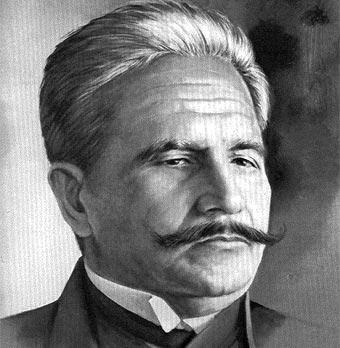
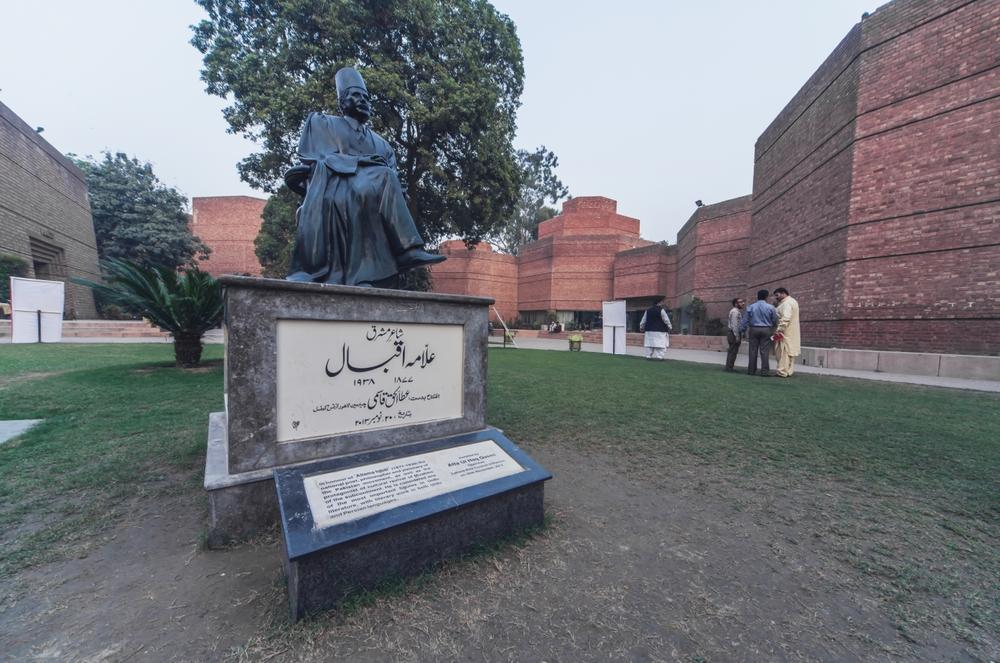
Sir Muhammad Iqbal (9 November 1877 – 21 April 1938), widely known as Allama Iqbal and in Persian literary tradition as Iqbal Lahori (Iqbal of Lahore), was one of the most influential poets, philosophers, thinkers, lawyers, and political figures of the modern Muslim world. He is regarded as one of the greatest poets of Urdu and Persian literature and is often called the “Spiritual Father of Pakistan” because of his intellectual contribution to the idea of a separate Muslim homeland in South Asia.
Early Life and Family Background
Muhammad Iqbal was born on 9 November 1877 in Sialkot, in the Punjab region of British India (present-day Pakistan). His family belonged to a Kashmiri background and was known for its strong religious and intellectual traditions. His father, Sheikh Noor Muhammad, was a deeply spiritual person whose influence played an important role in shaping Iqbal’s worldview. (Poetry Foundation)
From an early age, Iqbal showed exceptional interest in literature, languages, and philosophy. He studied Arabic, Persian, Urdu, and Islamic thought under the guidance of respected teachers, especially Syed Mir Hassan, a scholar who encouraged his literary talents. (Iranica Online)
Education
Iqbal received his early education in Sialkot and later moved to Lahore, where he studied at Government College Lahore. He earned degrees in philosophy, English literature, and Arabic and became known as a brilliant student and poet. After completing his studies, he taught philosophy and literature at institutions in Lahore. (Home)
In 1905, Iqbal traveled to Europe for higher studies. He studied philosophy at Trinity College, Cambridge, and later received a doctorate in philosophy from the University of Munich in Germany for his dissertation titled The Development of Metaphysics in Persia. He also studied law at Lincoln’s Inn, London, and qualified as a barrister. (Poetry Foundation)
Literary Career
Iqbal became famous as a poet writing primarily in Urdu and Persian. His poetry combined Islamic philosophy, spirituality, self-development, social criticism, and a call for intellectual awakening. His works addressed themes such as human dignity, freedom, creativity, and the revival of Muslim civilization. (Routledge Expert Portal)
Some of his most important literary works include:
Persian Works
- Asrar-i-Khudi (The Secrets of the Self, 1915)
- Introduced his famous concept of Khudi (Selfhood), which emphasized the development of individual potential and spiritual strength.
- Rumuz-i-Bekhudi (The Mysteries of Selflessness, 1918)
- Explored the relationship between the individual and society.
- Payam-e-Mashriq (Message of the East, 1923)
- Written partly as a response to Goethe’s West–Eastern Divan.
- Zabur-i-Ajam (Persian Psalms, 1927)
- Javid Nama (The Book of Eternity, 1932)
- A philosophical poem describing a spiritual journey through the universe.
Urdu Works
- Bang-e-Dara (The Call of the Marching Bell, 1924)
- Bal-e-Jibril (The Wings of Gabriel, 1935)
- Zarb-e-Kalim (The Rod of Moses, 1936)
He also wrote important philosophical prose, especially The Reconstruction of Religious Thought in Islam (1930), a collection of lectures in which he examined Islamic philosophy and its relationship with modern science, reason, and society. (Poetry Foundation)
Philosophy of Khudi (Selfhood)
The central idea of Iqbal’s philosophy was Khudi, often translated as “selfhood” or “the inner self.” Unlike the idea of selfishness, Iqbal’s Khudi represented the development of human personality, creativity, moral courage, and spiritual awareness.
He believed that human beings possess the ability to transform themselves and society through effort, knowledge, and action. His philosophy encouraged people to overcome weakness, dependence, and intellectual stagnation. (Routledge Expert Portal)
Iqbal was influenced by both Eastern and Western thinkers, including Rumi, whose mystical ideas deeply shaped him, as well as philosophers such as Nietzsche, Bergson, and others. However, he developed his own unique synthesis of Islamic spirituality and modern philosophical thought. (Routledge Expert Portal)
Political Thought and Role in the Pakistan Movement
Iqbal was not only a poet and philosopher but also an important political thinker. He believed that Muslims of India needed political and cultural renewal. In his famous Allahabad Address of 1930, delivered as president of the All-India Muslim League, he proposed the idea of a unified Muslim-majority state in northwestern India. This vision later became associated with the creation of Pakistan in 1947. (Iqbal Society)
He maintained a close intellectual relationship with Muhammad Ali Jinnah, encouraging him to take leadership in representing Indian Muslims. Although Pakistan was established after his death, Iqbal’s ideas greatly influenced the movement that led to its creation. (Iqbal Society)
Final Years and Death
During his later years, Iqbal suffered from declining health but continued writing and engaging in intellectual activities. He died on 21 April 1938 in Lahore at the age of 60. He was buried near the Badshahi Mosque in Lahore, where his tomb remains an important cultural and historical site. (Home)
Legacy
Muhammad Iqbal remains one of the most celebrated intellectual figures in South Asian history. His poetry continues to be read across Pakistan, India, Iran, Afghanistan, and other parts of the world. He is honored as the National Poet of Pakistan, and his ideas continue to influence discussions on philosophy, religion, literature, identity, and political thought. (Home)
Iqbal’s lasting significance lies in his attempt to bridge Eastern spirituality and Western philosophy, encouraging humanity to pursue knowledge, creativity, dignity, and purposeful action. His famous vision of the awakened individual continues to define his place among the major thinkers of the twentieth century. (Routledge Expert Portal)
Page Term Reference
Comments