
Book Launch of Women on Wheels Raises the Question: Does Writing About Women Still Matter in Times of War?
The launch ceremony for the book Women on Wheels posed a fundamental question to its audience: In times of war, does it still make sense to speak and write about women and culture? One of the experts at the event offered a thought-provoking answer:
"In times of crisis, safeguarding past achievements and continuing to advocate for rights—especially in the field of women's rights—is more essential than ever."
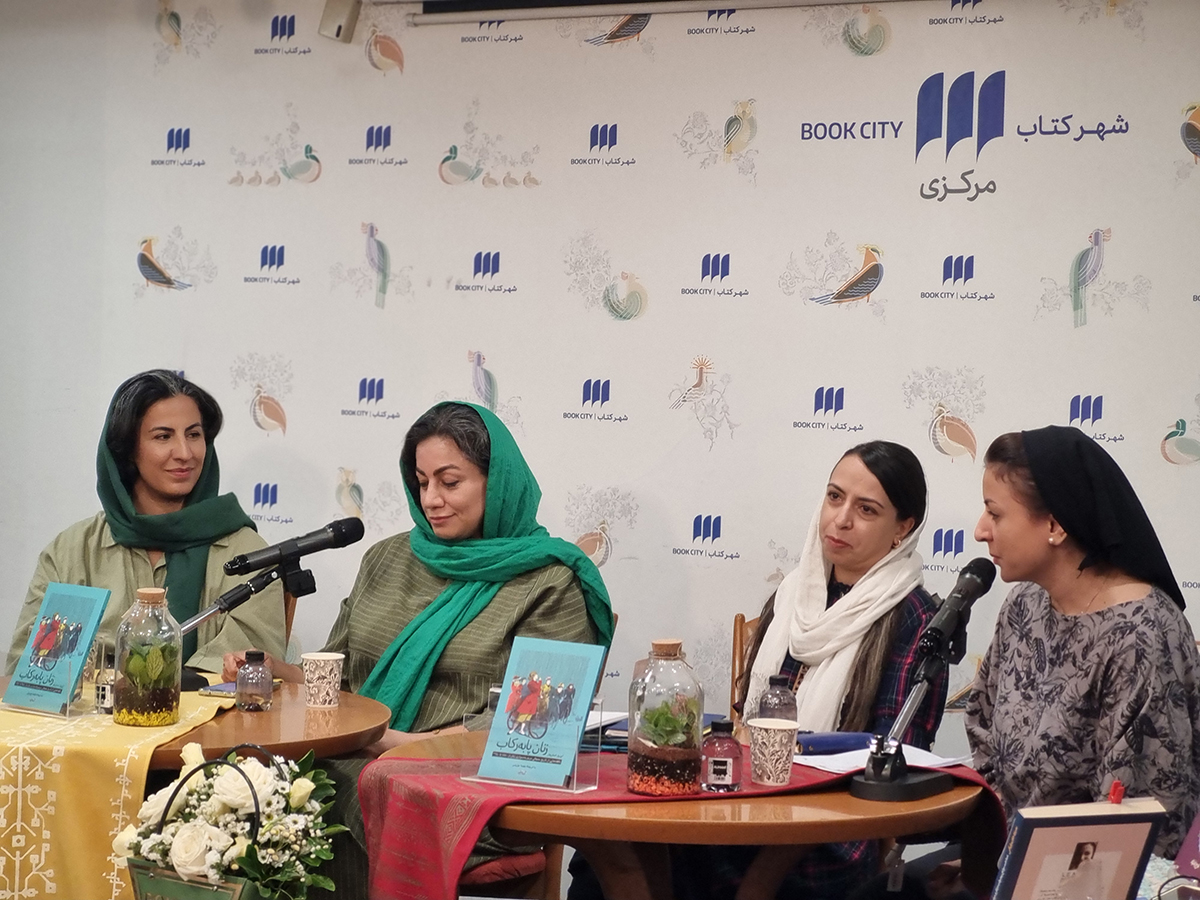
The remark underscored one of war's less visible yet deeply damaging consequences: the erosion of hard-won gains that generations of social activists have achieved through years of dedication and sacrifice. History shows that whenever societies become consumed by political crises such as war, other aspects of public life gradually fade into the background. From this perspective, the launch of Women on Wheels on Saturday (July 18), at the beginning of a week that Donald Trump described as "the week of destroying Iran's bridges," served as an effort to preserve and commemorate centuries of women's civil struggle to reclaim their most basic rights.
Iran's vast geography, its complex and dynamic society, years of enduring multiple hardships, and the shadow of war have all contributed to a reality in which, despite a difficult year, everyday life continues. It is precisely this determination to keep living that allows a fragile spark of hope to persist, even as U.S. attacks continue in southern and other parts of Iran. The book launch, organized by Amoozeh Publishing at Tehran's Central Book City, featured translator Mahsa Jazini, sociologist Najmeh Vahedi, and bicycle traveler (cycle tourist) Sara Rouhollahi.
At the beginning of the event, Jazini highlighted the scarcity of literary accounts documenting women's struggles to claim rights in activities often taken for granted, such as running and cycling. She spoke about her own experience of commuting by bicycle every day in Isfahan, explaining that this firsthand experience inspired her to explore the history of women's cycling.
Reflecting on her research, she said:
"I realized that women's cycling is about much more than simply riding a bicycle. Over the years, this seemingly ordinary activity brought about fundamental changes in women's clothing and made it easier for them to participate in public life."
Jazini added:
"One section of the book explains that women did not stop at cycling. They entered sporting competitions, won prizes, earned incomes, and in doing so gained greater economic independence."
Women's Creativity in the Pursuit of Rights
Legal barriers, together with entrenched social and cultural norms, have long complicated women's efforts to claim their rights. According to Jazini, these challenges forced women throughout history to devise creative ways of overcoming unjust structures. One example was the gradual transformation of women's clothing—from multilayered skirts and long dresses to blouses and trousers—which made greater mobility and public participation possible.
The event's second speaker was sociologist and editor Najmeh Vahedi. She emphasized the importance of continuing social advocacy even during wartime. In her view, the book is significant because it tells the stories of ordinary women—women she described as examples of "zero-wave feminism" who, throughout history, persistently and independently fought for their rights, even before organized feminist movements emerged.
Drawing on documented examples, Vahedi described women's long struggle to gain recognition in marathon competitions, which remained exclusively male until roughly fifty years ago.
She identified three qualities that make the book inspiring for women around the world.
First, she said, the book highlights women's agency as a conscious choice:
"These women did not postpone claiming their rights until a more suitable time or place."
Second, the book illustrates women's efforts to reclaim public spaces—a struggle that extends well beyond cycling and reflects women's broader efforts to participate actively in society.
Vahedi argued that throughout history, both public and private spaces have largely been controlled by men. By choosing to ride bicycles, the women featured in the book consciously claimed public space and sought independent movement beyond the confines of the private sphere.
Referring to statistics published by Iran's news agencies, she noted:
"Of Tehran's 18,000 named streets and public passages, only 12 are named after women. Male ownership of public space perpetuates domination and violence. Women's cycling is therefore an act of reclaiming their rightful place in public space."
The third defining feature of the book, she said, is its portrayal of women who, over many years, transformed what was once considered extraordinary into something ordinary.
The program concluded with remarks by Sara Rouhollahi, a bicycle traveler from Khomeinishahr near Isfahan, who has cycled across Iran and thirteen other countries. A photographer and graphic designer, Rouhollahi said she first discovered the world through a camera and later through a bicycle, but ultimately preferred the latter because:
"People often become guarded when they see a camera, but when you're on a bicycle, many things that seem impossible suddenly become possible."
She recalled dreaming of traveling by bicycle as a child—a dream that was shelved along with her childhood bicycle because of the social conventions of her hometown. Seven years ago, however, she finally realized that dream by purchasing a new bicycle.
Having ridden thousands of kilometers on roads across different countries, Rouhollahi reflected on Women on Wheels:
"After reading this book, I became more hopeful that the road will become smoother for women. I realized that lasting change happens gradually, through persistence."
She closed the event by reading a line from the book:
"For men, a bicycle is a simple blessing. For women, it is freedom, revolution, and salvation."
Comments