
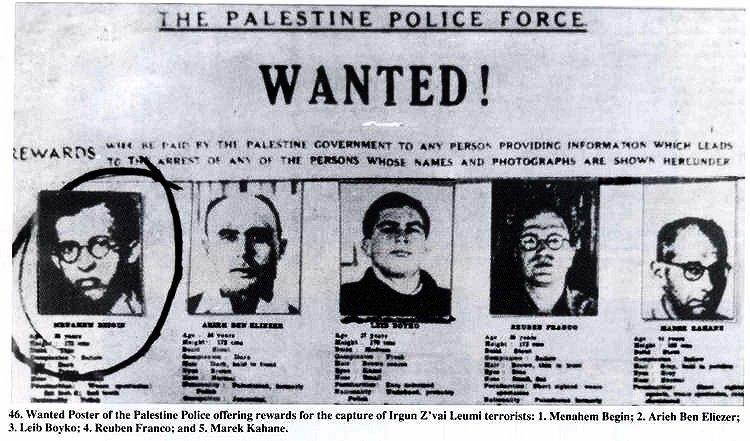
Menachem Begin, the Irgun, and the King David Hotel Bombing: From Underground Militant to Prime Minister of Israel
Abstract
The political evolution of Menachem Begin (1913–1992) represents one of the most controversial transformations in modern political history. Before becoming Israel's sixth Prime Minister in 1977, Begin served as commander of the Irgun Zvai Leumi (Etzel), a Zionist underground paramilitary organization that conducted an armed campaign against British rule in Mandatory Palestine during the 1940s. The most infamous operation attributed to the Irgun was the bombing of Jerusalem's King David Hotel on 22 July 1946, resulting in the deaths of 91 individuals. At the time, British authorities regarded Begin as a wanted insurgent and sought his arrest. Decades later, however, Begin became a democratically elected head of government and received the 1978 Nobel Peace Prize following the Camp David Accords. This article examines the historical context, ideological motivations, legal controversies, and political legacy surrounding Begin's transition from insurgent leader to statesman.
Keywords: Menachem Begin, Irgun, Etzel, King David Hotel, British Mandate Palestine, Zionist militancy, terrorism, political violence.
Introduction
Few political leaders illustrate the complexity of liberation movements and political violence as vividly as Menachem Begin. During the final years of the British Mandate, Jewish underground organizations—including the Haganah, Lehi (Stern Group), and Irgun—engaged in campaigns designed to end British administration and facilitate the establishment of a Jewish state.
Among these organizations, the Irgun adopted increasingly militant tactics under Begin's leadership after 1943. British authorities classified the organization as illegal and pursued its members through intelligence operations, arrests, and military tribunals.
The King David Hotel bombing remains the defining event associated with Begin's leadership.
Historical Background
Britain governed Palestine under a League of Nations Mandate beginning in 1922.
Following World War II, tensions escalated because of:
- Jewish immigration restrictions under the 1939 White Paper;
- Growing conflict between Arab and Jewish communities;
- Holocaust survivors seeking entry into Palestine;
- Increasing attacks on British military and administrative targets.
Begin argued that Britain had become an occupying colonial power obstructing Jewish self-determination.
The Irgun
The Irgun emerged from a split within the Haganah during the 1930s.
Its ideology was heavily influenced by Revisionist Zionism, founded by Ze'ev Jabotinsky.
Unlike the Haganah, which often exercised restraint, the Irgun advocated offensive military operations.
Its objectives included:
- ending British rule;
- facilitating unrestricted Jewish immigration;
- establishing a Jewish state.
British officials classified the Irgun as a terrorist organization because of its attacks on government personnel and infrastructure.
The King David Hotel Bombing
On 22 July 1946, Irgun operatives entered the basement of Jerusalem's King David Hotel disguised as delivery workers.
The southern wing housed:
- the Secretariat of the British Mandatory Government;
- British military headquarters;
- intelligence offices.
Approximately 350 kilograms of explosives were planted beneath the building.
The explosion killed:
- British officials,
- Arabs,
- Jews,
- hotel employees,
- civilians,
- military personnel.
A total of 91 people died.
The Irgun maintained that warning calls had been placed before the bombing, while British officials argued that the warnings were inadequate or not acted upon in time. Historians continue to debate the extent and timing of the warnings, but there is broad agreement that the attack caused extensive civilian casualties and became one of the deadliest incidents of the Mandate period.
British Pursuit of Menachem Begin
Following the bombing, British authorities intensified efforts to dismantle the Irgun.
Begin became one of the most wanted underground leaders in Mandatory Palestine.
He spent years:
- living under false identities;
- frequently changing safe houses;
- avoiding British intelligence operations.
Contrary to some popular claims, there was no personal arrest warrant issued by Queen Elizabeth II or any British monarch. Arrests were matters for the British Mandate administration and colonial legal system.
International Legal Perspective
Modern international humanitarian law distinguishes between combatants and civilians.
Scholars disagree over whether the King David Hotel bombing should be understood as:
- an anti-colonial insurgent attack against a military-administrative headquarters;
- an act of terrorism because of the foreseeable civilian casualties.
This disagreement reflects broader debates concerning the classification of political violence.
From Underground Commander to Prime Minister
In 1977, Begin became Prime Minister of Israel.
His election marked the first transfer of power from the Labor movement to the Likud bloc.
His government achieved:
- the 1978 Camp David negotiations;
- the 1979 Egypt–Israel Peace Treaty.
For these diplomatic efforts, Begin shared the Nobel Peace Prize with Egyptian President Anwar Sadat.
Historiographical Debate
Interpretations of Begin differ significantly.
Some historians characterize him as:
- a freedom fighter resisting colonial rule;
- a nationalist leader responding to extraordinary historical circumstances.
Others emphasize:
- the ethical implications of attacks causing civilian deaths;
- the precedent established for political violence.
These differing interpretations reflect broader disagreements over nationalism, colonialism, insurgency, and terrorism.
Conclusion
Menachem Begin's career demonstrates how political actors may be viewed very differently over time and by different audiences. As leader of the Irgun, he directed an armed campaign against British rule that included the King David Hotel bombing, an attack that killed 91 people and remains highly controversial. British authorities sought his arrest during this period, yet three decades later he became Israel's Prime Minister and a recipient of the Nobel Peace Prize.
His legacy continues to provoke debate among historians, legal scholars, and political scientists. Some regard him as an anti-colonial insurgent whose actions contributed to the establishment of Israel, while others view the tactics employed by the Irgun as terrorism because they resulted in significant civilian casualties. A balanced historical assessment recognizes both the documented events and the contested interpretations surrounding them, rather than reducing Begin's legacy to a single narrative.
Page Term Reference
Comments