
The Assassination of John F. Kennedy: History, Evidence, Investigations, and Unresolved Questions
Abstract
The assassination of United States President John Fitzgerald Kennedy on 22 November 1963 remains one of the most studied and controversial events in modern American history. Kennedy's death, occurring during a presidential motorcade in Dallas, Texas, shocked the world and triggered decades of investigations, scholarly debates, and public speculation. The official investigations concluded that Lee Harvey Oswald was responsible for the shooting and acted alone, yet questions surrounding the evidence, intelligence failures, the motives of possible actors, and the possibility of a broader conspiracy have continued to shape historical discussion. This article examines the background of Kennedy's presidency, the events of the assassination, the official investigations, competing theories, and the continuing historical significance of the case.
1. Introduction: A President at the Center of Cold War Tensions
John F. Kennedy became the 35th President of the United States in January 1961, at the height of the Cold War. His presidency was marked by major international crises, including the Bay of Pigs invasion, the Cuban Missile Crisis, tensions with the Soviet Union, nuclear arms negotiations, and conflicts over emerging nations during the decolonization era.
Domestically, Kennedy represented a new generation of American leadership. His administration promoted economic modernization, scientific advancement, civil rights reforms, and the ambitious goal of landing an American astronaut on the Moon.
However, Kennedy's presidency also generated powerful enemies. His administration confronted organized crime figures, intelligence agencies, anti-communist extremists, segregationists, foreign governments, and political opponents. These tensions later became central to debates about possible motives behind his assassination.
2. The Events of 22 November 1963
On the morning of 22 November 1963, President Kennedy arrived in Dallas, Texas, as part of a political tour aimed at strengthening Democratic Party unity and preparing for the 1964 presidential election.
Kennedy traveled in an open-top limousine with:
- First Lady Jacqueline Kennedy
- Texas Governor John Connally
- Nellie Connally, the governor's wife
- Secret Service agents
The motorcade moved through downtown Dallas along a planned route that included Dealey Plaza.
At approximately 12:30 p.m., gunfire erupted as the presidential limousine passed the Texas School Book Depository.
Kennedy was struck by bullets, suffering fatal wounds. Governor John Connally was also injured. The president was rushed to Parkland Memorial Hospital, where doctors pronounced him dead at 1:00 p.m.
Vice President Lyndon B. Johnson was sworn in as the 36th president later that afternoon aboard Air Force One at Dallas Love Field.
The assassination immediately became a national trauma. Millions of Americans watched the events unfold through television coverage, making it one of the first major national tragedies experienced collectively through mass media.
3. The Arrest and Death of Lee Harvey Oswald
Shortly after the assassination, law enforcement began searching for a suspect.
Police identified Lee Harvey Oswald, a 24-year-old former U.S. Marine who worked at the Texas School Book Depository, as a suspect.
Oswald's background attracted attention:
- He had served in the U.S. Marine Corps.
- He had defected to the Soviet Union in 1959 and lived there for several years.
- He returned to the United States in 1962.
- He had expressed Marxist political views and was involved in pro-Castro activities.
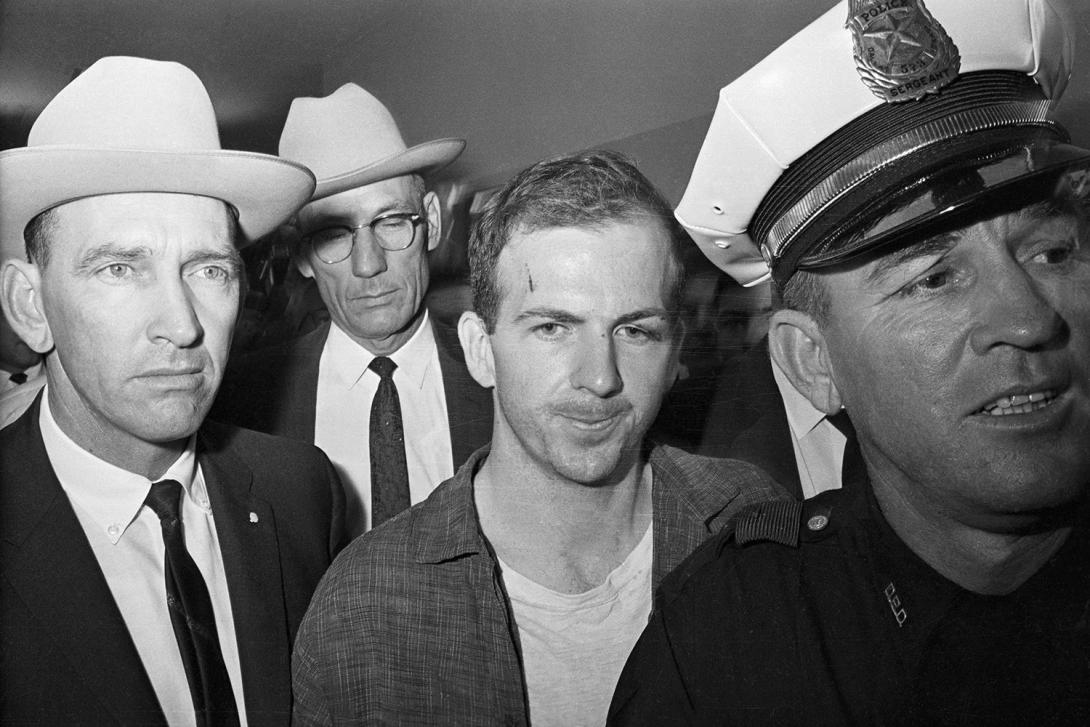
Police arrested Oswald on the afternoon of 22 November, initially in connection with the murder of Dallas police officer J.D. Tippit. He was later charged with murdering President Kennedy.
However, Oswald never stood trial.
On 24 November 1963, while being transferred between police facilities, Oswald was shot and killed by nightclub owner Jack Ruby in front of live television cameras.
Ruby's killing of Oswald created immediate suspicion because it eliminated the possibility of a public trial where Oswald's motives, contacts, and evidence could have been examined.
4. The Warren Commission Investigation (1963–1964)
Following Kennedy's assassination, President Lyndon Johnson established the President's Commission on the Assassination of President Kennedy, commonly known as the Warren Commission.
The commission was chaired by Chief Justice Earl Warren and included members of Congress, former government officials, and legal experts.
Its report, published in September 1964, reached several major conclusions:
- Lee Harvey Oswald assassinated President Kennedy.
- Oswald acted alone.
- Jack Ruby acted alone in killing Oswald.
- There was no evidence of a conspiracy involving foreign governments, domestic organizations, or U.S. government agencies.
The commission relied on thousands of interviews, physical evidence, ballistic analysis, and intelligence records.
The report became the official explanation of the assassination.
5. Questions and Criticism of the Warren Report
Despite the commission's conclusions, many Americans remained skeptical.
Critics raised several questions:
A. The Number of Shots
The Warren Commission concluded that three shots were fired from the Texas School Book Depository:
- One missed.
- One struck Kennedy and Connally.
- One fatally struck Kennedy.
Critics questioned whether one shooter could have fired the shots accurately within the available time.
B. The "Magic Bullet" Theory
The commission argued that a single bullet caused multiple wounds to Kennedy and Governor Connally.
Critics called this the "magic bullet theory," arguing that the bullet's reported path appeared unlikely.
Supporters of the Warren Commission argued that the bullet's trajectory was physically possible and consistent with the seating arrangement in the limousine.
C. Oswald's Background and Possible Connections
Researchers have examined Oswald's activities before the assassination, including:
- His time in the Soviet Union.
- His contacts with pro-Castro organizations.
- His interactions with intelligence-related individuals.
Some argue these connections suggest he may have been part of a larger operation.
Others argue that Oswald was a politically motivated individual seeking recognition and acting independently.
6. The House Select Committee on Assassinations (1976–1979)
Public distrust increased during the 1970s due to events such as the Vietnam War, Watergate, and revelations about intelligence agencies.
Congress created the House Select Committee on Assassinations (HSCA) to reinvestigate Kennedy's death.
The HSCA concluded in 1979:
- Kennedy was likely assassinated as the result of a conspiracy.
- Oswald fired the shots that killed Kennedy.
- There was a possibility of a second gunman based mainly on disputed acoustic evidence.
However, the committee did not identify:
- Who organized the alleged conspiracy.
- Who the other participants were.
- What their motive was.
Later scientific reviews questioned the acoustic evidence used by the HSCA, leaving the issue unresolved.
7. Major Conspiracy Theories
Over the decades, numerous theories have emerged. Some have been investigated seriously by historians; others lack reliable evidence.
A. Organized Crime Theory
One theory suggests involvement by organized crime figures.
Arguments supporting this idea include:
- Kennedy's administration targeted organized crime after Robert F. Kennedy became attorney general.
- The Mafia had connections with anti-Castro operations.
- Organized crime figures disliked the Kennedy administration.
Critics argue there is no definitive evidence linking organized crime leaders to planning the assassination.
B. CIA Involvement Theory
Some researchers have suggested that elements within the CIA may have been involved because of:
- Kennedy's conflicts with intelligence officials after the Bay of Pigs failure.
- Covert operations against Cuba.
- Disagreements over Cold War policy.
The CIA has denied involvement, and no conclusive evidence has proven agency responsibility.
C. Cuban Government Theory
Some have argued that Cuban leader Fidel Castro or Cuban intelligence could have sought revenge for U.S. attempts to overthrow his government.
Others argue that Castro had strong reasons not to provoke a massive American military response.
D. Anti-Castro Groups
Some researchers have focused on militant Cuban exile groups that opposed Castro and believed Kennedy was insufficiently aggressive against Cuba.
These groups had access to weapons and intelligence networks, but no definitive evidence has proven their involvement.
E. Soviet Involvement Theory
Because Oswald had lived in the Soviet Union, some suspected Moscow involvement.
However, Soviet leaders reportedly feared that Kennedy's assassination could lead to a military confrontation and had little incentive to create such a crisis.
F. Israeli or Middle Eastern Involvement Claims
Some theories have linked Kennedy's assassination to his disputes with Israel over nuclear inspections at the Dimona facility.
It is historically documented that Kennedy and Israeli Prime Minister David Ben-Gurion had disagreements regarding nuclear transparency.
However:
- No U.S. investigation has found evidence of Israeli government involvement.
- No credible documentary evidence has established Mossad or Israeli responsibility.
- Historians generally consider this theory unproven.
8. The Release of Classified Documents
For decades, government records related to the assassination remained classified.
The JFK Records Act of 1992 required the release of assassination-related documents.
Thousands of documents have since been declassified, revealing:
- Intelligence operations during the Cold War.
- Government knowledge about Oswald before the assassination.
- Internal debates within intelligence agencies.
However, the released documents have not produced definitive proof of a specific conspiracy.
9. Historical Impact of the Assassination
Kennedy's assassination transformed American politics and public trust.
Its consequences included:
A. Presidential Security
The Secret Service significantly changed procedures for protecting presidents, including limiting the use of open vehicles.
B. Public Distrust of Government
The assassination contributed to growing skepticism toward official explanations, which later intensified during the Vietnam War and Watergate.
C. Cultural Memory
Kennedy became an enduring symbol of lost potential. His death influenced literature, films, documentaries, political debates, and historical research.
The assassination remains one of the defining events of twentieth-century America.
10. Conclusion
The assassination of John F. Kennedy remains one of the most examined events in modern history. The established historical record confirms that Kennedy was killed in Dallas on 22 November 1963 and that Lee Harvey Oswald was identified as the gunman by official investigations. However, disagreements continue over whether Oswald acted alone or whether others participated.
The absence of definitive evidence proving a broader conspiracy has not eliminated public debate. The case continues to attract historians, researchers, and the public because it combines unresolved questions, Cold War tensions, intelligence controversies, and the dramatic loss of a young president.
More than sixty years later, Kennedy's assassination remains not only a criminal investigation but also a continuing examination of evidence, government transparency, and the relationship between historical facts and public trust.
References
- Warren Commission. Report of the President's Commission on the Assassination of President John F. Kennedy. 1964
- House Select Committee on Assassinations. Report of the Select Committee on Assassinations Regarding President John F. Kennedy. 1979
- National Archives. JFK Assassination Records Collection.
- Bugliosi, Vincent. Reclaiming History: The Assassination of President John F. Kennedy. 2007
- Posner, Gerald. Case Closed: Lee Harvey Oswald and the Assassination of JFK. 1993
- McAdams, John. JFK Assassination Logic: How to Think About Claims of Conspiracy. 2011
Page Term Reference
Comments