
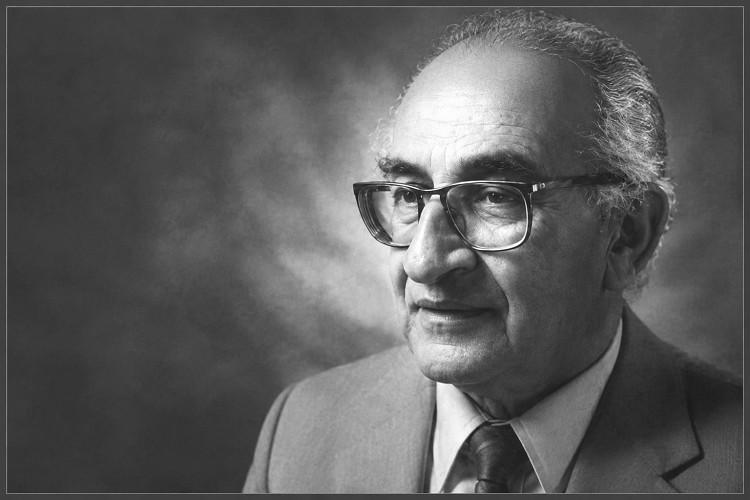
About the Author
Yahya Zoka (1923–2001) was an Iranian scholar, university professor, historian of Iranian art, and one of Iran's foremost experts on artistic heritage. He was born in Tabriz.
He completed his secondary education in literature at Firouz Bahram High School (1942–1943), where he studied under distinguished scholars such as Zabihollah Safa, Parviz Natel Khanlari, and others. In 1954 he graduated first in his class from the Faculty of Literature, University of Tehran, with a degree in archaeology.
Among the positions he held were Acting Director of the Department of Museums and Folk Culture (1956–1957), Director of the National Library of Iran (1968, for one year), and Adviser to the Minister of Culture and Arts (1969 until his retirement in 1978). During the final years of his life, despite illness and old age, he continued his scholarly work as a senior expert at the Tehran Museum of Contemporary Art and as a senior adviser to the Great Islamic Encyclopedia.
Among his notable works are The Diary of Sharaf al-Dowleh, Studies on the People of Azerbaijan, History of the Iranian Army, Nowruz and Its Astronomical Foundations in Relation to Persepolis, The Dress of Iranian Women from the Thirteenth Islamic Century to the Present, and many others.
He died in Tehran on 18 January 2001 (28 Dey 1379).
Part One
Yahya Zoka writes:
From the very beginning of its history, Azerbaijan has possessed a remarkably clear historical record regarding both its people and its language. There is virtually no room for dispute on this matter. It is evident that, at the dawn of recorded history, the Medes inhabited Azerbaijan and its surrounding regions. Anyone familiar with history knows perfectly well that at that time the Turks lived far away from these lands. Therefore, the claim made by some people that Azerbaijan has been Turkish since the beginning is entirely baseless.¹
This concerns Azerbaijan during the age of the Medes. Afterwards came the periods of the Achaemenids, the Parthians, and the Sasanians. In none of these eras do we find any event that would indicate a fundamental transformation in either the population or the language of the inhabitants.
Fortunately, one historical event in Atropatene (Lesser Media) provides a clear indication of the language and identity of the people of this land: the origin of the very name Azerbaijan.
As is well known, this region was originally called Lesser Media. During Alexander the Great's invasion of Iran, a man named Atropates protected the inhabitants of Lesser Media from foreign domination and established a small independent kingdom that remained under his family for about a century, becoming a bastion of Iranian identity. Consequently, the region came to be known as Āturpātakān (Atropatene), meaning "the place of Aturpat." Over time this name evolved into Ādharbāyagān and eventually Āzarbāyjān (Azerbaijan).
During the Parthian period the Turks gradually approached Iran from the northeast, near the frontiers of Greater Khorasan. However, owing to the military strength of the Parthians, they were unable to enter Iran.
During the Sasanian era, certain Turkic or Khazar tribes may have reached Iran's northern frontiers through Darband and the Caucasus. Yet there is no evidence that they entered Azerbaijan itself. History may record small groups of Turkic captives or mercenaries whom Sasanian kings such as Khosrow Anushirvan settled in various parts of the empire after wars. Such groups, however, were quickly absorbed into the indigenous Iranian population and disappeared without leaving any lasting trace.
Following the Islamic conquest, much fuller historical information about Azerbaijan becomes available. The writings of Muslim historians and geographers describe both the people and the language of Azerbaijan, referring to them as Ādharī (al-Ādhariyya).
According to Ibn al-Muqaffaʿ, as quoted by Ibn al-Nadim, and according to Hamza al-Isfahani, as cited by Yaqut and al-Khwarizmi, the language of the people of Azerbaijan is mentioned—although not explicitly named—and examples of its vocabulary are recorded.
Later, al-Yaʿqubi (9th century) used the term Ādhariyya as the designation for the inhabitants of Azerbaijan.
After him, al-Masʿudi, who visited Tabriz in the tenth century, mentions the Iranian languages Pahlavi and Dari, identifying them as the languages and dialects spoken in that region.
Following Hamza al-Isfahani, who described the language of Azerbaijan as Pahlavi, Abu Ishaq Ibrahim al-Istakhri, writing in the first half of the tenth century in Masālik wa al-Mamālik, likewise identifies the language of Azerbaijan as Iranian (al-Fārsiyya).
The geographer Ibn Hawqal repeats Istakhri's statement.
Subsequently, al-Muqaddasi, writing in the tenth century, remarks that the people's Persian speech was readily intelligible, while elsewhere describing their language specifically as Dari.
A story related by al-Samʿani concerning Abu Zakariya al-Khatib al-Tabrizi (d. 1109) and his teacher Abu al-ʿAlaʾ al-Maʿarri further illustrates the widespread use of the Ādhari language—not Turkish—in Azerbaijan during the eleventh and twelfth centuries.
Likewise, Hamdallah Mustawfi, in his Nuzhat al-Qulub (completed in 1340 CE), describes the language of the people of Zanjan, Maragheh, and Tabriz as Iranian and Pahlavi.
Footnote
¹ For further information regarding the historical homeland of the Turks in Eastern Turkestan and their westward migrations during the present millennium, including their eventual settlement in regions such as Iran, see:
Vasily Vladimir Bartold, History of the Turks of Central Asia, translated into Persian by Ghaffar Hosseini, Tous Publications, Tehran, 1997 (Vatan Yoli series).
Part Two
"O Fly, the Domain of the Simurgh Is No Place for Your Flight"
(A faithful English translation of the original text. The following reflects the author's views and historical interpretations and is presented as a translation, not as an endorsement of those claims.)
Following Timur's invasion of Iran and the penetration of the Qara Qoyunlu (810–872 AH / 1407–1468 CE) and Aq Qoyunlu (872–908 AH / 1468–1502 CE) Turkic dynasties, the Āzari language—which had been the native language of the people of Azerbaijan*—suffered its gravest setbacks. In the face of the Turkish language spoken by the Turkic and Tatar tribes (the Ghuzz and Oghuz) that had settled around the cities of Azerbaijan, it gradually fell into oblivion.
This process accelerated with the arrival of the nomadic ʿAlī-Allāhī Turks. Out of fear for their lives, the inhabitants of the cities were compelled to conduct their daily conversations in Turkish.
Thus, little by little, Āzari, a branch of the Iranian languages and closely related to Pahlavi, yielded its place to Turkish (which the author describes as a Mongolian and Altaic language). From the eleventh and twelfth Islamic centuries onward, Turkish became widespread in the cities of Azerbaijan, while Āzari survived only under the name Tati in a number of remote villages and mountainous regions that had remained beyond the reach of the Turkic tribes.
All of this, according to the historical evidence, indicates that until the eleventh century AH (seventeenth century CE), the majority of the people of Azerbaijan—especially those of Tabriz—still spoke Āzari, not Turkish.
Historical investigations therefore suggest that the first entry of the Turks and the Turkish language into Azerbaijan began during the fifth century AH (eleventh century CE), and that before that time there is no evidence of either Turkic peoples or the Turkish language in this region.
Zeki Velidi, despite being himself, in the author's words, "one of the Turkish nationalists," writes:
"At that time, apart from limited territories in eastern Iran, there existed no other region in which Turks had settled collectively."
(History of Azerbaijan, Firooz Mansouri, Urmia.)
For the Khazars and Ghuzz Turks who entered Azerbaijan from north of the Caucasus could only have been insignificant groups numbering perhaps a few hundred.
Nevertheless, the Ghuzz were the forerunners of the later Turkic migrations into Iran. As far as we know, before them any Turkic tribes living within what is now Iran were confined to the regions beyond the Oxus River, as well as Khorasan and Khwarazm.
Later, groups of them spread into Iraq, Azerbaijan, Armenia, and Diyarbakir.
These newcomers, however, were merely a small body of foreigners. They possessed neither a capable leader nor an organized government, and their total number—including men, women, and children—did not exceed fifty thousand. Yet for years they brought turmoil to these lands, plundering and killing wherever they went.
It was not until some thirty years later, when Tughril Beg and his brothers crossed the Oxus and founded the Seljuk state, that the people found relief from the depredations of these tribes.
In short, the first Ghuzz bands, fleeing from ʿAlāʾ al-Dawla, whom Sultan Mahmud of Ghazni had ordered to suppress them, escaped from Isfahan and looted every place they encountered until they reached Azerbaijan.
According to the author, this marked the first arrival of the Turks in Azerbaijan.
What history has left unwritten, the author continues, is the conduct of these tribes toward the indigenous people of Azerbaijan.
The claim that relations between the newly arrived Turks and the people of Iran were always characterized by peaceful coexistence, he argues, is nothing more than falsehood.
If we accept that poets are the voice of the people of their own age, then, he writes, the behavior of this small Ghuzz (Turkic) minority toward the people of Azerbaijan—whom he regards as Iranian—must have been extremely brutal.
The poets of Azerbaijan repeatedly lamented these injustices in their verses.
Whenever marauding Turkic bands entered one of the cities of Azerbaijan, Qatran Tabrizi is said to have fled from that place.
Qatran writes:
Although the Turk has brought ruin upon Iran,
Through God's aid, justice shall restore prosperity.
The policy of the Seljuk sultans, according to the author, was to abolish the system of local Iranian principalities and establish their own rule over the whole of Iran.
This was particularly significant because the native rulers were Iranian and defended their country's history and culture while extending patronage to Iranian poets and scholars.
Those poets and scholars, in turn, celebrated the ancient kings of Iran and the country's historical and cultural heritage.
Such sentiments, the author argues, were unwelcome to the Turks, whom he characterizes as newcomers lacking an established historical and cultural tradition.
During the sixth century AH (twelfth century CE), the proximity of settled Turkic communities to the cities and villages inhabited by Tajiks (Tats) led to the gradual penetration of the Turkish language into parts of Iran, including Azerbaijan, Persian Iraq (ʿIrāq-i ʿAjam), and Jibal.
This process produced a new social group known as "Turk olmuş" ("those who had become Turks").
Although these people remained ethnically Iranian and originally spoke Pahlavi, they eventually became bilingual, speaking both Turkish and Āzari.
The very expression "Turk olmuş," the author argues, is itself revealing, for it indicates how the people of Azerbaijan first came to adopt the Turkish language.
Curiously, he says, this term was later deliberately suppressed and survives only in a handful of historical documents.
Nevertheless, it is evident that during that period the language and way of life of the Turks, the "Turk olmuş," and the Tajiks (Tats) remained distinct from one another.
At that time the majority of the population still consisted of Pahlavi- and Āzari-speaking people.
The Turkish-speaking population was comparatively small, and, according to the author, generally had little involvement with literacy. He further asserts that many regarded literacy as dishonorable and that some were unable even to write their own names.
Thus the fifth and sixth centuries AH passed under the growing domination of these newly arrived Turkic raiders.
Gradually they became stronger, while the indigenous inhabitants became weaker, and, in the author's words, "the Iranian element was trampled beneath the hooves of the horses of these newcomers."
In this connection he quotes Professor Zabihollah Safa, who writes:
“The domination of these Turks produced various consequences. It brought about profound changes in the social principles and beliefs of the Iranian people and, regrettably, transformed many of their ancient customs.”
Notes
* Āzari, or the Ancient Language of Azerbaijan, by Ahmad Kasravi Tabrizi, Hazar Publications.
** According to Mahmud al-Kashghari's Dīwān Lughāt al-Turk, the terms Tat and Tajik were used to refer to Iranians (that is, non-Turks). "Tat" designated Iranians who did not speak Turkish, while "Tajik" referred to Persian-speaking Iranians. The author further cites the late scholar Mohit Tabataba'i, who argued that historically there was never an independent people called "Tajiks" outside the Iranian cultural sphere; rather, the term functioned as an ethnolinguistic designation for Persian-speaking Iranians.
Part Three
"May Iran Never Be Without Its Head, and May Azerbaijan Never Be Without Its Body"
(Faithful English translation of the original text. The following presents the author's historical interpretation and arguments.)
The newly arrived Turks in Azerbaijan became prominent in religious strictness and intolerance, and this domination continued to intensify until the Mongol invasion.
The Seljuk Turks, and after them the Turkic slave soldiers of Khwarazm, for a century and a half brought devastation upon the people of Mesopotamia.
After the Mongol invasion and the terrible historical catastrophes that took place in this land, the Turks—who, according to the author, saw themselves as foreigners among Iranians—claimed kinship with the Mongols and joined them in massacres and plundering.
Most of the oppression committed by the Mongols, the author argues, occurred through the instigation and assistance of Turks who viewed the Iranians as their enemies.
The northwestern regions of Iran (Azerbaijan) underwent profound transformations between the eighth and eleventh Islamic centuries.
During this period, groups descended from the Ghuzz and from the Turkic tribes of the Aq Qoyunlu and Qara Qoyunlu moved from the region of Diyarbakir and eastern Ottoman territories toward Azerbaijan.
On the other hand, when Timur returned from his campaigns against the Ottomans, he captured groups of Turks and intended to take them with him to Samarkand.
However, during the journey, at the request of Shaykh Ali Safavi, he gave them to him. This tribe, known as the Rumlu, from that time onward became among the strongest supporters of the Safavid dynasty.
These nomadic shepherds, who initially wandered the plains following their goats and sheep and lived in tents far removed from urban life, viewed cities primarily, the author claims, as places for plunder and exploitation.
During this troubled period, since the administration of the country fell into the hands of the Tekelu, Ustajlu, and many other tribes whose names ended in -lu, there was little opportunity left for the indigenous Iranian population of Azerbaijan to play a role.
Overall, the Safavid dynasty, because it was established from the beginning with the support of these immigrant Turkic tribes, especially during its wars with the Ottomans, continually depended upon them and attempted by every means to win the loyalty of their tribal leaders.
During this period, whenever there was a courageous and powerful Safavid ruler such as Shah Ismail, these tribes, following the command of their murshid (spiritual master)—the Safavid king—obeyed him completely.
But when the ruler was a young and weak monarch, such as the blind Sultan Muhammad Khudabanda, the king became merely a puppet in the hands of the tribal chiefs.
The danger posed by the influence of the Turkic Qizilbash during the Safavid era was recognized, according to the author, only by one courageous and intelligent woman: a Tajik and Mazandarani woman who unfortunately lost her life because of her efforts.
She was Khayr al-Nisa Begum, the wife of Sultan Muhammad Khudabanda and the mother of Shah Abbas.
This woman wished to restore the Tajiks (Tats—the Iranians) to positions of power.
However, the Turks conspired against her and eventually strangled and killed her.
Shah Abbas, following his mother's recommendation, later created a group known as the Shahsavan.¹
This, the author argues, demonstrates the behavior of a powerful Turkic minority even toward the wife of a king; therefore, one can imagine how they treated ordinary urban and rural people of Azerbaijan.
In any case, it was during these dark years of Azerbaijani and Tabrizi history that the Iranian element of these lands lost political authority, and administration fell into the hands of newly arrived Turks—people who competed among themselves over the plundering and exploitation of the native Iranian population of Azerbaijan.
Furthermore, because during those troubled times most governmental and military affairs were conducted in the Turkish language, the people were compelled to learn this Mongolian language.
Their own native language, Āzari, which was one branch of the Iranian languages and related to Pahlavi, gradually weakened.
In addition, the prolonged military campaigns and wars between Iran and the Ottoman Empire greatly harmed the Āzari language.
Several times the Ottomans invaded Azerbaijan, including the final occasion when they remained in Tabriz for twenty years, plundering the city and massacring its inhabitants.
All of these events, the author argues, worked against the survival of Āzari, the native language of the people of Azerbaijan.
After those twenty years, Shah Abbas expelled the Ottomans from Tabriz.
During that period, once all the prosperous inhabitants of Tabriz who were able to do so migrated to Qazvin, and another time they migrated to Isfahan.
In general, the prominent people of Tabriz left the city and never returned.
The author concludes:
It must be understood that Azerbaijanis are not Turks, and I ask all friends not to call Azerbaijanis and Tabrizis "Turks."
Today, perhaps with great regret, one may say that they are Turkish-speaking, but we are not Turks.
We Azerbaijanis and Tabrizis have not had our Iranian ancestry changed; rather, only our language has unfortunately changed as a result of these unfortunate historical and social events.
Therefore, the word "Turk" should never be applied to us.
Azerbaijanis are not Turks; rather, today they are Iranians who have become Turkish-speaking.
If their language became Turkish because of historical and social circumstances, this has no connection whatsoever to their Iranian nationality or ancestry.
If misguided people—descendants, the author says, of "the remnants of corruption and violence"²—compare their behavior with that of those plundering Turks and consider the people of Azerbaijan to have been "Turks" since the time of Cyrus and Darius, wishing to attach the ancient nationality, culture, and civilization of this land to the tails of the horses of uncultured desert nomads, then we have nothing to do with them.
However, they have no right to determine the identity of all the people of Azerbaijan, fabricate a history for them, or create a false literature and language.
By casting dust into people's eyes and exploiting their modern lack of knowledge about their own historical and social past, they seek to impose hostile interpretations upon the honorable people of Azerbaijan.
As has become clear, the Turkish language in Azerbaijan, without doubt, has a history of no more than three to four centuries.
I state this, and I am prepared to defend it.
Notes
¹ Moving the capital from Qazvin to Isfahan, appointing Georgian and Armenian commanders, and establishing the Shahsavan army—which was loyal only to the Shah—were among Shah Abbas's policies in this regard.
(Vatan Yoli journal.)
² Pan-Turkism and Zionism, Alireza Soltanshahi, Iranian Civilization Publications.
Source:
Taken from Vatan Yoli ("The Path of the Homeland"), issue no. 13, pages 1 and 4
The first part of this article was published on page 8 of issue 263 of the weekly magazine Amordad (16 Mehr 1390 Solar Hijri / 8 October 2011)
The second part was published on page 8 of issue 264 of Amordad (30 Mehr 1390 / 22 October 2011)
The third part was published on page 8 of issue 265 of Amordad (14 Aban 1390 / 5 November 2011)
Page Term Reference
Comments