
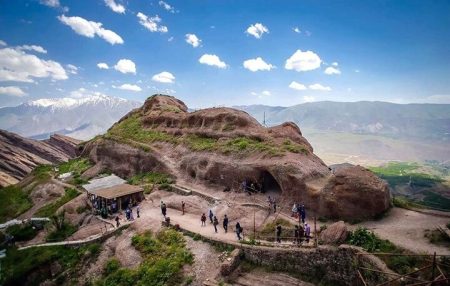
The nomination dossier for the global registration of Alamut Fortress is still open, and discussions continue regarding the progress of its preparation and implementation. In addition, the methods and results of archaeological excavations at the fortress require proper reporting. It is now necessary to understand what plans have been prepared to ensure the successful inscription of this globally significant Iranian cultural heritage site.
The dossier for the Alamut Fortresses Collection is approaching its final review at the 48th session of the UNESCO World Heritage Committee. After completing the stages of preparation, evaluation, and expert assessment, the dossier is now awaiting the opinions of committee members in the hope of becoming Iran’s 30th World Heritage site.
Hamideh Chubak, archaeologist and director of the Alamut Cultural Heritage Base: “Alamut Fortress and its associated defensive structures have been accepted for nomination to the World Heritage List after more than a quarter-century of continuous presence within major national cultural heritage projects, including excavation, preservation, restoration, and interdisciplinary research throughout the Alamut region.”
“We are waiting”
Regarding the latest status of the dossier, she added:
“The dossier has been submitted for review at the 48th session of the World Heritage Committee, and it has been decided that a decision on its inscription will be made during this session, which will be held from 19 July to 1 August. Last year, international evaluators visited the site, and extensive expert reports regarding the dossier were prepared and submitted. We are now waiting for the case to be reviewed at the 48th session. We hope that, if there are no obstacles, a positive decision will be made for its inscription on the World Heritage List.”
The archaeologist also explained the work that needed to be carried out after the UNESCO evaluators’ visit:
“The main issue ahead is the management plan for the site. A two-year short-term plan, as well as medium-term and long-term plans covering a ten-year period, have been identified for this region and must gradually be implemented. Some of these measures had already been completed before the evaluators’ visit, including documentation, organization of the fortress area, improvement of access routes in cooperation with the provincial authorities, organization of Gazor Khan village in cooperation with the Housing Foundation, provision of water facilities for the site’s marketplace, parking arrangements in cooperation with the Water Department, and several conservation measures.”
Increase in visitors and delay in archaeological excavations
Responding to a question about the archaeological excavations at Alamut Fortress, Chubak said:
“Excavations at Alamut Fortress have not yet begun due to the start of the 1405 financial year and the peak season of tourist visits. According to the planned schedule, excavations will continue from the end of September. Last year, we carried out the first excavation season at Qestīn Lar Fortress, which was highly valuable from a scientific perspective, and we hope this process will continue at Alamut Fortress and the other fortresses included in this dossier.”
She emphasized:
“However, archaeological excavation alone is not sufficient. Every excavation project must be carried out alongside conservation and restoration programs, because without the necessary funding for preservation, excavation by itself cannot achieve the desired results.”
The director of the Alamut Cultural Heritage Base further explained the details of the World Heritage dossier:
“This dossier includes seven fortresses. The most important of them is Alamut Fortress, which served as the center of the Nizari Ismaili state. Another major fortress is Lambesar, the largest fortress in this collection, which served as a residence for the deputy ruler or successor of the main ruler and was considered a winter residence. Nevisar Shah Fortress is also included in this dossier; it was the final stronghold of resistance against the Mongol invasions and is the highest and most inaccessible fortress in the collection. It requires extensive infrastructure and conservation work.
“Other components of the dossier include Shams-Kalayeh Fortress in Moallem Kalayeh, Shirkuh Fortress, Ilan Fortress, and Qestīn Lar Fortress. Together, they represent the integrated administrative and defensive system of the historical land of Alamut.”
“We do not know what will happen”
Regarding the possibility of the dossier being inscribed during the upcoming session, Chubak stated:
“It is not possible to predict the outcome of the meeting. The ICOMOS expert report has been prepared and will be presented during the session. Ultimately, members of the World Heritage Committee will decide, based on expert assessments, whether to approve or reject the nomination. Therefore, it is impossible to make a definite statement about the result at this stage.
“Nevertheless, we hope that the inscription of Alamut Fortress and its defensive structures will take place as Iran’s 30th World Heritage site.”
Comments