

So behind the iron pride lies a hidden secret: an invisible bridle woven not from rope, but from the golden chains of dowry coins. However loudly the Iranian man may roar, deep down his heart trembles at the threat of, “Go ahead and enforce the dowry claim.” Every time his wife calmly says, “Do you remember my dowry?” a subtle but unmistakable shiver runs through the depths of his soul.
Yesterday’s fierce cat, standing in the notary office today, has become a tame gazelle—worried eyes, trembling hands, signing a settlement agreement.
Women, within the context of marriage and family relationships, possess certain tools which, if used deliberately and maliciously, can lead to the economic, social, and psychological destruction of men. This is a situation that either does not exist in many other countries—such as those in Europe, North America, and East Asia—or exists with much more carefully balanced safeguards.
First, the institution of dowry in Iran, which on the surface is viewed as a traditional and ethical contractual arrangement, has in practice become a legal instrument of pressure. A woman can invoke the registered dowry—even if it is symbolic, such as 1,000 gold coins—at any time and without needing to provide any particular justification, and pursue its collection through legal channels, potentially driving a man toward imprisonment and the complete seizure of his assets. No developed country has a legal mechanism with such breadth and enforcement power.
Second, the transfer of assets into a wife’s name, often done because of social pressure or in an effort to preserve family life, can in many cases become a tool for settling scores. After receiving property, vehicles, or shares, women may fully benefit from the legal protections attached to ownership, while men often have little practical ability to reclaim those assets or mount an effective challenge.
Third, and perhaps most importantly, the cultural and social influence of a woman’s family—especially her brothers—in certain social groups and regions of Iran can become a means of intimidation, coercion, or even violence. There have been cases in which, under the banner of “family honor,” a wife’s brother or relatives have engaged in physical aggression, psychological harassment, or threats against a son-in-law, without receiving a decisive response from judicial or law-enforcement authorities.
This trio—dowry claims, property ownership, and cultural backing—effectively places powerful instruments in the hands of women who, if they choose, may be able to strip a man of his financial security and destroy his social standing within a short period of time and without needing to establish judicial or moral wrongdoing.
While many advocates of women’s rights rightly emphasize the forms of discrimination that women face in other areas, it should also be acknowledged that in the specific sphere of marital relations in Iran, this imbalance of power can operate in favor of women and, if abused, may produce consequences far more severe than they initially appear.
This situation calls for serious reconsideration of family law, dowry regulations, and property rights, along with the creation of a genuine legal and cultural balance between men and women. The absence of such balance not only leads to the personal ruin of some men, but also undermines the institution of the family from within.
 |
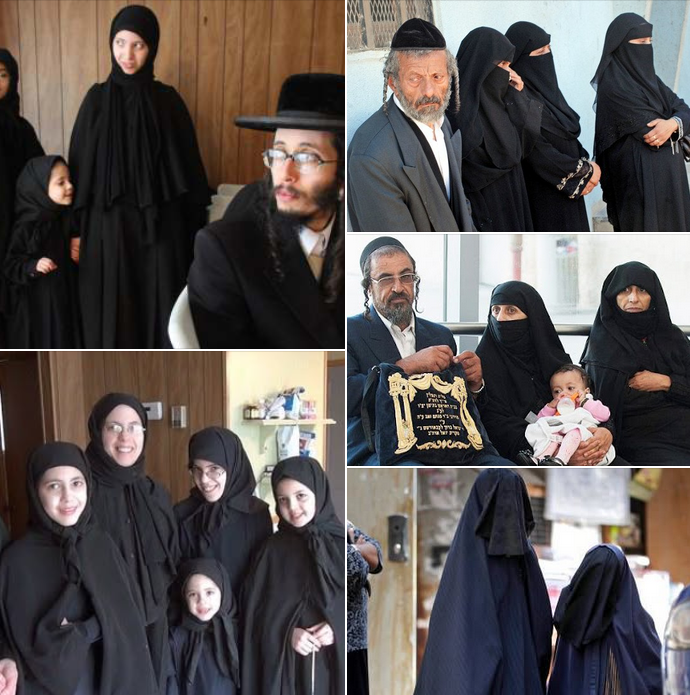 |
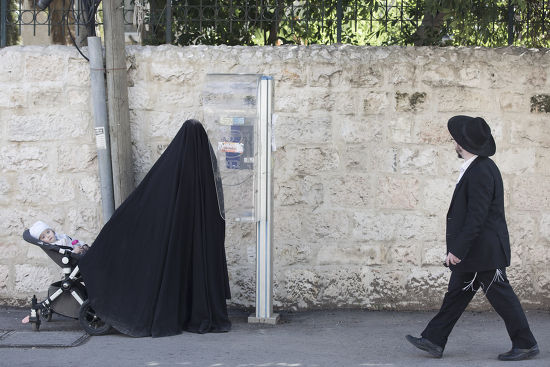
The "Haredi burqa sect" (Hebrew: נשות השָאלִים Neshót haShalím, lit. 'shawl-wearing women') is a community of Haredi Jews that ordains the full covering of a woman's entire body and face, including her eyes, for the preservation of modesty (tzniut) in public. In effect, the community asserts that a Jewish woman must not expose her bare skin to anyone but her husband and immediate family. The garment in question, known as a shal (שָאל, lit. 'shawl'), is also referred to as a frumka—a portmanteau of the Yiddish-language word frum and the Arabic-language word burqa. The Haredi burqa sect is primarily concentrated in Israel, and particularly in the Israeli city of Beit Shemesh.
Page Term Reference
Comments