
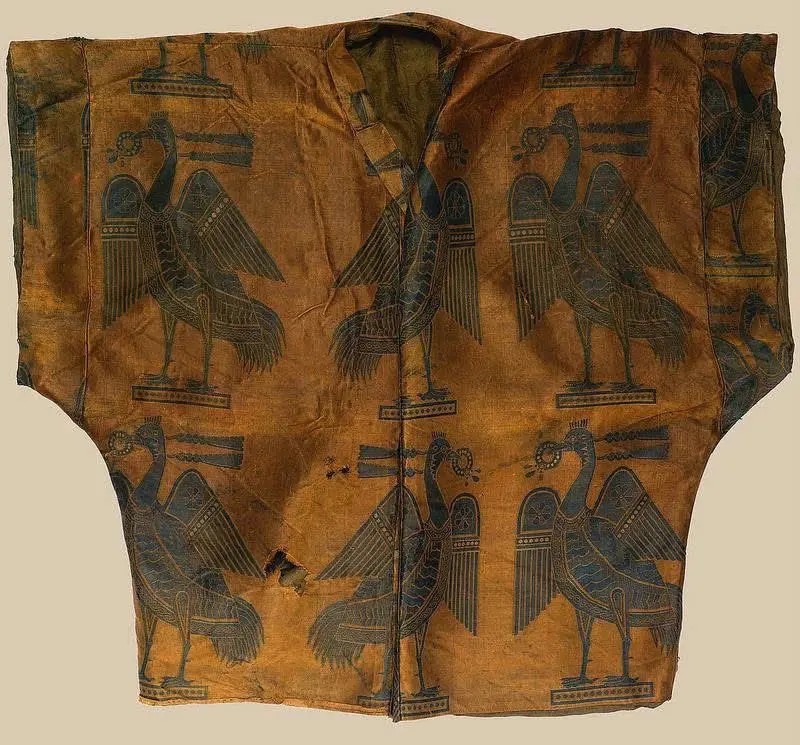
This Sasanian silk dress, shown in the image, is an example of the advanced art of weaving of this period. During the Sasanian era, silk weaving and decorative fabrics were considered among the prominent arts of ancient Iran. This dress, due to its intricate design and meticulous details, demonstrates the skills of Sasanian weavers. The designs on the dress, which include birds with spread wings and symbols of power, were usually associated with religious and royal concepts. Such designs were considered symbols of royal and religious power and authority at the time.
Culturally, this dress is a symbol of the splendor and grandeur of Sasanian Iran. The use of silk as a luxurious fabric indicated the social status and power of the individual who wore it. The Sasanians were pioneers in creating and expanding trade and cultural networks, especially in exchanges with China and India, and this played an important role in the production and consumption of silk and decorative fabrics. This clothing was not only part of everyday wear or formal ceremonies, but also reflected the cultural and social identity of that era.
Page Term Reference
Comments