
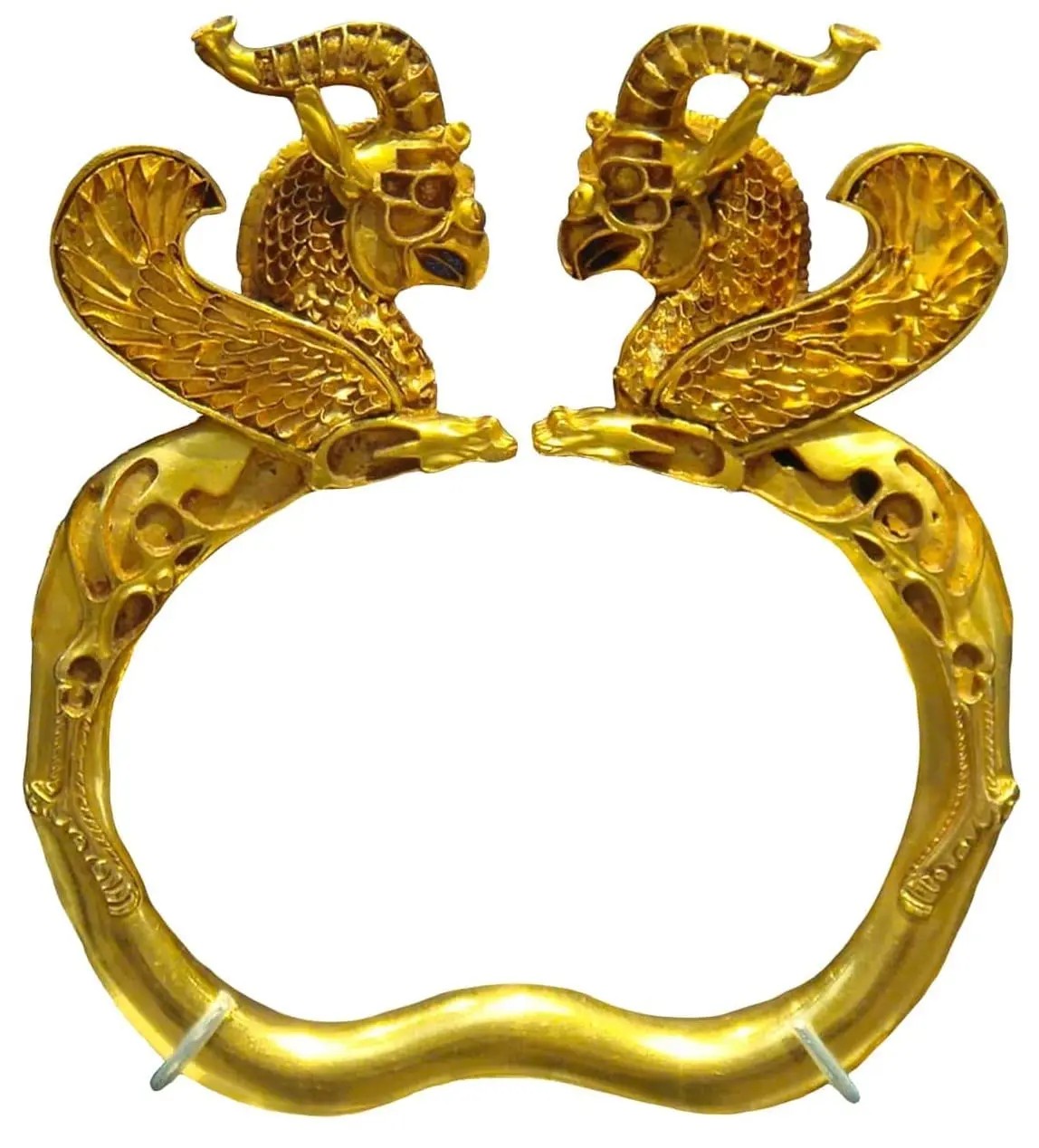
The Golden Shirdal Bracelet is an ancient artifact from the Achaemenid era. It is decorated with two mythical lions standing symmetrically facing each other. The Achaemenid Golden Lion Bracelet was adorned with precious stones and jewels that were dug out of it. The bracelet is one of hundreds of artifacts from the Amu Darya Treasure. The Amu Darya Treasure is a collection of 170 gold and silver pieces and 200 coins from the Achaemenid era found in southwestern Tajikistan. The treasure is now housed in the Victoria and Albert Museum and the British Museum.
These artifacts date back to the 5th and 4th centuries BC, when the powerful Achaemenid kingdom had raised its banner over lands from the Indus Valley to the Nile River. The treasure was discovered on the banks of the Oxus River in present-day Tajikistan, most likely from the ancient Takht-e Kabad (Qabad) hill, a pass on the northern bank of the river, between 1877 and 1880 during non-scientific excavations. Many of the artifacts may have been scattered or even melted. The artifacts probably belonged to a temple from the Achaemenid period and were placed there as gifts or votive offerings by the people of the region.
The lion is considered an important figure in ancient Eastern thought and art. The eagle and the lion each had magical powers and were rulers of their own realms. When they were combined, they became invincible guardians of the temples.
Comments