
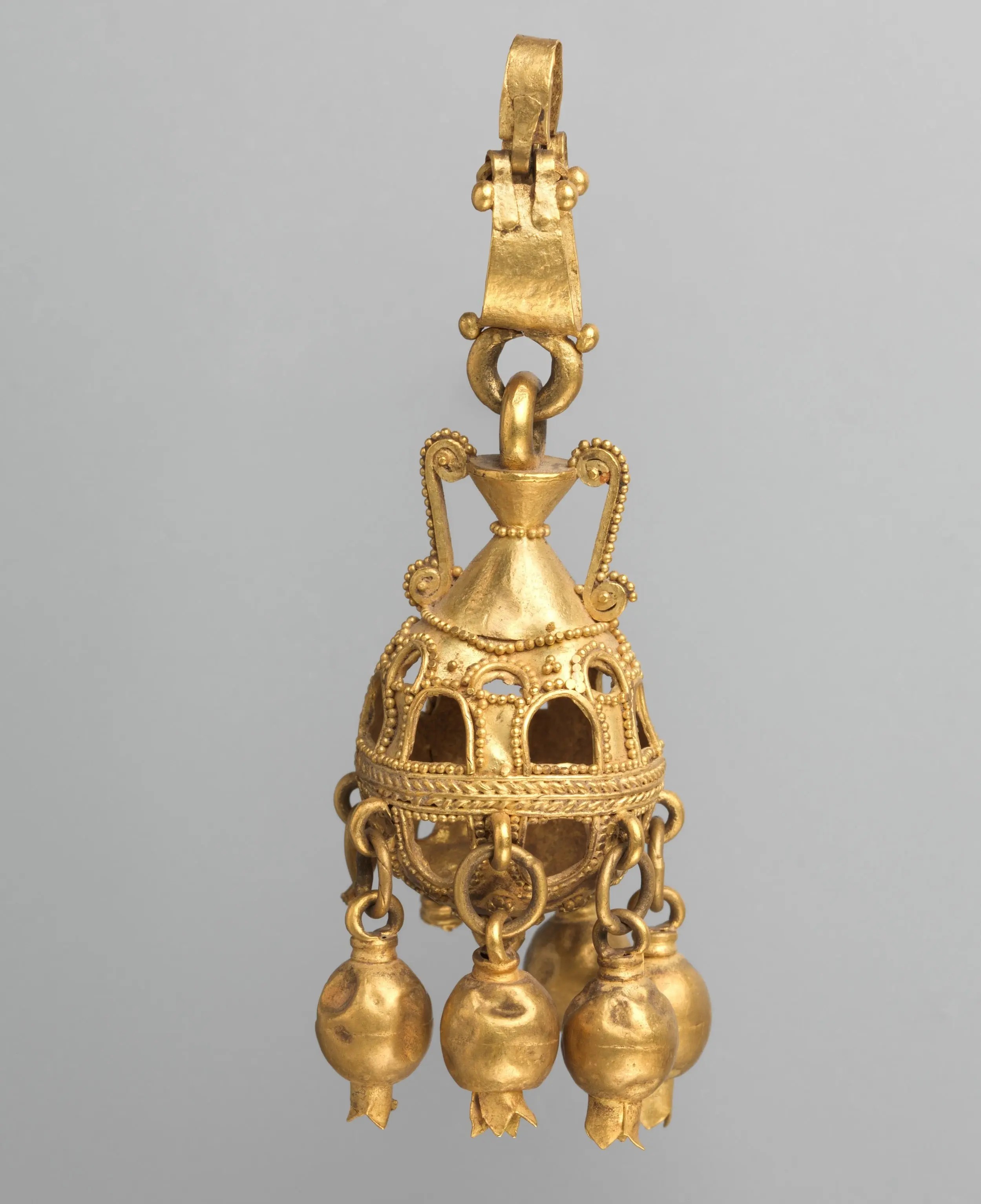
This golden earring with pomegranate-shaped pendants is one of the prominent examples of jewelry from the Parthian dynasty in the Iranian Empire, which dates back more than two thousand years. This work reflects the high skill of ancient Iranian goldsmiths and the special place of jewelry in the culture and social life of that period. The elegance of execution and attention to detail make it an outstanding example of the art of metalwork of the Parthian period.
The structure of the earring consists of a latticed and cage-like central part from which seven pomegranate-shaped pendants are hung. Techniques such as precise hammering, delicate graining and calculated connections were used in the manufacture of this work. The pendants are designed in such a way that they create a dynamic effect with movement and well demonstrate the harmony between form and function.
In ancient Iranian culture, pomegranates symbolized fertility, birth and abundance, and the number seven also had a symbolic meaning. The use of these elements together shows that Parthian jewelry, beyond its decorative aspect, carries cultural and symbolic concepts and reflects the beliefs and aesthetic system of the society of that time. This historical artifact is currently kept in the collection of The Metropolitan Museum of Art in New York.
Page Term Reference
Comments