
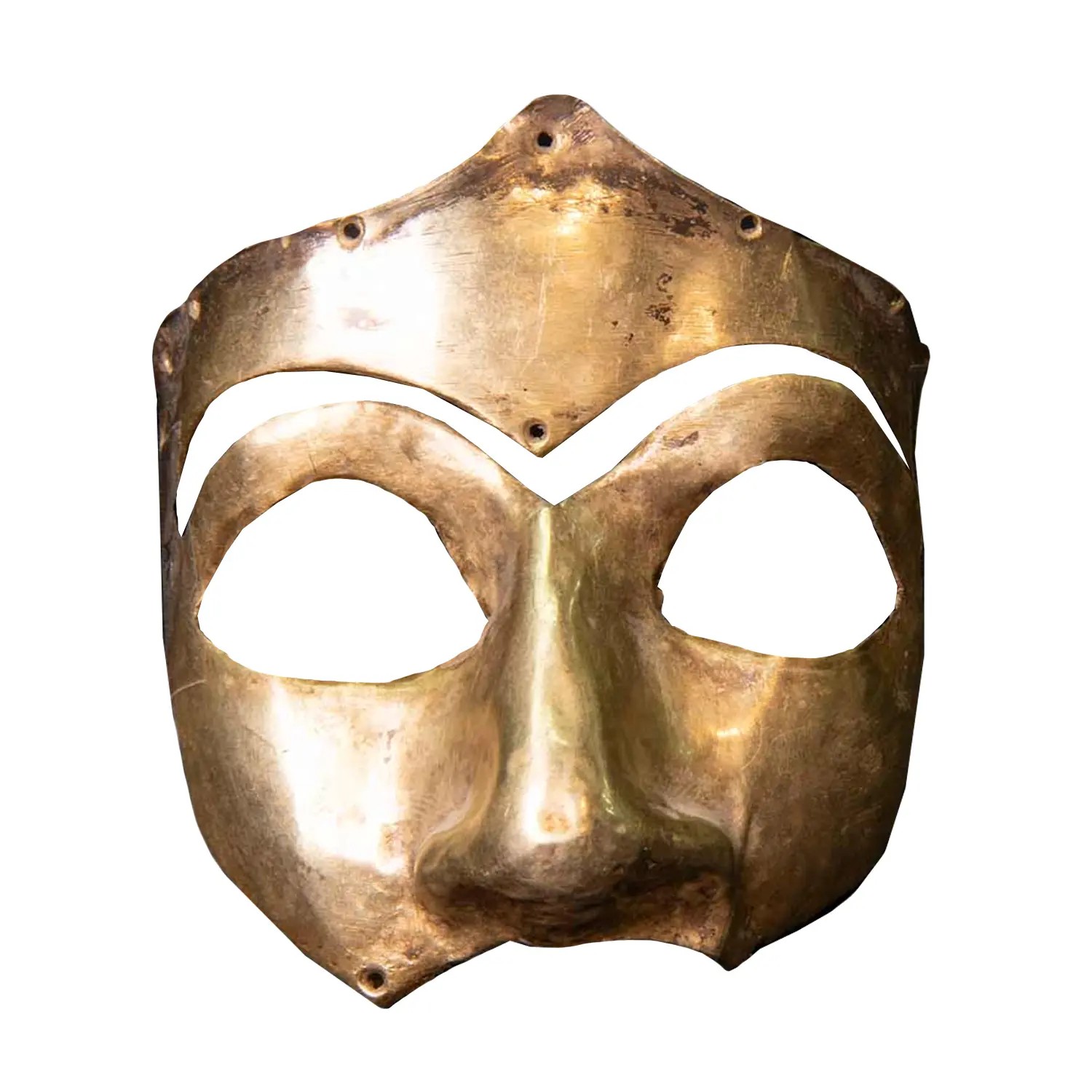
The metal mask recovered from the Kalmakareh Cave belongs to one of the most mysterious and important historical treasures of Iran, dating back to the first millennium BC, around the 7th to 5th centuries BC. This period coincides with the end of the Elamite period, the beginning of the Median state, and the beginning of the Achaemenid rule. Masks of this type were usually used in funerary, religious, or royal rituals and often belonged to nobles and rulers, as their manufacture required high skill and access to precious metals.
The Kalmakareh Cave was discovered by chance in the mountains of Lorestan in the 1360s (1980s) and quickly became one of the most important historical treasures of Iran; however, due to the lack of official protection, a large part of these works were looted by smugglers and transported to global markets. Similar masks have been found in contemporary civilizations such as Assyrian, Urartian, and even ancient Egypt, indicating the cultural connections and influences between West Asian civilizations of that period.
Examining the artistic style of this mask, with its prominent design and exaggerated facial features such as the nose and eyebrows, leads us to the artistic traditions and religious symbolism of the period. It is possible that these types of masks were used in rituals to communicate with spirits or gods, or even represented a mythical figure or king. In this way, this mask is not only a work of art, but also a living document of the beliefs, rituals, and social structure of ancient Iranian societies on the verge of entering the era of great empires.
Page Term Reference
Comments