
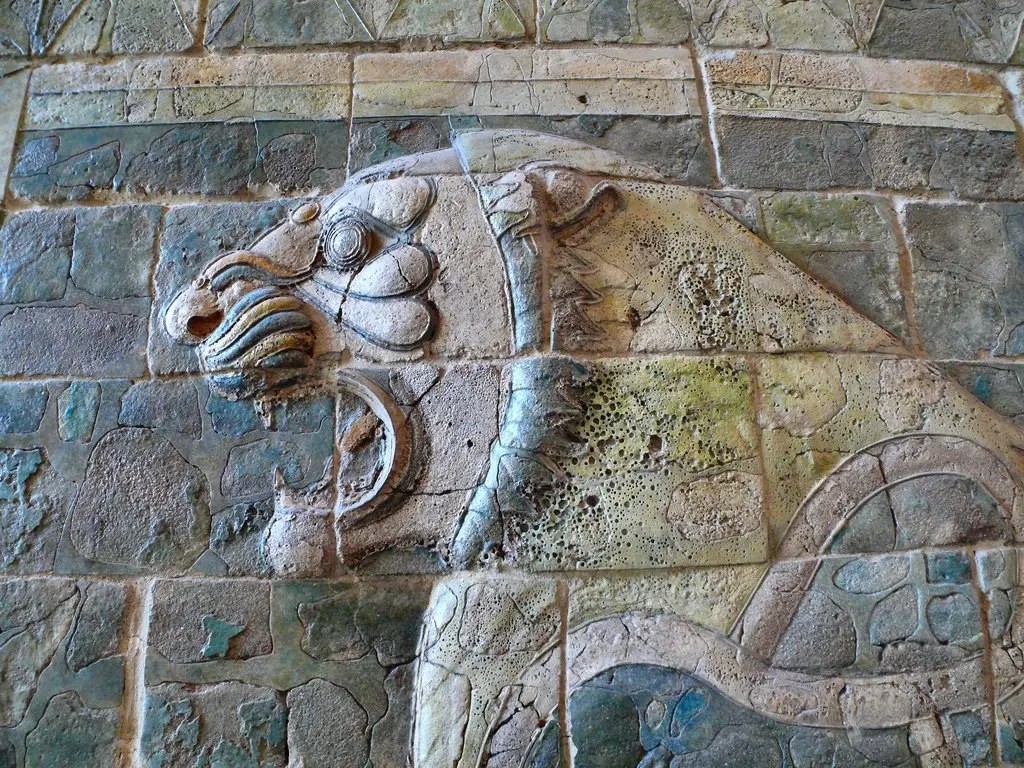
This magnificent bas-relief, made of glazed tiles, is part of the wall decoration of the Apadana Palace in Persepolis, the glorious capital of the Iranian Empire during the Achaemenid era. The image shows a lion’s head in precise and beautiful detail; a majestic face, with a half-open mouth and prominent muscles that symbolize power, courage and dominance. The soft but strong lines on the muzzle, mane and body lines demonstrate the skill of Achaemenid artists in combining realism with symbolic arrangements. The large eyes and sunken ears also convey a symbolic look of attention and alertness of the lion.
The use of glazed tiles in colors such as turquoise, blue, green and yellow not only gives the work a stunning visual effect but also increases its durability against time. This type of decoration, mostly seen in the formal and ceremonial parts of the Apadana Palace, reflects the importance of the lion as a royal and guardian symbol in the Iranian culture of the period. The lion may be part of a more symbolic dynamic scene, such as a lion-bull battle, representing the cycle of time, the confrontation of forces, or even the rituals of the New Year (Nowruz) in the Achaemenid worldview. The art of this bas-relief is a blend of architecture, myth, and politics in one of the most important empires in world history.
Page Term Reference
Comments