

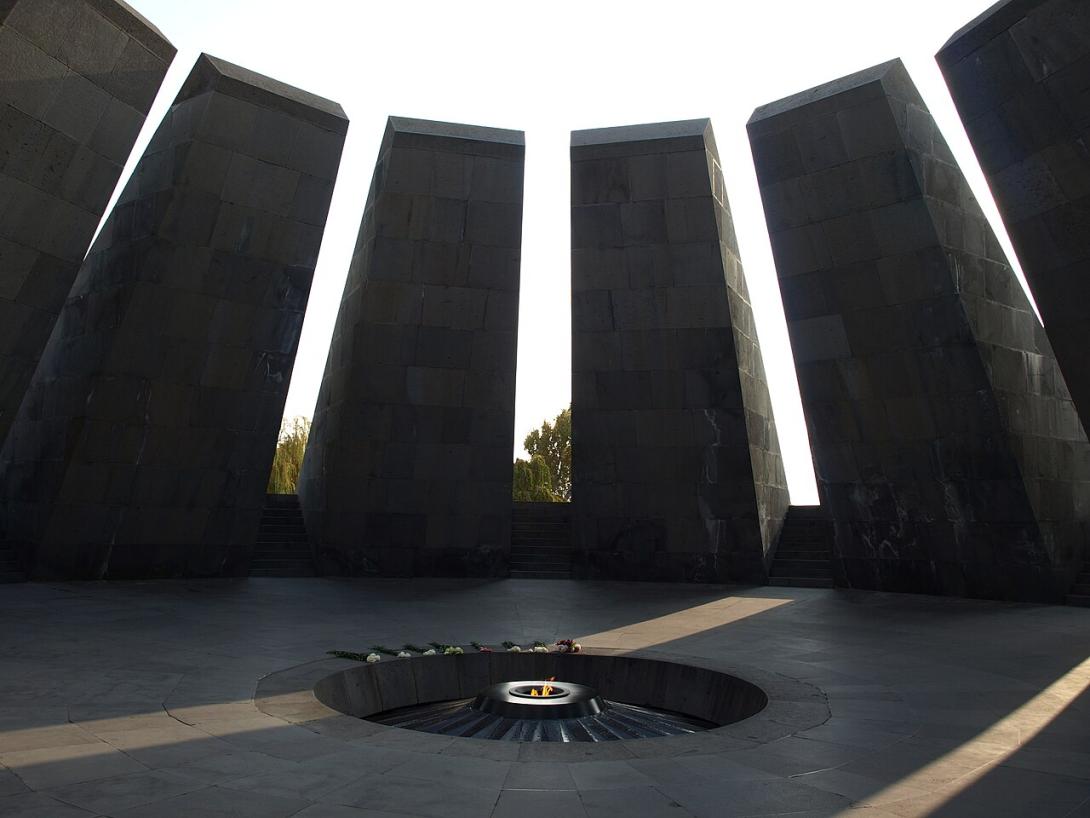
The Temple of Eternity
The Armenian Genocide: State Violence, Wartime Deportation, and the Question of Intent in the Late Ottoman Empire
Abstract
The Armenian Genocide of 1915–1917 represents one of the most consequential episodes of mass violence in modern history and remains a central case study in genocide scholarship. This article examines the destruction of Armenian communities within the Ottoman Empire during the First World War, focusing on the relationship between state policy, wartime security concerns, demographic transformation, and genocidal intent. Drawing upon Ottoman archival materials, diplomatic correspondence, survivor testimonies, demographic studies, and the broader historiography of genocide studies, this article analyzes the mechanisms through which mass deportation evolved into systematic destruction. It evaluates competing interpretations of the events, including arguments emphasizing wartime collapse and security concerns as well as the prevailing scholarly interpretation that identifies the policies of the Ottoman Committee of Union and Progress (CUP) government as constituting an intentional campaign to eliminate a substantial portion of the Armenian population. The article further examines the significance of the Armenian case for the development of international law, particularly the concept of genocide articulated by Raphael Lemkin and later codified in the 1948 United Nations Convention on the Prevention and Punishment of the Crime of Genocide. By situating the Armenian experience within the broader history of ethnic violence, and state-building, this study highlights the importance of historical evidence and comparative analysis in understanding mass atrocities.
Keywords: Armenian Genocide; Ottoman Empire; Committee of Union and Progress; deportation; genocide studies; World War I; international law
Armenia's Prime Minister at the UN General Assembly: Relations with Tehran are very important to us, and we seek deep ties with IRAN
🇺🇳 September 24th 2026
1. Introduction
The Armenian Genocide occupies a foundational place in the modern study of mass violence. Between 1915 and the final years of the First World War, hundreds of thousands of Armenians living within the Ottoman Empire were deported, dispossessed, and killed. The destruction of Armenian communities in Anatolia and neighboring regions transformed the demographic and cultural landscape of the eastern Ottoman territories and became one of the earliest major cases of twentieth-century state-organized mass killing.
The historical significance of the Armenian case extends beyond the immediate suffering of the Armenian population. It has influenced the development of concepts central to modern human rights discourse, including crimes against humanity, forced population transfer, and genocide. The events also became an important reference point for scholars examining the relationship between state power, war, and the targeting of minority populations.
The term genocide was not available during the events themselves. It was introduced in the 1940s by Raphael Lemkin, who sought to create a legal and conceptual framework for understanding the destruction of ethnic, racial, and religious groups. The Armenian experience was among the historical cases that shaped Lemkin’s thinking. Following the adoption of the Convention on the Prevention and Punishment of the Crime of Genocide by the United Nations in 1948, historians and legal scholars increasingly examined the Armenian case through the lens of genocidal intent and state responsibility.
The central scholarly question surrounding the Armenian Genocide concerns the relationship between policy, intent, and consequence. Most historians specializing in the late Ottoman period argue that the deportation and killing of Armenians represented a deliberate attempt by Ottoman authorities to eliminate the Armenian presence from much of the empire. Other interpretations emphasize the extraordinary conditions of World War I, arguing that the Ottoman government’s actions were primarily motivated by military concerns and that mass deaths resulted from administrative collapse, local violence, famine, and disease rather than a centrally organized extermination policy.
The debate, however, does not concern whether large-scale atrocities occurred. The historical record demonstrates extensive evidence of mass death, forced displacement, property confiscation, and the destruction of Armenian communal institutions. Rather, the principal debate concerns the degree of central planning, the nature of government intent, and the appropriate historical and legal classification of these events.
This article examines the Armenian Genocide through three interconnected perspectives. First, it analyzes the political and historical conditions of the late Ottoman Empire that shaped relations between the state and its Armenian population. Second, it evaluates the evidence regarding Ottoman policies of deportation and destruction. Third, it considers the historiographical and legal debates surrounding the classification of these events as genocide.
2. Historical Background: Armenians and the Ottoman Empire Before 1915
2.1 Armenians in the Ottoman Imperial System
For centuries, Armenians constituted one of the significant Christian communities within the Ottoman Empire. Unlike modern nation-states, the Ottoman Empire organized many of its non-Muslim populations through the millet system, which granted religious communities a degree of internal autonomy while maintaining their subordinate status within an Islamic imperial order.
Armenians were concentrated primarily in eastern Anatolia, particularly in regions historically associated with Armenian settlement, including parts of the provinces of Van, Erzurum, Bitlis, Diyarbakır, Harput, Sivas, and surrounding areas. Armenian communities also existed in major urban centers such as Constantinople, Smyrna, and Aleppo.
During much of the nineteenth century, Ottoman Armenians experienced increasing political tensions. The empire faced military defeats, territorial losses, economic pressures, and the rise of competing Turkism among various ethnic groups. As European powers increasingly intervened in Ottoman affairs, the condition of Christian minorities became a major diplomatic issue.
The Treaty of Berlin (1878) placed international attention on reforms affecting Ottoman Armenians, particularly regarding security, administrative reform, and protection from abuses by local officials and irregular forces. However, many promised reforms were not effectively implemented.
2.2 Rising Turkism and Ottoman-Armenian Tensions
The late nineteenth and early twentieth centuries witnessed the emergence of Armenian political organizations demanding reform, greater security, and, in some cases, autonomy. Organizations such as the Armenian Revolutionary Federation sought political change within the empire.
At the same time, Ottoman authorities increasingly viewed Armenian political activism through the lens of separatism and foreign intervention. These suspicions intensified after conflicts involving Russia, which had its own Armenian population and competed with the Ottoman Empire for influence in the Caucasus.
The period before World War I was already marked by significant violence. Between 1894 and 1896, during the reign of Sultan Abdul Hamid II, widespread massacres of Armenians occurred across the empire. Estimates of those killed vary, but hundreds of thousands of Armenians were affected. These events created a legacy of fear and mistrust between Armenian communities and Ottoman authorities.
2.3 The Young Turk Revolution and the Committee of Union and Progress
In 1908, the Young Turk Revolution restored the Ottoman constitution and brought the Committee of Union and Progress (CUP) to political dominance. Initially, many minority groups, including Armenians, welcomed the movement because it promised constitutional equality and modernization.
However, CUP ideology increasingly emphasized Turkism and centralization. Scholars have debated the extent to which this ideology contributed directly to later anti-Armenian policies. Many historians argue that wartime conditions provided the opportunity for radical Turkish elements within the CUP leadership to pursue demographic engineering aimed at creating a more homogeneous Muslim-Turkish state.
The Ottoman Empire entered World War I in 1914 on the side of the Central Powers. Military defeats, especially against Russia in the Caucasus, intensified government suspicions toward Armenians living near the eastern frontier.
2.4 The Beginning of Deportations in 1915
In April 1915, Ottoman authorities arrested Armenian intellectuals, religious leaders, political figures, and community representatives in Constantinople. Many of those arrested were later killed. This event is often considered a symbolic beginning of the genocide.
Soon afterward, Ottoman authorities implemented mass deportations of Armenians from eastern Anatolia and other regions. Deportees were ordered to leave their homes and were transported or forced to march toward areas in the Syrian desert, particularly around Deir ez-Zor.
Although deportation was officially justified as a wartime security measure, the conditions under which it was carried out resulted in catastrophic mortality. Deportees frequently faced starvation, disease, exposure, attacks by irregular forces, and killings by state personnel and allied groups.
The destruction of Armenian communities involved not only physical violence but also the confiscation of property, elimination of cultural institutions, and permanent transformation of demographic patterns throughout the former Armenian-populated regions of the Ottoman Empire.
Part II — Historiography, Sources, and the Debate Over Genocidal Intent
3. Historiography of the Armenian Genocide
The historical interpretation of the Armenian Genocide has developed through several phases, shaped by changing access to archival materials, methodological approaches in genocide studies, and broader debates about Turkism and state violence. While scholars have long agreed that the Armenian population suffered catastrophic losses during World War I, the interpretation of these events has remained politically and historiographically contested.
3.1 Early Documentation and Contemporary Observers
The events of 1915–1917 were documented extensively by contemporary observers. Diplomatic representatives from neutral and Allied countries, missionaries, journalists, and humanitarian organizations produced reports describing mass deportations and killings.
American, German, and Scandinavian observers stationed in the Ottoman Empire provided particularly significant accounts. Although Germany was allied with the Ottoman Empire during World War I, several German diplomats and officials reported concerns regarding Ottoman treatment of Armenians. Their reports described deportations, massacres, and the apparent destruction of Armenian communities.
One of the most influential contemporary sources was the testimony of diplomats such as Henry Morgenthau Sr., the American ambassador in Constantinople. Morgenthau’s reports to the U.S. government characterized Ottoman policies as a systematic campaign against Armenians. His later memoir, Ambassador Morgenthau’s Story (1918), became an important early account of the events, though historians have debated aspects of his interpretation and the extent to which diplomatic accounts reflected wartime perspectives.
Missionaries working throughout Anatolia also produced extensive documentation. Many had direct contact with Armenian communities and recorded patterns of deportation, starvation, and violence. Their writings became important sources for later historians reconstructing local experiences of the genocide.
4. Primary Sources and Historical Evidence
The study of the Armenian Genocide relies on a wide range of evidence. Historians generally evaluate multiple types of sources rather than relying on a single category of documentation.

4.1 Ottoman Government Documents
A major area of historical research concerns Ottoman archival materials. Historians have examined official correspondence, administrative orders, military communications, population records, and court documents to understand government policy.
Documents from Ottoman authorities demonstrate that deportations were centrally organized and implemented through provincial administrations. Orders were issued regarding the relocation of Armenian populations, the management of deportees, and the transfer of Armenian property.
A key debate concerns whether these documents demonstrate a policy of forced relocation intended as a security measure or whether they reveal a broader plan of population destruction. Scholars who argue that genocide occurred emphasize several factors:
- the targeting of Armenian civilians rather than only military-age men;
- the deportation of populations far from military frontiers;
- the absence of adequate provisions for survival;
- the systematic nature of killings along deportation routes;
- the confiscation and redistribution of Armenian property.
Historians such as Taner Akçam have argued that Ottoman archival evidence demonstrates state responsibility and evidence of genocidal intent.
Other scholars have questioned whether surviving Ottoman documents conclusively demonstrate a centrally planned extermination order, emphasizing the need to distinguish between official policy statements and the actions of local officials.
4.2 The “Five-Party Trial” and Postwar Ottoman Proceedings
After the Ottoman Empire’s defeat in World War I, Ottoman courts-martial investigated CUP leaders and officials accused of responsibility for the destruction of Armenians.
The trials of 1919–1920 resulted in convictions of several Ottoman officials. The proceedings included testimony concerning deportation policies, massacres, and government responsibility.
However, historians debate the evidentiary value of these trials. Supporters view them as important evidence of Ottoman acknowledgment of crimes committed against Armenians. Critics argue that the trials occurred under Allied occupation and were influenced by political circumstances following Ottoman defeat.
Nevertheless, the proceedings remain an important source for historians studying Ottoman administrative responsibility.
4.3 Survivor Testimony and Oral History
Survivor accounts represent another major category of evidence. Thousands of Armenians who survived deportations and massacres provided testimony describing:
- forced removal from homes;
- separation of families;
- violence against civilians;
- starvation and disease;
- sexual violence;
- child displacement and forced assimilation;
- destruction of Armenian religious and cultural institutions.
Because survivor testimony reflects individual experiences, historians analyze it carefully alongside other evidence. Questions regarding memory, trauma, and retrospective interpretation are important methodological considerations. However, the large number of independent testimonies from different regions has contributed significantly to historians’ understanding of patterns of violence.
5. The Central Historiographical Debate: Intent and Classification
The principal academic disagreement concerns whether the Ottoman government intended to destroy the Armenian population as a group or whether mass death resulted from wartime conditions and forced relocation.
5.1 The Genocide Interpretation
The dominant position among genocide scholars is that the destruction of Ottoman Armenians constituted genocide. Scholars supporting this interpretation generally identify several interconnected elements.
A. Centralized Deportation Policy
The deportations were not isolated local events but were implemented throughout Ottoman administrative structures. Orders were transmitted from central authorities to provincial officials, creating a coordinated process.
B. Targeting of an Ethnic and Religious Group
The policies affected Armenians as a collective population rather than merely suspected political opponents. Women, children, the elderly, and individuals with no connection to military activity were deported and killed.
C. Destructive Conditions
The argument emphasizes that Ottoman authorities created conditions under which mass death was foreseeable and, according to many scholars, intended. Deportation routes through inhospitable regions lacked adequate food, shelter, and protection.
D. Demographic Transformation
The destruction of Armenian communities was accompanied by the confiscation of Armenian property and the settlement of Muslim populations in formerly Armenian areas. Scholars interpret these measures as part of a broader demographic restructuring.
According to this interpretation, the combination of deportation, mass killing, dispossession, and demographic engineering demonstrates an intention to eliminate Armenians as a significant population within the empire.
5.2 The Turkish State Interpretation
The official position of successive Turkish governments has rejected the classification of the events as genocide.
This interpretation generally argues that:
- The Ottoman Empire faced an existential war crisis.
- Armenian revolutionary groups cooperated with Russia in some regions.
- The deportation policy was intended as a military security measure.
- Many Muslims also died during the collapse of the empire.
- Mass deaths resulted from warfare, famine, disease, banditry, and administrative failure rather than an intentional extermination policy.
Supporters of this position argue that the term genocide requires proof of specific intent to destroy a group and that such evidence has not been conclusively established.
5.3 Scholarly Responses to the Revisionist Interpretation
Most specialists in Ottoman history and genocide studies reject the argument that wartime circumstances alone explain the scale and pattern of Armenian destruction.
They acknowledge that:
- the Ottoman Empire was experiencing severe military and political crisis;
- intercommunal violence existed before and during the war;
- Muslim populations also suffered enormous losses.
However, they argue that these factors do not explain:
- the systematic deportation of Armenian civilians;
- the destruction of communities far from combat zones;
- the consistent patterns of killing across provinces;
- the state-directed confiscation of Armenian property.
The prevailing scholarly view is that wartime conditions facilitated the implementation of a destructive policy but do not adequately explain the policy itself.
6. Comparative Genocide Studies
The Armenian case occupies a significant place in comparative genocide studies because it occurred before the Holocaust and influenced later discussions about state-organized destruction.
Scholars compare the Armenian Genocide with other cases of mass violence, including:
- the Holocaust,
- the destruction of Indigenous populations in various colonial contexts,
- the Cambodian genocide,
- the Rwandan genocide,
- and ethnic cleansing campaigns in the twentieth and twenty-first centuries.
The Armenian case contributed to scholarly debates about whether genocide requires explicit written orders or whether intent can be established through patterns of action, administrative decisions, and predictable consequences.
Many genocide scholars emphasize that perpetrators rarely openly declare genocidal intentions. Instead, intent is often reconstructed through evidence such as policies, rhetoric, organizational structures, and the systematic nature of destruction.
Part III — The Mechanisms of Destruction: Deportation, Mass Killing, Property Confiscation, Cultural Erasure, and the Development of International Law
7. The Mechanisms of Destruction
The destruction of Ottoman Armenian communities between 1915 and 1917 did not occur through a single method or event. Rather, it unfolded through a combination of administrative decisions, forced displacement, mass violence, economic dispossession, and cultural destruction. Historians studying the Armenian Genocide have emphasized that these interconnected processes must be examined together because the physical destruction of a population was accompanied by the dismantling of its social, economic, and cultural foundations.
The concept of genocide in modern scholarship extends beyond direct killing. The destruction of a group may also involve the elimination of institutions, confiscation of resources necessary for survival, forced assimilation of children, and the removal of collective identity. The Armenian experience demonstrates how state power can operate through multiple mechanisms simultaneously.
7.1 Deportation as an Instrument of Population Destruction
The Ottoman government formally justified the deportation of Armenians as a wartime security measure. The official rationale was that Armenian communities near the Russian front represented a potential internal security threat. In practice, however, deportation policies affected Armenians throughout the empire, including communities far from active military operations.
Beginning in spring 1915, Ottoman authorities issued orders requiring the relocation of Armenian populations from numerous provinces. These measures were implemented through provincial governors, military units, police forces, and special administrative bodies.
The deportations followed a recurring pattern:
- Armenian community leaders were arrested.
- Families were ordered to leave their homes with little preparation.
- Property and possessions were often abandoned or confiscated.
- Deportees were transported or forced to march over long distances.
- Large numbers died from violence, starvation, disease, and exposure.
The scale and organization of the deportations are central to the argument of historians who classify the events as genocide. They argue that the policy was not simply a temporary relocation but a process that destroyed Armenian communities as functioning social units.
7.2 Mass Killing and the Role of State and Paramilitary Forces
The killing of Armenians occurred through several mechanisms. In some regions, executions targeted Armenian men who had been separated from deportation columns. In others, entire groups of civilians were attacked during deportation.
Responsibility for violence involved different actors, including:
- Ottoman military units,
- local officials,
- police forces,
- irregular armed groups,
- and individuals acting within an environment created by state policy.
A significant scholarly question concerns the degree of coordination between central authorities and local perpetrators. Historians who argue for the genocide interpretation emphasize that widespread violence occurred within a framework established by Ottoman administrative decisions.
The organization of deportation routes and the allocation of authority to officials responsible for Armenian populations created conditions in which mass killing became possible on a large scale.
The victims included not only adult men but also women, children, and elderly people. This demographic pattern is important because it distinguishes the events from conventional wartime reprisals against suspected combatants.
7.3 The Syrian Desert Camps and Mass Mortality
A major destination for deported Armenians was the Syrian region of the Ottoman Empire, particularly areas around Deir ez-Zor.
The deportation system resulted in the establishment of temporary camps and settlements where survivors faced extreme conditions. Many deportees arrived already weakened by hunger, disease, and violence during the marches.
Conditions included:
- insufficient food supplies;
- lack of medical care;
- overcrowding;
- exposure to disease;
- attacks by armed groups;
- and continued executions.
The mortality in these areas became one of the most devastating aspects of the Armenian catastrophe. The Syrian desert became associated with the destruction of the final remnants of many Armenian communities from Anatolia.
7.4 Property Confiscation and Economic Destruction
The destruction of Armenian life was not limited to physical violence. Economic dispossession played a central role in transforming Armenian communities.
Following deportation orders, Armenian homes, businesses, farms, workshops, and religious properties were frequently confiscated or redistributed. Ottoman authorities developed legal and administrative mechanisms for managing what was officially described as “abandoned property.”
The consequences were profound:
- Armenian communities lost their economic foundations.
- Survivors returning after the war often found their homes occupied or their property transferred.
- Armenian institutions lacked the resources necessary for reconstruction.
Historians studying genocide increasingly emphasize economic destruction as a significant component of mass violence. The removal of a population’s material resources can prevent recovery even among those who survive.
7.5 The Destruction of Armenian Cultural Heritage
The Armenian Genocide also had a major cultural dimension. Armenian communities had maintained a distinctive religious, educational, and cultural presence in Anatolia for centuries.
During and after the genocide:
- Armenian churches were destroyed, abandoned, or converted to other uses.
- Schools and cultural organizations disappeared.
- Manuscripts, archives, and religious objects were lost.
- Armenian place names were altered in many regions.
Cultural destruction contributed to the erasure of Armenian historical presence in areas where Armenian communities had existed for centuries.
Scholars of cultural genocide argue that eliminating a group’s institutions and historical memory represents an important dimension of collective destruction.
8. Children, Forced Assimilation, and the Destruction of Family Structures
One of the most significant aspects of the Armenian Genocide was the fate of Armenian children.
Many children were separated from their families during deportations. Some were placed in orphanages, while others were absorbed into Muslim households or institutions.
The Ottoman government issued regulations concerning Armenian orphans and children, and thousands experienced forced assimilation. Survivors and historians have documented cases in which children lost their language, religion, and connection to Armenian identity.
The fate of children is central to genocide studies because children represent the continuity of a group across generations. Policies affecting children can therefore be understood as attempts to eliminate the future existence of a targeted community.
9. The Armenian Case and the Development of the Concept of Genocide
The Armenian Genocide played an important role in shaping modern international discussions about mass violence.
9.1 Raphael Lemkin and the Concept of Genocide
The Polish legal scholar Raphael Lemkin introduced the term genocide in his 1944 book Axis Rule in Occupied Europe.
Lemkin argued that genocide was not simply mass murder but the destruction of groups through coordinated actions aimed at eliminating their collective existence. He studied historical examples, including the destruction of Armenians in the Ottoman Empire, as part of his effort to define this crime.
For Lemkin, the Armenian case demonstrated that international law lacked adequate mechanisms to prevent or punish the destruction of entire peoples.
9.2 The United Nations Genocide Convention
In 1948, the United Nations adopted the Convention on the Prevention and Punishment of the Crime of Genocide.
The convention defines genocide as acts committed with the intent to destroy, in whole or in part, an ethnic, racial, or religious group.
These acts include:
- killing members of the group;
- causing serious bodily or mental harm;
- deliberately creating conditions of life calculated to bring about physical destruction;
- imposing measures intended to prevent births;
- forcibly transferring children.
Modern historians analyze the Armenian case using these categories, particularly focusing on the relationship between deportation policies, mortality, and evidence of intent.
10. Intent and Historical Methodology
The question of intent remains one of the most important issues in genocide studies.
Because perpetrators rarely leave explicit written statements declaring genocidal goals, historians often establish intent through accumulated evidence, including:
- government orders;
- administrative practices;
- patterns of violence;
- demographic consequences;
- ideological writings;
- statements by officials;
- and the treatment of survivors.
Supporters of the genocide interpretation argue that the Ottoman case demonstrates intent through the systematic destruction of Armenian communities and the consistent application of policies across different regions.
Critics argue that intent must be proven through direct documentation and that wartime decisions should not automatically be interpreted as genocidal.
This methodological debate reflects a broader challenge in studying historical atrocities: determining how governments move from discriminatory policies to campaigns of destruction.
11. The Legacy of the Armenian Genocide
The consequences of the Armenian Genocide extended beyond the years of World War I. The destruction of Ottoman Armenian communities produced a global Armenian diaspora and permanently altered the demographic landscape of the region.
Survivors rebuilt communities in countries throughout the Middle East, Europe, North America, South America, and elsewhere. Armenian identity in the twentieth century became deeply shaped by memory of genocide, displacement, and survival.
The events also influenced later debates about human rights, refugee protection, cultural preservation, and international responsibility for mass atrocities.
Part IV — International Recognition, Memory Politics, Contemporary Debates, Conclusion, and References
12. International Recognition and the Politics of Memory
The historical interpretation of the Armenian Genocide has not remained confined to academic scholarship. It has become deeply connected to questions of national identity, international diplomacy, and collective memory. Unlike many historical events whose interpretation is primarily an academic matter, the Armenian case has continued to influence relations between states, particularly between Armenia and Turkey.
Recognition of the Armenian Genocide has developed unevenly across countries and international institutions. Many governments, parliaments, and academic organizations have formally recognized the events as genocide, while others have avoided the terminology due to diplomatic considerations.
Recognition debates generally involve several overlapping issues:
- historical responsibility;
- international law;
- diplomatic relations;
- identity and memory;
- demands for acknowledgment and justice.
For Armenians worldwide, recognition is often understood as a matter of historical truth, remembrance, and acknowledgment of the suffering of their ancestors. For many Turkish officials and segments of Turkish society, the issue is associated with questions of national identity, responsibility, and the interpretation of Ottoman history.
12.1 The Armenian Perspective on Memory and Recognition
Within Armenian communities, remembrance of the genocide has become a central element of collective identity. The annual commemoration of 24 April—the date associated with the arrest of Armenian intellectuals in Constantinople in 1915—serves as a major day of remembrance.
Armenian memory emphasizes:
- the destruction of historic Armenian communities;
- the loss of cultural heritage;
- the experiences of survivors;
- the consequences of displacement;
- and the importance of preventing future genocides.
The genocide is often viewed not only as a historical tragedy but also as a defining event that shaped the modern Armenian nation and diaspora.
12.2 Turkish Historical Debates and State Position
The Republic of Turkey, founded in 1923 after the collapse of the Ottoman Empire, has generally rejected the characterization of the events of 1915 as genocide.
The official Turkish position has changed in emphasis over time but has generally maintained that:
- Armenians and Muslims both suffered during the First World War;
- Ottoman authorities faced rebellion and foreign invasion;
- deportations were a military measure rather than an extermination policy;
- deaths resulted from wartime conditions, disease, famine, and local conflicts.
The Turkish state has also argued that the term “genocide” carries a legal meaning requiring proof of specific intent and that historical interpretation should remain the subject of scholarly debate rather than political declaration.
However, within Turkey itself, a number of historians, journalists, writers, and civil society organizations have challenged official narratives and called for greater examination of Ottoman responsibility. Scholars such as Taner Akçam have played an important role in developing Turkish-language scholarship that supports the genocide interpretation.
13. The Role of International Law
The Armenian Genocide occupies a significant position in discussions about international criminal law because it occurred before the creation of the legal category of genocide.
A fundamental legal principle is that criminal laws generally cannot be applied retroactively. Therefore, the term “genocide” was not legally available in 1915. Instead, historians apply the concept retrospectively as an analytical category based on later legal definitions.
This distinction is important:
- Historical judgment asks whether the events fit the concept of genocide as developed by scholars and international law.
- Legal judgment concerns whether individuals or states can be prosecuted under laws existing at the time.
Most contemporary genocide scholars argue that the absence of the word “genocide” in 1915 does not prevent historians from applying the concept to earlier events.
13.1 Crimes Against Humanity and the Postwar Response
After World War I, Allied governments investigated Ottoman actions against Armenians. The concept of crimes against humanity emerged partly from discussions surrounding atrocities committed during the war, including those against Armenians.
Although postwar prosecutions were limited and ultimately unsuccessful in establishing a comprehensive international legal framework, the Armenian case contributed to later efforts to create mechanisms for preventing mass atrocities.
The experience of the Armenians, together with the Holocaust and other twentieth-century atrocities, influenced the development of international human rights law.
14. Comparative Analysis: The Armenian Genocide in Genocide Studies
The Armenian case is frequently examined alongside other examples of mass violence because it raises fundamental questions about how societies move from discrimination to destruction.
Comparative genocide studies examine recurring patterns, including:
14.1 Dehumanizing Ideologies
Many genocidal campaigns are preceded by narratives portraying a targeted group as dangerous, disloyal, or incompatible with the future of the state.
In the Ottoman case, Armenian political activity and religious difference increasingly became associated in official discourse with threats to imperial unity.
14.2 Wartime Conditions as Opportunities
War often creates conditions in which governments can implement extreme policies with reduced oversight.
World War I provided the Ottoman government with:
- expanded military authority;
- weakened administrative accountability;
- heightened fears of internal enemies;
- and conditions of secrecy.
Historians generally agree that the war context was crucial, although they differ regarding whether it explains or merely enabled the destruction of Armenians.
14.3 Bureaucratic Organization
Modern genocide studies emphasize that mass atrocities often require administrative structures.
The Armenian case demonstrates the role of:
- provincial administrations;
- transportation systems;
- population records;
- property regulations;
- and state communication networks.
The involvement of bureaucracy distinguishes genocide from spontaneous episodes of communal violence.
15. Conclusion
The Armenian Genocide remains one of the most significant and debated episodes of twentieth-century history. Between 1915 and 1917, Ottoman Armenians experienced mass deportation, widespread killing, dispossession, and the destruction of centuries-old communities.
The historical evidence demonstrates that the catastrophe was not the result of a single event but a complex process involving state policy, wartime conditions, Turkish ideology, administrative structures, and violence carried out across multiple regions.
The central scholarly debate concerns the question of intent. While some interpretations emphasize wartime security concerns and imperial collapse, the prevailing view among genocide historians is that Ottoman authorities pursued policies that resulted in the deliberate destruction of a substantial portion of the Armenian population. This interpretation is based on the convergence of documentary evidence, survivor testimony, demographic studies, and patterns of state action.
Beyond the question of classification, the Armenian experience remains historically significant because it illustrates the dangers of extreme Turkism, the vulnerability of minority populations during periods of crisis, and the consequences of state power directed against civilian communities.
The study of the Armenian Genocide also demonstrates the importance of historical methodology. Understanding mass violence requires careful examination of evidence, recognition of competing interpretations, and attention to both individual experiences and broader political structures.
More than a century after the events, debates over recognition and responsibility continue. Yet the historical record remains essential not only for understanding the past but also for informing contemporary efforts to prevent future atrocities.
References
(Chicago Author–Date Style)
Akçam, Taner. 2012. The Young Turks’ Crime Against Humanity: The Armenian Genocide and Ethnic Cleansing in the Ottoman Empire. Princeton: Princeton University Press.
Balakian, Peter. 2003. The Burning Tigris: The Armenian Genocide and America’s Response. New York: HarperCollins.
Dadrian, Vahakn N. 2003. The History of the Armenian Genocide: Ethnic Conflict from the Balkans to Anatolia to the Caucasus. Providence: Berghahn Books.
Hovannisian, Richard G., ed. 1992. The Armenian Genocide: History, Politics, Ethics. New York: St. Martin’s Press.
Kévorkian, Raymond. 2011. The Armenian Genocide: A Complete History. London: I.B. Tauris.
Morgenthau, Henry. 1918. Ambassador Morgenthau’s Story. New York: Doubleday.
Power, Samantha. 2002. “A Problem from Hell”: America and the Age of Genocide. New York: Basic Books.
Suny, Ronald Grigor. 2015. “They Can Live in the Desert but Nowhere Else”: A History of the Armenian Genocide. Princeton: Princeton University Press.
Üngör, Uğur Ümit. 2011. The Making of Modern Turkey: Nation and State in Eastern Anatolia, 1913–1950. Oxford: Oxford University Press.
United Nations. 1948. Convention on the Prevention and Punishment of the Crime of Genocide.
Page Term Reference
Comments