

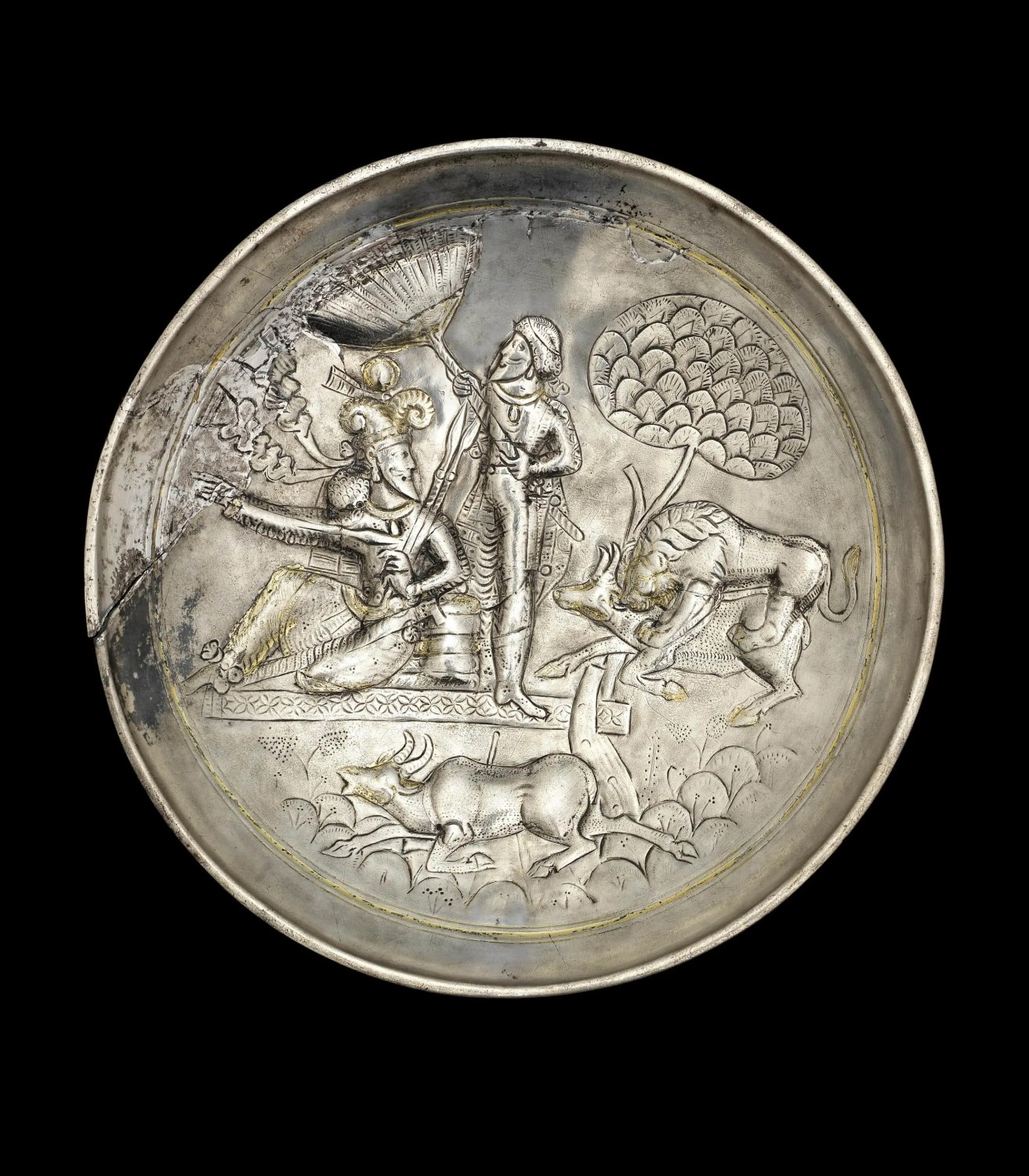
The Sasanian plate depicted here is one of the significant artistic artifacts from the era of the Sasanian Empire. Such plates were generally used not only as decorative objects but also as symbols of royal power, prestige, and the grandeur of the Sasanian court. The intricate and highly detailed designs on the plate portray a hunting scene in which a Sasanian king is shown observing and overseeing the hunt.
Hunting was regarded as one of the most important symbols of royal authority, strength, and capability among Sasanian kings. It was frequently represented in the artistic works of the period, particularly on silver plates, vessels, and palace reliefs. In these depictions, the king was often portrayed as a figure who embodied supremacy, demonstrating his control over nature and wild animals. The act of hunting symbolized not only physical strength and courage but also the ruler’s ability to maintain order and harmony between humans and the natural world.
Beyond their decorative function, these royal plates may have also carried religious, social, and ideological meanings. They served as visual expressions of kingship, emphasizing qualities such as power, wisdom, bravery, and divine legitimacy. The motifs found on this plate—including wild animals and royal figures—reflect the high status of the monarch and his perceived ability to master the forces of nature.
In Sasanian artistic tradition, the king was not represented merely as a political ruler but as an enlightened and capable leader who observed, guided, and controlled events with wisdom and precision. Such objects were sometimes used in formal gatherings and royal ceremonies, functioning as symbols of the sophisticated culture, craftsmanship, and artistic achievements of the Sasanian Empire. They provide valuable insight into the ideals of kingship, social hierarchy, and the worldview of one of the most influential civilizations of late antiquity.
Page Term Reference
Comments