
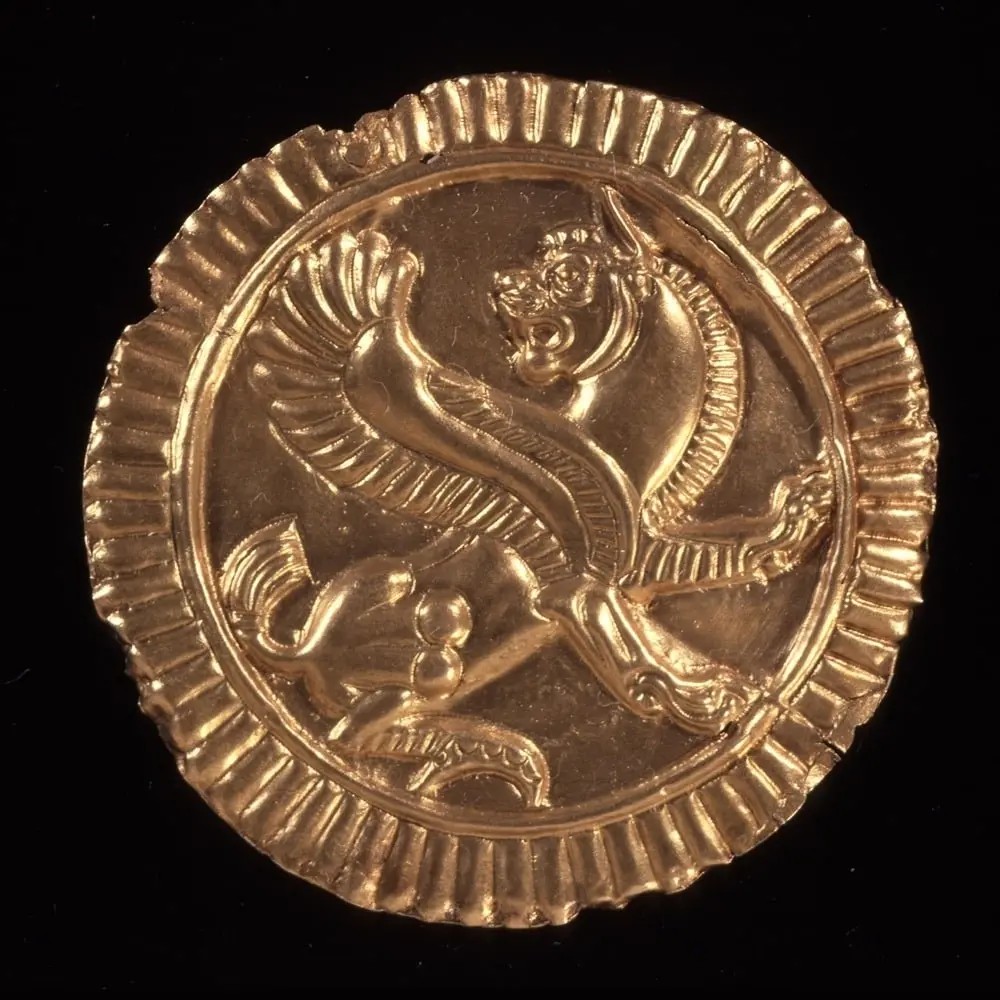
This golden plaque, belonging to the Achaemenid royal dynasty of Iran, is a brilliant example of ancient Iranian goldsmithing. It was crafted to be sewn onto formal or ceremonial garments. At its center is a repoussé depiction of a griffin—a mythical creature with the body of a lion, outstretched wings, and the head of an eagle or a powerful predatory animal—which was regarded in the culture and art of the period as a symbol of strength, kingship, and protection. The precise details in the design of the wings, body, and face demonstrate the exceptional skill of Achaemenid metalworkers. The surrounding scalloped border further enhances the plaque’s visual prominence while also contributing to its structural durability.
Griffins were among the most recognizable mythical symbols in the art and architecture of Achaemenid Iran, with examples appearing in the palaces of Persepolis and other royal monuments. The use of such imagery on golden plaques sewn onto the garments of nobles or royal guards reflects the deep connection between mythology, aesthetics, and the structure of political power in that era. This plaque was not merely a magnificent ornament; it also served as a carrier of the cultural and political messages of the Achaemenid Empire.
Page Term Reference
Comments