
PARS ENTERPRISE (SINCE2015) IS A WORLD NATIONAL DEDICATION BY MONTAZERI.ORG
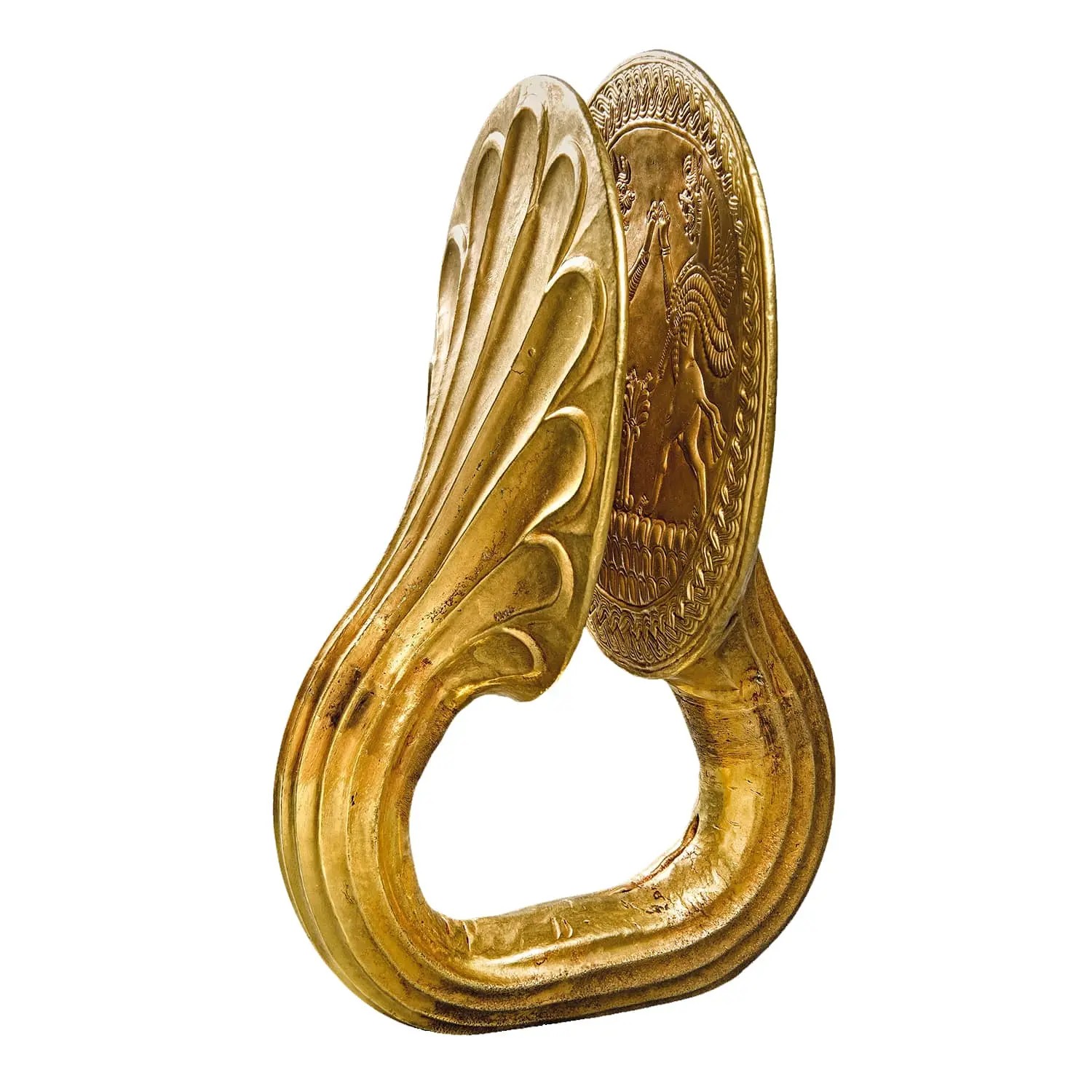
The Arjan Ring of Power is a mysterious ancient artifact dating back to around the second millennium BCE and the Middle Elamite period. It was discovered at the historical site of Arjan (Argan) in Behbahan County, Khuzestan Province, Iran, and is currently preserved in the National Museum of Iran.
Arjan (Argan) was the name of an ancient city and province belonging to the Middle Elamite period, located on the border between Khuzestan and Fars. The remains of the city lie about 12 kilometers northeast of Behbahan, on both sides of the Marun River. In 1982 CE (1361 in the Iranian calendar), the remains of a tomb dating back to approximately the second millennium BCE and the Elamite period were discovered near this site.
The tomb contained a large bronze coffin, along with a gold ring, 98 golden buttons, a dagger, a silver rod, a jug and a goblet, as well as a tray and ten cylindrical bronze vessels dating to around the 8th century BCE. One of the notable features of the tomb was the use of bitumen mortar and a plaster coating to prevent moisture penetration due to its proximity to the Marun River.
One of the most significant discoveries from this archaeological site was the mysterious golden ring found on the deceased person’s left hand, which became known as the Arjan Ring of Power. The ring has a hollow, crescent-shaped cylindrical handle, with both ends terminating in two oval-shaped plates. The inner surfaces of these plates are symmetrically decorated with images of two winged lions standing on either side of a sacred tree. A braided-hair pattern surrounds the motifs. Beneath the lions’ feet are three rows of engraved designs in the shape of semicircular arches, while grooves carved along the handle extend outward and end in a twelve-petaled flower motif on the exterior sides of the two plates.
The ring bears an inscription in the Elamite cuneiform script on its handle, which translates as:
“Kidin-Hutran, son of Kurlush.”
حلقه قدرت اَرگان یک اثر باستانی رازآمیز متعلق به حدود هزاره دوم پیش از میلاد و دوره ایلامی است که در محوطه تاریخی ارجان در استان خوزستان شهرستان بهبهان کشف شده و در موزه ایران باستان نگهداری میشود.
ارگان (ارجان) نام شهر باستانی و استانی متعلق به دوره ایلام میانی که در مرز خوزستان و فارس واقعشده است. بقایای شهر در ۱۲ کیلومتری شمال شرقی بهبهان در دو طرف رود مارون قرار دارد. در سال ۱۳۶۱ خورشیدی در نزدیکی این محوطه، آثار یک آرامگاه متعلق به حدود هزاره دوم پیش از میلاد و دوره ایلامی کشف شد. این آرامگاه حاوی تابوتی بزرگ از جنس مفرغ بود که به همراه آن یک حلقه طلایی، ۹۸ دکمه زرین، یک خنجر، یک میله نقرهای، تُنگ و ساغر و یک سینی و ده ظرف استوانهای شکل برنزی متعلق به ۸۰۰ سال پیش از میلاد ، پیدا شد. ویژگی این آرامگاه استفاده از ملاط قیر و اندودِ گچ برای جلوگیری از نفوذ رطوبتِ همجواری با رودخانهی مارون بوده است.
یکی از کشفیات مهم این محوطهی تاریخی، حلقهی اسرارآمیزِ زرینی بود که در دست چپِ متوفی قرار داشت و به حلقه قدرتِ ارجان معروف شد. این حلقه دارای دسته استوانهای هلالی شکلِ تو خالی است، که دو انتهای آن به دو صفحه بیضی شکل ختم می شود. قسمت داخلی این صفحهها به طور قرینه با نقش دو شیرِ بالدار که در دو طرف درختِ مقدس ایستاده اند، تزیین شده است. دورتادور نقوش نقش گیس باف دیده می شود. در زیر پای شیرها سه ردیف نقش به صورت طاق هلالی شکل کنده شده و بر روی دسته، شیارهایی ایجاد شده که انتهای آنها به یک گل دوازده پر در قسمت بیرونیِ دو صفحه، ختم میشود. این حلقه دارای کتیبهای به خط میخی ایلامی در قسمت دسته است که ترجمه آن کیدین هوتران پسر کورولوش است.
Page Term Reference
Comments