

A remnant of the Sasanian era, stands in the historic garden-city of Natanz in Isfahan Province as a precious memento of one of the most glorious periods of Iranian history. This religious structure was registered on Iran’s National Heritage List on 9 July 1932 (18 Tir 1311 in the Iranian calendar). Today marks the ninety-fourth anniversary of that historic registration.
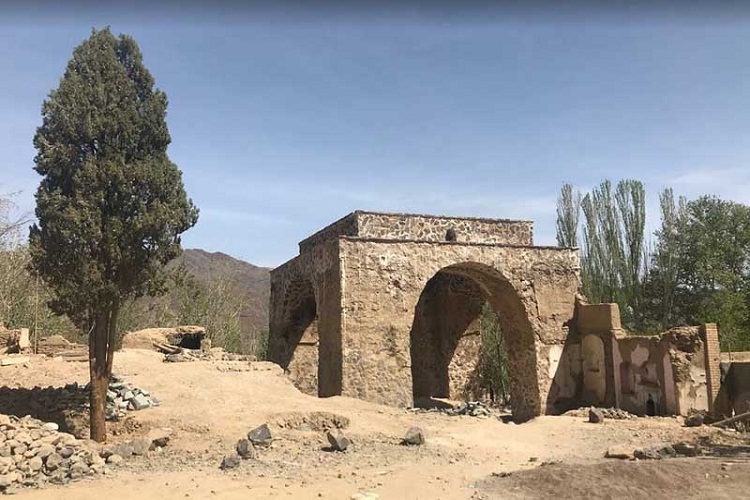
Across an area of 122 square meters, the remains of a Chahar-Taqi (four-arched structure) can be seen, bearing witness to the radiant splendor of its past. Of this once-flourishing fire temple, built centuries ago, only its four pillars, the southern arch, and a small portion of the edge of its ancient dome remain standing. The ruthless hand of time has taken away much of the rest. Yet even so, it still whispers untold stories to those who listen with their hearts to the enchanting melody of its ancient, undying flame—a melody heard within the soul and a fire that continues to burn in the heart.
Nearly 1,800 years have passed since the construction of this enduring fire temple. It is sometimes referred to simply as a Chahar-Taqi. Whatever name it bears—whether Chahar-Taqi or fire temple—it remains a beautiful and steadfast relic, a lasting treasure of Iran’s ancient and eternal heritage. Its stonework and building materials speak volumes about Iran’s past—a past filled with pride and grandeur, yet at times accompanied by profound pain and sorrow.
It appears that the Natanz Fire Temple was constructed from river stones of various sizes. What remains today reveals the graceful form of its original design. Moreover, the temple’s pleasing details, despite all the damage it has suffered, and the unique shape of its arches are features that cannot escape the eye. It is remarkable that after eighteen centuries—centuries marked by tragic and destructive events—the Natanz Fire Temple has preserved its essential structure and has endured the relentless struggle against the forces of time, remaining firm and dignified.
Although in recent years, like many historical structures and monuments of Iran, reports have emerged about its deteriorating condition, and little was said about its restoration (except in 2017, when some attention was briefly given to it), the good news is that the Natanz Fire Temple continues its timeless journey and lives on.
Page Term Reference
Comments