Before the internationally acclaimed airline Iran Air officially began operations in 1962, an earlier company called Iranian Airways had already been established in 1946. However, it was Iran Air that earned a distinguished reputation among the world's leading airlines thanks to its modern fleet and high service standards. On 4 July 1965 (13 Tir 1344 in the Iranian calendar), the airline entered the jet age by operating its first scheduled flight with a jet aircraft.
On 24 February 1962 (5 Esfand 1340), Iran's national airline, officially named The National Iranian Airline, was founded with an initial capital of 17 million tomans. Ownership was divided among the government (50%), private investors (9%), and two domestic airlines (41%). The airline adopted the abbreviated Persian name HOMA, and in April 1962 the name Iran Air was painted on the fuselages of its aircraft.
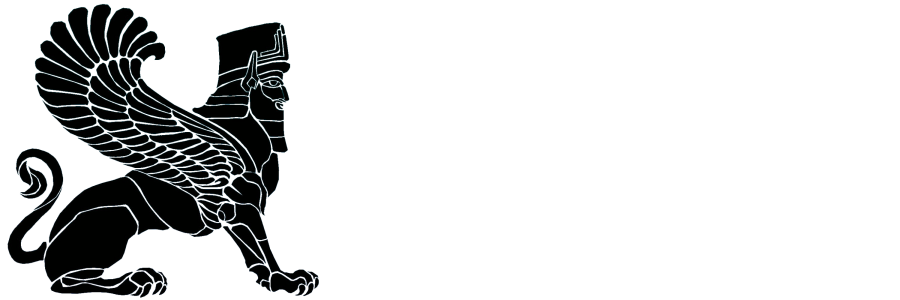
Iran Air also introduced one of the most recognizable airline emblems in aviation history. Its elegant logo was inspired by the legendary Homa bird, a mythical creature depicted in the ancient reliefs of Persepolis, symbolizing fortune and prosperity. The airline initially operated a fleet consisting of four-engine Douglas DC-3, Avro York, Douglas DC-6, and Vickers Viscount aircraft. Shortly after its establishment, Iran Air became a member of the International Air Transport Association (IATA).
In 1962, Iran Air operated a fleet of 13 aircraft and employed approximately 750 staff members. By 1978, the airline had expanded dramatically, operating 37 Boeing aircraft and employing more than 12,800 people, making it one of the largest and fastest-growing airlines in the region.
Iran Air's first jet-powered commercial flight departed in the early morning of 4 July 1965, using a Boeing 727-100 on the Tehran–Beirut route, although some historical sources refer to the inaugural jet service as a Tehran–Europe flight. The Boeing 727 had arrived at Mehrabad Airport the previous day and was officially delivered to the National Iranian Airline before entering service.
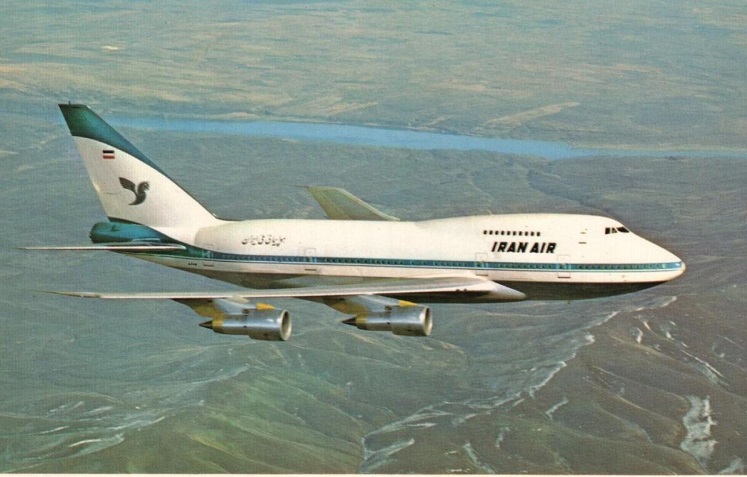
Following the successful introduction of the Boeing 727, Iran Air adopted a long-term strategy to modernize its entire fleet with jet aircraft. This decision marked the beginning of the airline's Golden Age, which accelerated from 1970 onward. In 1975, the airline introduced the prestigious Boeing 747 into its fleet, significantly expanding its long-haul capabilities and international presence.
In 1977, Iran Air purchased six Airbus A300 aircraft from the European manufacturer Airbus, becoming the first airline in the Middle East to operate Airbus aircraft. This milestone demonstrated the airline's commitment to adopting the latest aviation technologies and maintaining one of the most advanced fleets in the region.
By the mid-1970s, the National Iranian Airline (HOMA), internationally known as Iran Air, had earned a reputation as one of the safest, most modern, and most profitable airlines in the world. Its young fleet, extensive international network, and high operational standards placed it among the leading global carriers of its era, making it a symbol of Iran's rapid modernization and growing presence in international civil aviation.
Page Term Reference
Comments