
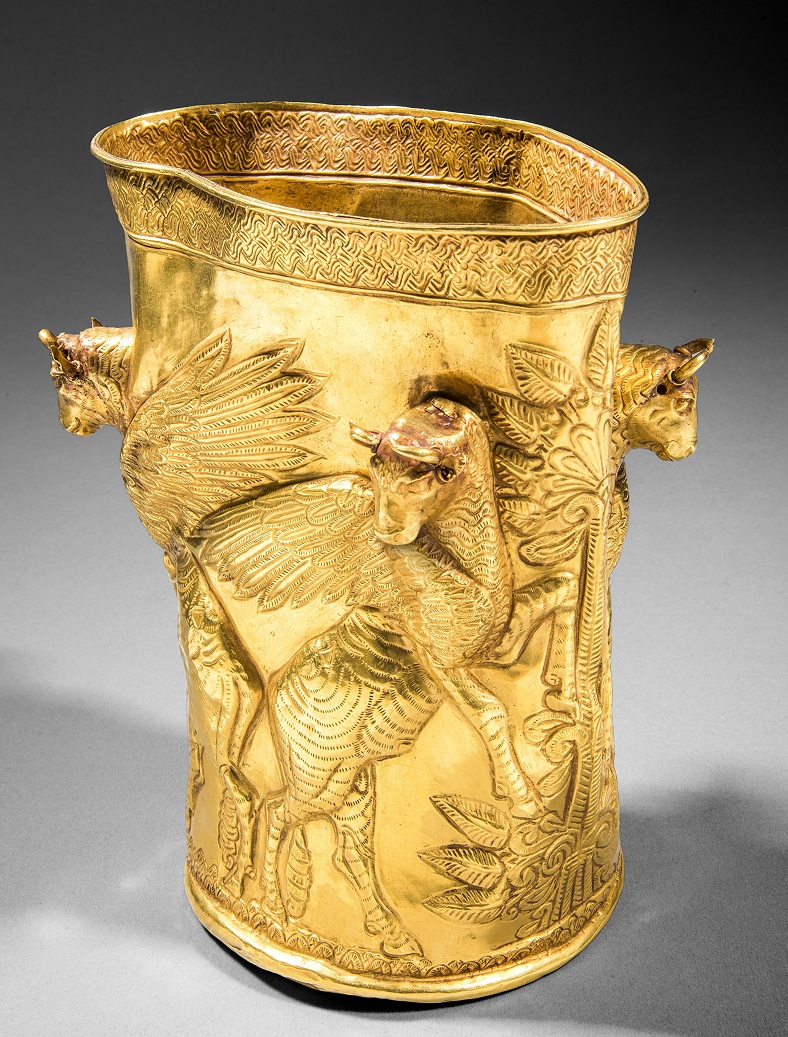
One of the masterpieces exhibited at the National Museum of Iran in the framework of the Golden Masterpieces of Iranian Art is the Marlik Cup.
According to the Public Relations Department of the National Museum of Iran, Marlik is located in the Gohar Rud Valley in Rudbar County, Gilan. This cemetery is located on a natural cliff and 53 graves have been excavated, which are placed in an irregular order in the open areas between the boulders. The cemetery was used from about 1400 to 1000 BC and even later. In some graves, objects from several periods are seen, which probably indicate several consecutive burials in one grave during different times.
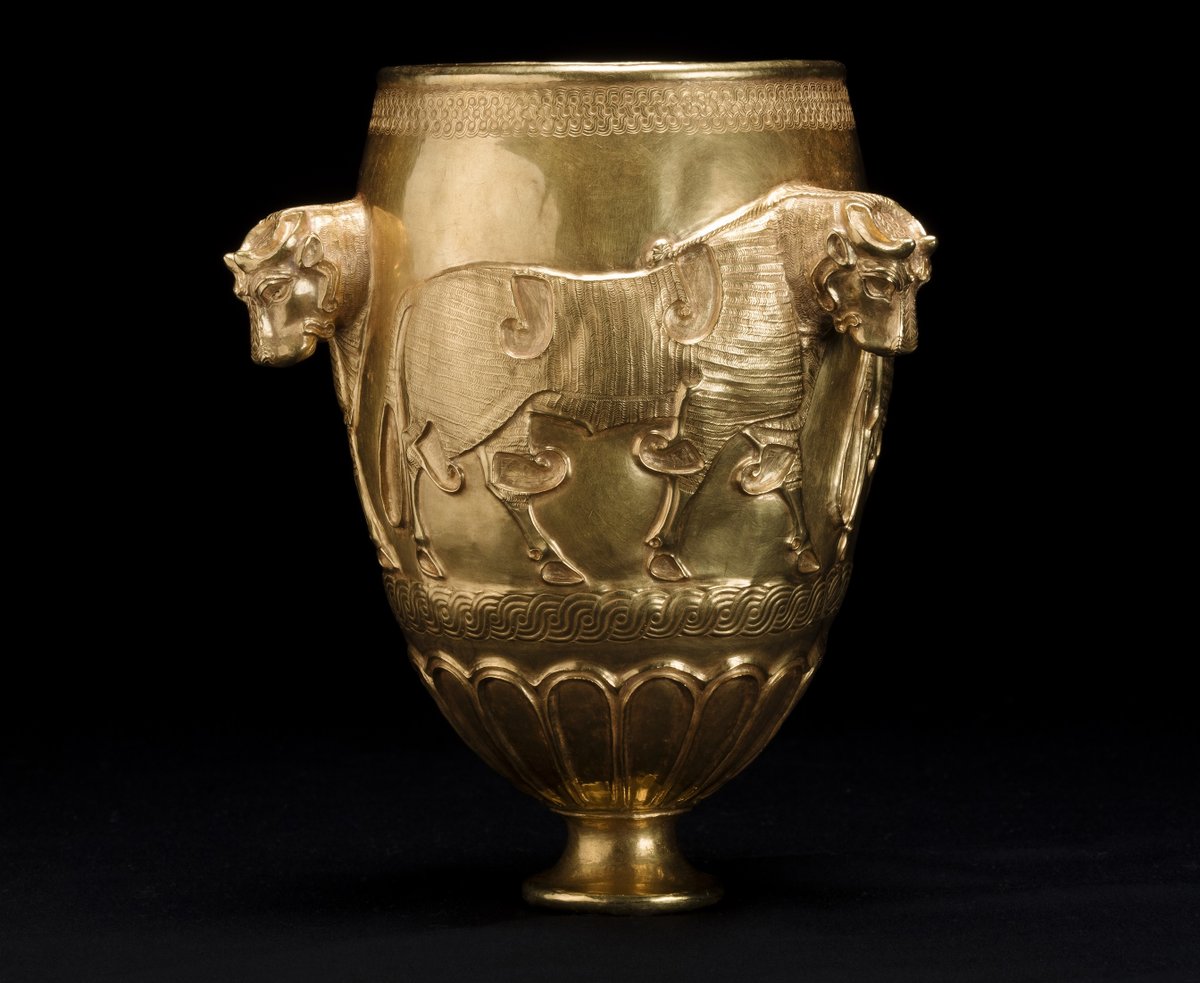
This work is one of the gold cups from the excavation of the Marlik cemetery, which was obtained from grave 26 and belongs to the late second millennium and early first millennium BC. It is 6/18 centimeters high and is decorated with four mythical winged bulls in relief carving. The heads of the bulls are raised and hammered out of the body of the vessel. Each pair of winged bulls is symmetrically climbing a palm-like decorative tree. These imaginary animals are shown to be extremely mobile and lively, standing on their hind legs, raising their front legs and leaning around the trunk and branches of the tree. The rim of the cup is decorated with a very thin wire strip in a compact and dense manner, and has an almost angular protrusion at the point where the body of the cup connects to the bottom. The combination of winged animal motifs and a tree, known as the tree of life, was more popular in Iran and Mesopotamia during the Iron Age in the first millennium BC.
Page Term Reference
Comments