

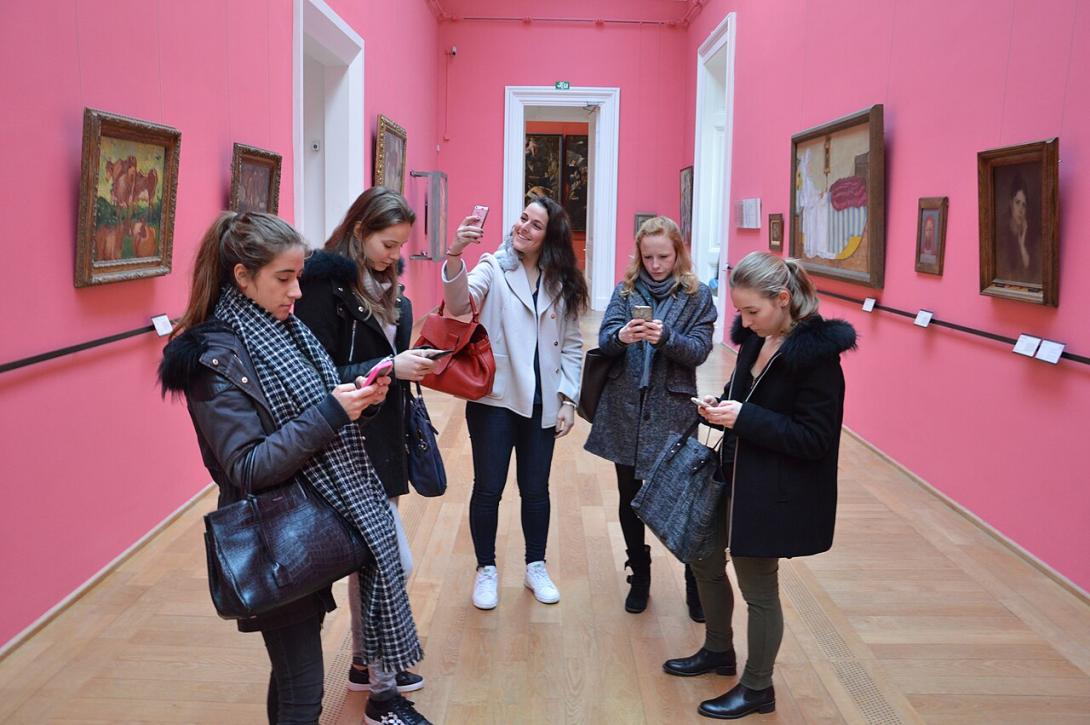
Generation-Z girls taking and sending photos while at the Lille Palace of Fine Arts museum by Nben54 - Own work, CC BY-SA 4.0 https://commons.wikimedia.org/w/index.php?curid=54927031
The European Union and allegations of political double standards towards Iran
The European Union has faced serious criticism regarding what many consider to be a double-standard approach towards Iran and the Iranian people.
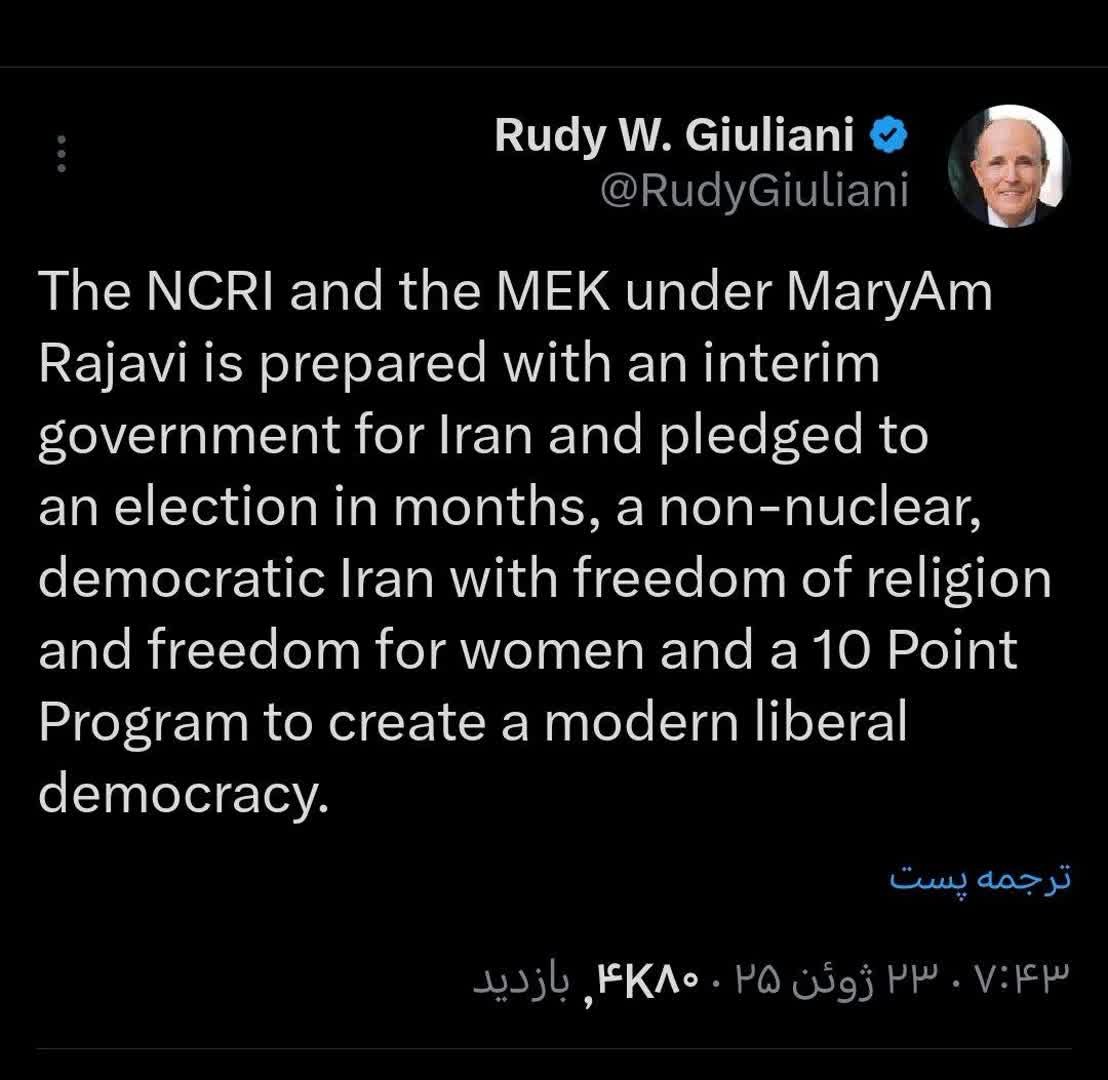
On the one hand, the European Union has publicly and politically engaged with groups such as the Mujahedin-e Khalq and has provided platforms for political activities by this organisation in certain official and public forums. At the same time, a significant part of Iranian society strongly disputes the history, actions, and political role of this organisation, considering it to have a controversial record, including allegations of violent activities.
Abstract
Iran's Generation Z, generally defined as individuals born between the late 1990s and early 2010s, has emerged as an influential social and political generation. Their aspirations have become increasingly visible through social movements, digital activism, and cultural expression. While the diversity of this generation makes broad generalizations difficult, survey data, academic research, and analyses of recent protest movements indicate recurring themes such as individual freedom, social pluralism, gender equality, secular governance, economic opportunity, and global engagement. These aspirations differ substantially from the ideology of the Mujahedin-e Khalq (MEK), an Iranian opposition organization founded in the 1960s whose political doctrine historically combined elements of revolutionary Shi'a Islam with Marxist-inspired theories before later evolving under its centralized organizational leadership. This article compares these ideological frameworks and argues that the values commonly associated with many members of Iranian Generation Z are largely incompatible with the historical ideological foundations and organizational culture of the MEK.
Introduction
Generational change has become an increasingly important factor in understanding Iranian society. Unlike previous generations that experienced the 1979 Iranian Revolution or the Iran-Iraq War firsthand, most members of Generation Z have grown up in an era characterized by the internet, globalization, social media, and increasing exposure to international cultural and political norms.
At the same time, the Mujahedin-e Khalq remains one of the oldest Iranian opposition organizations. Although the organization has undergone significant ideological transformation over several decades, its historical roots, internal structure, and political methods distinguish it sharply from the decentralized and digitally connected activism associated with many younger Iranians.
Rather than viewing Iranian opposition politics as ideologically unified, it is important to recognize substantial differences among opposition movements themselves.
Iranian Generation Z: Emerging Social and Political Values
Recent scholarship suggests that many politically active members of Iran's Generation Z emphasize values that reflect broader global generational trends while also responding to Iran's unique political and economic circumstances.
Frequently observed priorities include:
- Personal autonomy and individual rights
- Freedom of expression
- Gender equality
- Religious freedom and freedom of belief
- Access to global culture and information
- Economic opportunity and entrepreneurship
- Meritocracy
- Transparency and governmental accountability
- Digital freedom and internet access
- Political pluralism
These priorities generally emphasize individual choice rather than adherence to comprehensive ideological systems.
Many researchers argue that Generation Z exhibits skepticism toward rigid political ideologies, preferring practical reforms and institutional accountability over revolutionary narratives.
Historical Ideology of the Mujahedin-e Khalq
The Mujahedin-e Khalq was established in 1965 as an underground revolutionary organization opposing the Pahlavi monarchy.
Its founders attempted to synthesize:
- Revolutionary interpretations of Shi'a Islam
- Anti-imperialist thought
- Anti-capitalist economic theory
- Marxist concepts of class struggle and historical analysis
Although the organization rejected atheism, many scholars have described its early ideological framework as incorporating significant Marxist analytical concepts alongside Islamic revolutionary principles.
Following internal ideological developments and later political conflicts after the 1979 Revolution, the organization evolved into a highly centralized movement centered on the leadership of Massoud and Maryam Rajavi.
Academic literature has extensively discussed the organization's hierarchical internal discipline, leadership structure, and organizational practices, although interpretations vary among scholars.
Individualism versus Revolutionary Collectivism
One of the clearest differences lies in attitudes toward the individual.
Generation Z generally emphasizes:
- Individual identity
- Personal life choices
- Privacy
- Self-expression
- Lifestyle diversity
The historical ideology of the MEK emphasized:
- Collective revolutionary struggle
- Organizational discipline
- Sacrifice for ideological objectives
- Loyalty to organizational leadership
These contrasting approaches represent fundamentally different understandings of political participation.
Pluralism versus Ideological Uniformity
Digital communication has exposed Iranian youth to a wide range of political philosophies, cultures, and worldviews.
Many young Iranians appear comfortable engaging with multiple perspectives simultaneously rather than adhering exclusively to one ideological framework.
By contrast, the MEK historically developed a comprehensive ideological worldview that sought to provide political, social, and moral guidance through a unified organizational doctrine.
This difference reflects broader contrasts between networked social movements and centralized revolutionary organizations.
Secular Tendencies and Religious Ideology
Many observers have noted that recent protest slogans and public discourse among younger Iranians often emphasize the separation of religion from state governance or advocate greater religious freedom.
While attitudes vary considerably across Iranian society, public expressions among many younger activists frequently prioritize civic rather than explicitly religious political language.
The MEK, despite later political evolution and changes in public messaging, originated as a movement grounded in revolutionary interpretations of Islam combined with socialist ideas.
Thus, the intellectual foundations of the organization differ from the more secular or religiously pluralistic outlook evident among many younger Iranians.
Leadership Models
Generation Z's political activism often emerges through:
- Horizontal social networks
- Online coordination
- Leaderless organization
- Grassroots initiatives
These decentralized forms of mobilization contrast with the MEK's historically centralized leadership structure, where authority has been concentrated within the organization's senior leadership.
Political scientists frequently identify this distinction as representative of broader changes in twenty-first-century social movements.
Economic Aspirations
Economic concerns remain among the highest priorities for Iranian youth.
Common aspirations include:
- Stable employment
- Entrepreneurship
- International mobility
- Technological innovation
- Integration into the global economy
Rather than advocating revolutionary economic restructuring, many younger Iranians appear primarily concerned with improving living standards and expanding professional opportunities.
Violence and Political Change
Recent youth-led movements in Iran have often relied on:
- Civil resistance
- Public demonstrations
- Digital activism
- Symbolic protest
- International media engagement
While confrontations with security forces have occurred, much of Generation Z activism has centered on decentralized civic mobilization rather than participation in organized militant movements.
The MEK, by contrast, has a historical record that includes armed struggle during portions of its history, although the organization states that it has renounced military activity in recent decades.
This historical distinction remains significant in analyses of the organization's identity.
Conclusion
Iranian Generation Z represents a diverse and evolving demographic whose political attitudes cannot be reduced to a single ideology. Nevertheless, available research suggests that many younger Iranians prioritize individual liberty, pluralism, social openness, economic opportunity, and decentralized civic participation.
These values differ in important respects from the historical ideological foundations of the Mujahedin-e Khalq, which combined revolutionary Islamic thought with Marxist influences and later developed into a highly centralized political organization.
The comparison illustrates a broader transformation in Iranian political culture: younger generations increasingly appear less attracted to comprehensive revolutionary ideologies and more interested in practical governance, personal freedoms, and institutional accountability. While opposition to the current political system does not imply support for any particular opposition organization, the available evidence indicates that many aspirations expressed by politically active members of Generation Z diverge substantially from the historical ideology and organizational model of the MEK.
References
Abrahamian, E. (1989). Radical Islam: The Iranian Mojahedin. I.B. Tauris.
Various reports by organizations such as Amnesty International, Human Rights Watch, and academic analyses of the 2022–2023 protests also provide context on youth activism, although interpretations and methodologies differ.
Page Term Reference
Comments