

Abstract
The development of nuclear science in Iran predates the 1979 Islamic Revolution and emerged as part of a broader modernization strategy pursued during the reign of Shah Mohammad Reza Pahlavi. Beginning in the 1950s through cooperation with the United States under the "Atoms for Peace" program, Iran established research institutions, trained nuclear scientists, acquired research reactors, and launched ambitious plans for nuclear power generation. By the late 1970s, Iran possessed a growing scientific community, an institutional framework for nuclear research, and several major international nuclear agreements. This article examines the origins, institutional development, scientific infrastructure, and international partnerships that shaped Iranian nuclear science before 1979. (Wikipedia)
Introduction
Nuclear science in Iran emerged during a period of rapid economic growth and industrialization in the mid-twentieth century. The Iranian government viewed advanced scientific and technological capabilities as essential components of national development. While contemporary discussions of Iran's nuclear activities often focus on developments after 1979, the foundations of Iran's nuclear sector were established during the preceding decades through extensive cooperation with Western countries, particularly the United States, West Germany, and France. (Iris)
The pre-revolutionary nuclear program was officially civilian in nature and focused on scientific research, electricity generation, medical applications, and technological modernization. Iran was also among the original signatories of the Nuclear Non-Proliferation Treaty (NPT), which entered into force in 1970. (Wikipedia)
Origins of Iran's Nuclear Program
The origins of Iranian nuclear science can be traced to 1957, when Iran and the United States signed a civil nuclear cooperation agreement under President Dwight Eisenhower's "Atoms for Peace" initiative. The agreement provided technical assistance, training opportunities, and access to nuclear research technologies. (Wikipedia)
The primary objectives of the program included:
- Development of scientific and technical expertise.
- Establishment of research facilities.
- Exploration of nuclear applications in medicine and agriculture.
- Long-term diversification of energy resources.
- Integration of Iran into the global scientific community. (Iran Watch)
Development of Nuclear Research Infrastructure
A major milestone occurred in 1967 with the establishment of the Tehran Nuclear Research Center (TNRC) at the University of Tehran. The center became the focal point of nuclear research in the country and housed the Tehran Research Reactor (TRR), a 5-megawatt research reactor supplied by the United States. The reactor operated under International Atomic Energy Agency (IAEA) safeguards and was used for scientific research, isotope production, and educational purposes. (Wikipedia)
The Tehran Research Reactor contributed significantly to:
- Training nuclear engineers and physicists.
- Producing radioisotopes for medical applications.
- Conducting basic and applied nuclear research.
- Supporting university-level education in nuclear science. (Iran Watch)
These developments created the first generation of Iranian nuclear scientists and engineers.
Human Capital and Scientific Education
One of the most important aspects of pre-1979 nuclear development was investment in human capital. Throughout the 1960s and 1970s, Iranian students and researchers were sent to universities and research centers in the United States and Europe for specialized training in nuclear engineering, reactor physics, materials science, and related disciplines. (Sage Journals)
According to contemporary assessments, hundreds of Iranian students received advanced education abroad. Foreign experts from the United States, Britain, India, France, and West Germany also participated in training and advisory programs within Iran. This international exchange accelerated the growth of a domestic scientific community capable of supporting a national nuclear program. (Sage Journals)
By the late 1970s, Iran had developed a cadre of highly trained specialists who formed the scientific foundation of later nuclear activities. (Sage Journals)
Establishment of the Atomic Energy Organization of Iran
A decisive step occurred in 1974 with the creation of the Atomic Energy Organization of Iran (AEOI). Under the leadership of Akbar Etemad, the organization became responsible for planning and coordinating nuclear research, education, reactor construction, and fuel-cycle development. (Wikipedia)
The AEOI pursued an ambitious national strategy that included:
- Expansion of nuclear research facilities.
- Development of nuclear power generation.
- Exploration of uranium resources.
- Establishment of nuclear engineering programs.
- International scientific cooperation. (Iran Watch)
The organization transformed Iran's nuclear efforts from a research-oriented initiative into a comprehensive national technological program.
Nuclear Energy and Industrial Ambitions
Following the oil boom of the 1970s, the Shah's government announced plans to generate approximately 23,000 megawatts of electricity through nuclear power within two decades. The rationale was that nuclear energy would conserve oil reserves for export while supporting rapid industrial growth. (Wikipedia)
Major projects included:
Bushehr Nuclear Power Plant
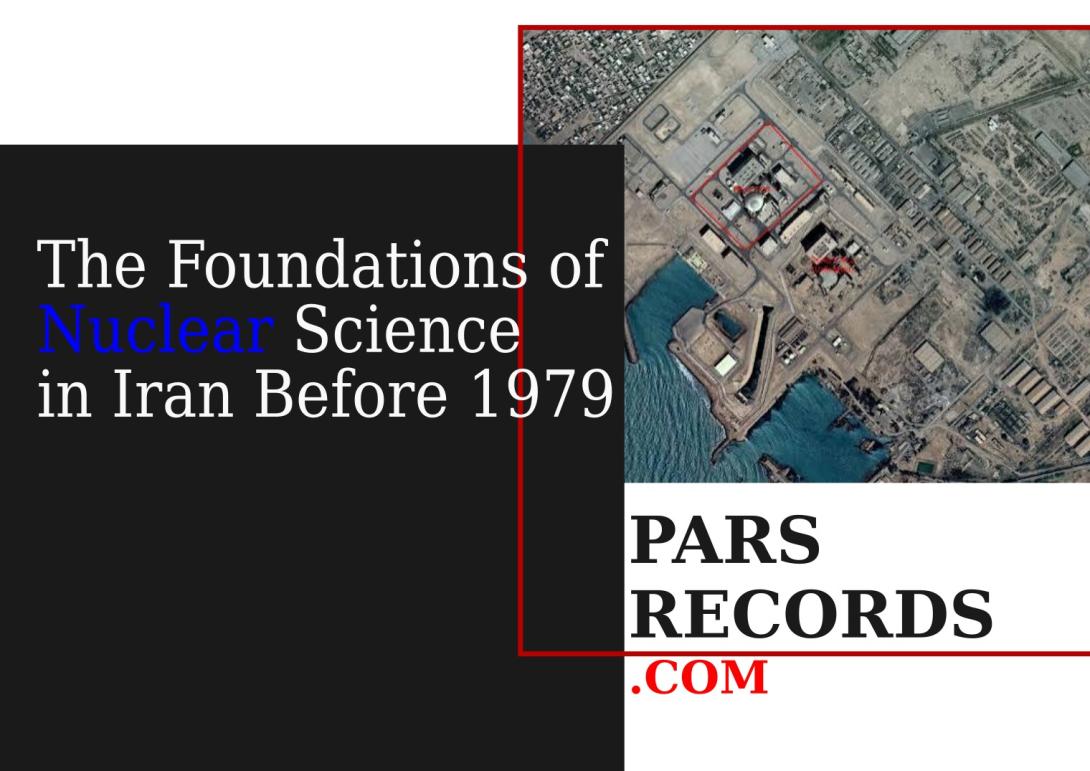
Iran signed contracts with the German company Kraftwerk Union (a subsidiary of Siemens) to construct two large nuclear reactors at Bushehr. Construction began in 1975, and substantial progress had been achieved by the time of the revolution. (Wikipedia)
French Cooperation
Iran negotiated with the French company Framatome for additional reactors and invested more than one billion dollars in the Eurodif uranium enrichment consortium, securing a stake in future enriched uranium production. (Wikipedia)
Isfahan Nuclear Technology Center
Plans were initiated for research and technological facilities in Isfahan, including activities related to the nuclear fuel cycle, uranium processing, and scientific research. (Wikipedia)
These projects demonstrated Iran's intention to develop not only power generation capacity but also a broad technological base supporting nuclear science.
International Cooperation and Non-Proliferation
Before 1979, Iran's nuclear activities were conducted largely through cooperation with Western governments and companies. The United States, France, and West Germany all played important roles in supporting Iranian nuclear development. (Wikipedia)
Iran signed the Nuclear Non-Proliferation Treaty in 1968 and ratified it in 1970 as a non-nuclear-weapon state. Its nuclear facilities were placed under international safeguards administered by the IAEA. (Wikipedia)
This international framework reflected the generally accepted view during the 1960s and 1970s that Iran's nuclear ambitions were linked primarily to economic development and technological modernization. (Iris)
Impact of the 1979 Revolution
The Islamic Revolution of 1979 interrupted many ongoing nuclear projects. Construction at Bushehr ceased, foreign contractors withdrew, and numerous scientific collaborations were suspended. Several trained specialists left the country, and the new government initially viewed some aspects of the nuclear program as symbols of the previous regime. (Wikipedia)
Despite this disruption, the scientific infrastructure, trained personnel, research institutions, and organizational framework established before 1979 remained important foundations for later nuclear activities. (Wikipedia)
Conclusion
The foundations of Iranian nuclear science were established well before the 1979 Revolution through a combination of international cooperation, state investment, scientific education, and institutional development. Between 1957 and 1979, Iran created research centers, trained a generation of nuclear scientists, established the Atomic Energy Organization of Iran, and launched ambitious nuclear energy projects. Although the revolution interrupted many of these efforts, the scientific and organizational structures developed during this period formed the basis of Iran's subsequent nuclear activities. Understanding the pre-1979 era is therefore essential for a comprehensive assessment of the historical evolution of nuclear science in Iran. (Wikipedia)
References
- Iran Watch, A History of Iran's Nuclear Program. (Iran Watch)
- History of the Nuclear Program of Iran. (Wikipedia)
- Atomic Energy Organization of Iran historical records. (Wikipedia)
- Boureston, J. & Ferguson, C., Schooling Iran's Atom Squad (2004). (Sage Journals)
- Passino, C., The Birth of the Iranian Nuclear Program, 1956–1979. (Iris)
- InfoIran, Iran's Nuclear Program: A Historical Analysis (1957–2025). (Info Iran)
PARSRECORDS.COM
Page Term Reference
Comments