
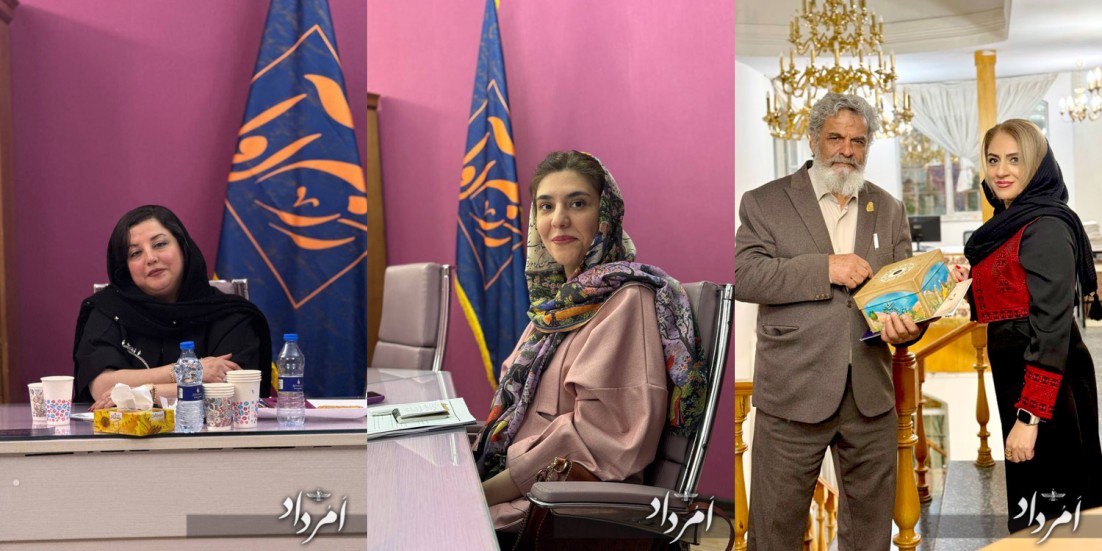
The first consultative meeting of the Razm-Āvā Festival was held with the participation of the country’s Shahnameh reciters and storytellers, distinguished scholars, judges of Shahnameh festivals and competitions, a number of Shahnameh facilitators and teachers, and cultural activists, chaired by Mohammad-Reza Saeedi.
At the beginning of the meeting, which was held in Amordad (July–August), Sara Soubout, Executive Secretary of the first edition of the Razm-Āvā Festival, drew on the findings of the evaluation of submitted works, participants’ scores, and the reports and videos received to identify the principal challenges facing the art of naqqāli (traditional storytelling) and Shahnameh narration. She went on to emphasise the high cultural and identity-forming status of this ancient Iranian art, as well as the necessity of properly understanding and making effective use of the authentic tools, methods and capabilities of naqqāli throughout the processes of research, education and performance.
The distinguished scholars and members of the meeting—Amir Sadeghi, Parisa Simin-Mehr, Mehdi Chayāni, Marjan Sadeghi, Abolfazl Varmaziar, Tahereh Bahrami, Mina Mansouri Vala and Pariya Mavandi—then reviewed the reports presented by the secretariat of the first edition of the festival and offered their specialist views, critiques and recommendations aimed at improving the quality of performances, safeguarding the authentic art of naqqāli in the most appropriate manner, and outlining a vision for future editions. At the conclusion of the meeting, emphasis was placed on greater synergy, the continuation of dialogue between the festival secretariat and scholars, and making use of the valuable experience of experts in order to further develop and enhance this cultural and artistic event.
The principal issues discussed at the meeting were as follows:
-
Explaining the rationale for and necessity of independent, non-commercial festivals within the country’s cultural sphere.
-
Reviewing the need for, and importance of, understanding the tools used in Shahnameh naqqāli and employing them correctly in performance.
-
Expert examination and critical discussion of the theoretical foundations of naqqāli, and the importance of providing theoretical instruction before beginning practical training in the art of naqqāli.
-
Discussing the educational challenges involved in teaching this art to students and Shahnameh enthusiasts across different age groups.
-
Emphasising the important and strategic role of veteran naqqāls and Shahnameh storytellers in conducting educational workshops related to the subject of the meeting.
-
Presenting valuable views, critiques and recommendations from veteran artists in the fields of naqqāli and Shahnameh storytelling aimed at improving future training and educational workshops.
-
Discussion and consultation concerning the Razm-Āvā educational workshops for participants, including their implementation process and the educational subjects to be addressed.
The first edition of the Razm-Āvā Festival, held in two sections—naqqāli and Shahnameh storytelling—with the motto “A New Battle, an Enduring Voice”, was organised last year by Wiki Shahnameh, Ferdowsi Sarā-ye Iran and the Adib-e Now Association, with Sara Soubout serving as Executive Secretary. The secretariat of the Razm-Āvā Festival is currently planning a thanksgiving ceremony for the first edition, while also holding a series of consultative meetings in preparation for the second edition of the Razm-Āvā Festival of naqqāli and Shahnameh recitation.
It is worth noting that the Razm-Āvā Festival is the first event dedicated to naqqāli and Shahnameh storytelling across the Persian-speaking world. Its aims include reviving the art of naqqāli and Shahnameh storytelling; honouring those who have devoted themselves to these traditions; pursuing new approaches to understanding and further disseminating the Shahnameh; promoting the art of naqqāli and Shahnameh storytelling across Persian-speaking countries; creating an appropriate platform for identifying and training new talent in the fields of naqqāli and Shahnameh storytelling; and facilitating the exchange of experience, dialogue, collaboration and action to expand the presence of the Shahnameh in artistic and cultural spheres. Another central objective is to connect established masters and veterans of the tradition with younger artists and members of the new generation, thereby fostering the continued development and transmission of this important cultural heritage.
Page Term Reference
Comments