

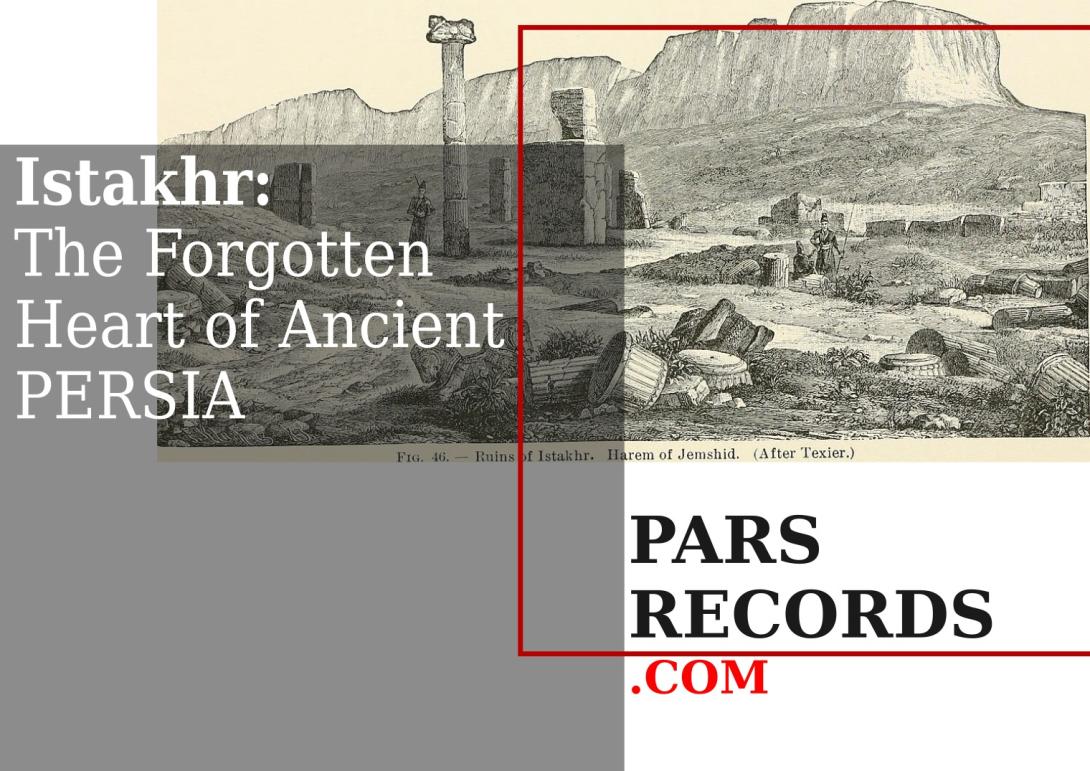
For centuries, the ancient city of Istakhr (also spelled Estakhr, Stakhr, or Istakhar) stood as one of the most influential political, religious, and cultural centers of Persia. Although overshadowed today by the nearby ruins of Persepolis, Istakhr played a remarkable role in preserving Persian identity during some of the most turbulent periods of Persian history. Its story stretches from the aftermath of the Achaemenid Empire through the rise of the Sasanian dynasty, making it one of the longest-lived urban centers in the historical landscape of Persia.
A City Born from an Empire
Istakhr is located in today's Fars Province, only a few kilometers north of the magnificent ruins of Persepolis. While Persepolis served as the ceremonial capital of the Achaemenid Empire, Istakhr gradually emerged after the empire's fall in the fourth century BCE.
When Alexander the Great conquered Persia in 330 BCE, Persepolis suffered extensive destruction. Over time, nearby settlements expanded, and Istakhr became the principal urban successor to the once-glorious royal city.
Rather than disappearing with the empire, Persian civilization adapted. Istakhr became a bridge between the ancient Achaemenid world and later Iranian kingdoms.
Guardian of Persian Traditions
During the centuries following Alexander's conquest, Persia experienced the rule of the Seleucids and later the Parthians. Despite foreign political control, the region of Fars remained the cultural homeland of the Persian people.
Istakhr became an important center where local nobles, priests, and administrators preserved Persian traditions, language, and religious customs. This continuity would prove essential in shaping the future of the Persian world.
The city's importance was not merely political—it also served as a powerful symbol of national identity.
Birthplace of the Sasanian Revival
Perhaps Istakhr's greatest historical significance lies in its connection with the rise of the Sasanian Empire.
In the early third century CE, the local ruler Papak governed the region surrounding Istakhr. His son, Ardashir I, eventually defeated the Parthian king and established one of the most powerful empires in ancient history.
The Sasanians viewed themselves as heirs to the Achaemenids, and Istakhr became one of the symbolic centers of this revival. The city maintained close religious ties with the Zoroastrian priesthood and served as an important administrative hub during the empire's formative years.
A Center of Zoroastrian Worship
Religion formed the spiritual foundation of Istakhr.
The city was closely associated with Zoroastrianism and housed important fire temples that attracted priests and pilgrims from across the empire.
Ancient historical sources suggest that sacred fires burned continuously within these temples, symbolizing purity, wisdom, and divine presence.
Many historians believe that the nearby sanctuary known as the Ka'ba-ye Zartosht at Naqsh-e Rostam also held religious and ceremonial importance for rulers connected to Istakhr.
Prosperity Through Trade
Beyond politics and religion, Istakhr prospered as a commercial center.
Situated along important trade routes connecting southern Iran with Mesopotamia and the Persian Gulf, merchants exchanged:
- Silk
- Textiles
- Precious metals
- Agricultural products
- Ceramics
- Luxury goods
Its location helped transform the city into a thriving marketplace where cultures and ideas met.
Archaeological Discoveries
Modern archaeological excavations have uncovered valuable evidence of Istakhr's long history.
Researchers have identified:
- City walls
- Residential quarters
- Coins
- Pottery
- Administrative buildings
- Religious structures
- Water management systems
These discoveries demonstrate that Istakhr remained continuously inhabited for nearly a millennium.
Artifacts recovered from the site help historians understand the transition from the Achaemenid world to the Sasanian Empire.
Why Istakhr Matters Today
Unlike many ancient cities that represent a single civilization, Istakhr embodies continuity.
It witnessed:
- The fall of the Achaemenid Empire.
- The preservation of Persian identity under foreign rule.
- The birth of the Sasanian Empire.
- The flourishing of Zoroastrian culture.
Few places in Persian history encompass so many defining chapters.
Visiting Istakhr
Today, visitors to Fars Province often focus on Persepolis, Naqsh-e Rostam, and Pasargadae. Yet only a short distance away lie the quieter ruins of Istakhr.
Walking among its archaeological remains offers a different perspective—not the grandeur of imperial palaces, but the enduring resilience of a city that carried Persian civilization through centuries of transformation.
Its weathered stones remind us that history is not only written in monumental architecture but also in the communities that preserve culture across generations.
Final Thoughts
Istakhr may not enjoy the worldwide fame of Persepolis, but its historical importance is equally profound. As the spiritual and political successor to the Achaemenid heartland and the cradle of the Sasanian renaissance, it occupies a unique place in the story of Persia.
Today, archaeologists continue to uncover traces of its remarkable past, revealing how one ancient city helped preserve a civilization through conquest, renewal, and change.
For anyone interested in Persian history, archaeology, or the endurance of cultural identity, Istakhr is far more than a forgotten ruin—it is one of the foundations upon which the history of Persia was built.
Page Term Reference
Comments