

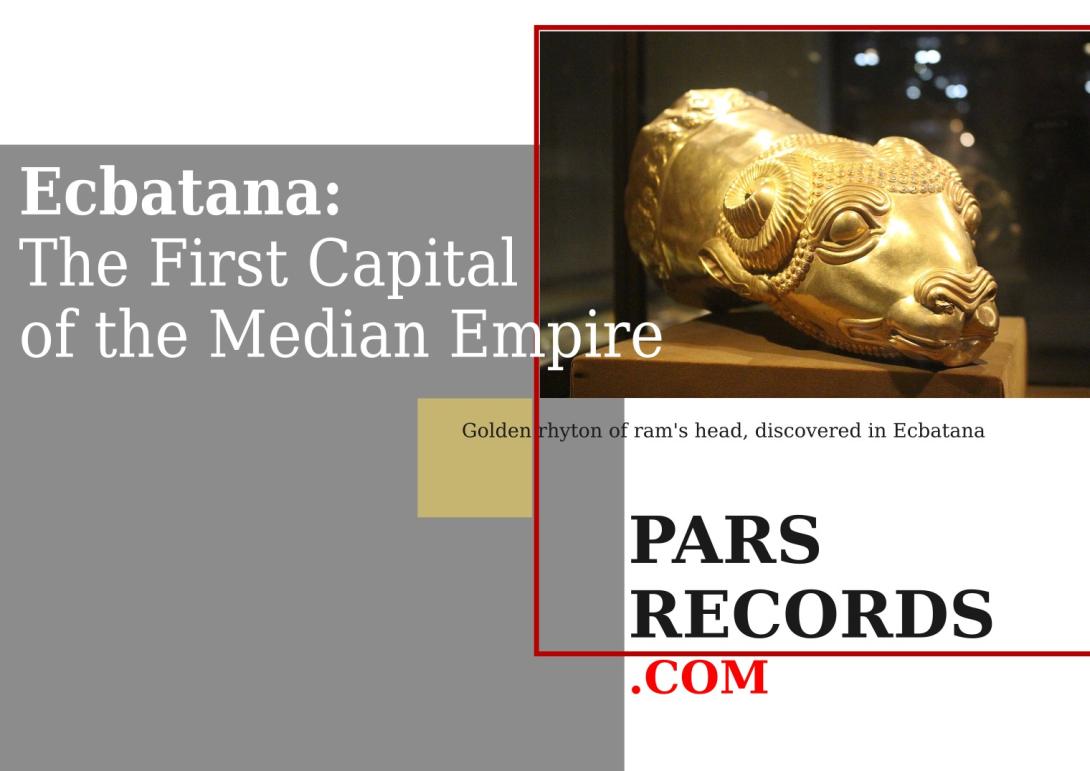
Nestled beneath the green slopes of the Alvand Mountains in western Iran lies one of the oldest continuously inhabited cities in the world: Ecbatana, an ancient metropolis that once served as the capital of the Median Empire and later became a favored royal residence of Persian kings. Today, the remains of this remarkable city are found in modern-day Hamadan, where layers of history spanning nearly three millennia continue to fascinate archaeologists, historians, and travelers alike.
Ecbatana is more than an archaeological site—it is a symbol of the birth of organized government in ancient Iran and an important chapter in the story of one of humanity's earliest civilizations.
The Origins of Ecbatana
The name Ecbatana comes from the Old Persian word Hangmatana, meaning "the place of gathering" or "assembly." This name reflects the city's role as a political and administrative center where tribal leaders united under a centralized government.
According to Greek historian Herodotus, Ecbatana was founded during the 7th century BCE by Deioces, the first king of the Medes. He sought to unite the scattered Median tribes into a powerful kingdom and established Ecbatana as his capital.
Although Herodotus' account blends history with legend, archaeological evidence confirms that the area was an important settlement long before the rise of the Median Empire.
Capital of the Median Empire
During the 7th and 6th centuries BCE, Ecbatana became the political heart of the Median Empire—the first Iranian empire in recorded history.
The city was strategically located along important trade routes connecting Mesopotamia, Central Asia, and the Iranian Plateau. This advantageous position allowed Ecbatana to flourish economically while also serving as a military stronghold.
Herodotus famously described the city as being protected by seven concentric walls, each painted in different colors, with the royal palace and treasury located at the center. Whether this description was entirely literal or partly symbolic remains a topic of scholarly debate, but it illustrates the city's reputation for grandeur.
Under the Achaemenid Empire
In approximately 550 BCE, Cyrus the Great conquered the Median Empire and incorporated Ecbatana into the rapidly expanding Achaemenid Empire.
Rather than abandoning the city, Cyrus recognized its importance. Ecbatana remained one of the empire's principal royal residences alongside Pasargadae, Persepolis, and Susa.
Because of its higher elevation and cooler climate, Persian kings often spent the summer months in Ecbatana. It also served as an administrative center and housed one of the empire's royal treasuries.
The city's strategic importance continued throughout the reigns of Darius I, Xerxes I, and their successors.
A City Admired by Alexander
When Alexander the Great invaded Persia in the 4th century BCE, Ecbatana became one of the major cities he occupied after the fall of the Achaemenid Empire.
Alexander reportedly used the city's treasury and stayed there during his eastern campaigns. It was also in Ecbatana that his close friend and general Hephaestion died in 324 BCE, an event that deeply affected the Macedonian conqueror.
Even under Hellenistic rule, Ecbatana remained an important administrative and commercial center.
Parthian and Sasanian Importance
The city continued to thrive during the Parthian Empire and later under the Sasanian Empire.
Its strategic location made it a key crossroads for trade caravans traveling along routes connecting East and West. Merchants transported silk, spices, precious metals, textiles, and luxury goods through the region.
Ecbatana also maintained religious significance throughout these periods, with Zoroastrian traditions remaining influential.
Archaeological Discoveries
Modern excavations have revealed only part of ancient Ecbatana, largely because the modern city of Hamadan sits directly above much of the ancient settlement.
Archaeologists have uncovered:
- Massive mud-brick fortification walls
- Foundations of large administrative buildings
- Residential quarters
- Storage facilities
- Ancient road systems
- Pottery, seals, coins, and inscriptions
These discoveries demonstrate that Ecbatana was a highly organized urban center with sophisticated planning and long-term occupation.
Each archaeological season adds new information about the city's layout and its role in ancient Iranian civilization.
Ecbatana in Classical Sources
Several ancient writers described Ecbatana, including:
- Herodotus
- Polybius
- Strabo
- Diodorus Siculus
- Arrian
Although their descriptions sometimes differ, they consistently portray Ecbatana as one of the wealthiest and most impressive cities of the ancient Near East.
Its royal palaces, treasuries, gardens, and strategic location made it famous across the ancient world.
UNESCO Recognition
The archaeological remains of Ecbatana have gained international recognition for their historical significance.
As one of the oldest capitals in Iranian history, the site represents the development of early state formation, urban planning, and imperial administration in western Asia.
Its preservation contributes to a broader understanding of the civilizations that shaped the ancient world.
Visiting Ecbatana Today
Visitors to Hamadan can explore the archaeological hill where excavations continue to reveal the city's remarkable past.
Nearby attractions include:
- The Ecbatana Museum
- The Tomb traditionally attributed to Esther and Mordechai
- The Ganjnameh inscriptions carved during the Achaemenid period
- Alvand Mountain's scenic landscapes
Together, these sites make Hamadan one of Iran's richest historical destinations.
Why Ecbatana Still Matters
Ecbatana represents more than the ruins of an ancient capital. It tells the story of political unity, cultural continuity, and the emergence of one of history's earliest Iranian states.
From the Medes to the Achaemenids, from Alexander to the Sasanians, the city witnessed the rise and fall of empires while remaining an enduring center of administration, commerce, and culture.
Its legacy reminds us that great civilizations are built not only through conquest but also through organization, innovation, and the preservation of knowledge.
As archaeological research continues, Ecbatana continues to reveal new insights into the foundations of ancient Iranian civilization, ensuring that its story remains alive for future generations.
Page Term Reference
Comments