
Nestled against the towering limestone cliffs of the Zagros Mountains in western Iran, Bisotun (also spelled Behistun or Bisitun) is one of the Middle East's most extraordinary archaeological landscapes. More than a single monument, Bisotun is an ancient cultural complex where imperial history, mythology, commerce, and religion intersect. For thousands of years, travelers, merchants, soldiers, and kings passed through this strategic gateway, leaving behind inscriptions, sculptures, temples, and memories carved into stone.
Today, Bisotun stands as one of Persia's most significant historical treasures, offering visitors an unparalleled journey through several civilizations that shaped the ancient Near East.
A Strategic Location Through the Ages
Bisotun lies along the ancient route connecting the Persian Plateau with Mesopotamia. Long before modern highways, this natural corridor served as one of western Asia's busiest transportation routes. Armies marched through the valley, merchants transported valuable goods, and royal envoys carried messages between imperial capitals.
Its favorable location made Bisotun an ideal place for rulers to display their authority. The towering cliffs acted as an enormous natural billboard, ensuring that every traveler passing beneath would witness the power of the empire.
Archaeological evidence suggests human activity in the area dating back to prehistoric times, making Bisotun one of Persia's longest continuously occupied cultural landscapes.
The Famous Behistun Inscription
No feature of Bisotun is more famous than the monumental Behistun Inscription, commissioned by the Achaemenid king Darius I around 520 BCE.
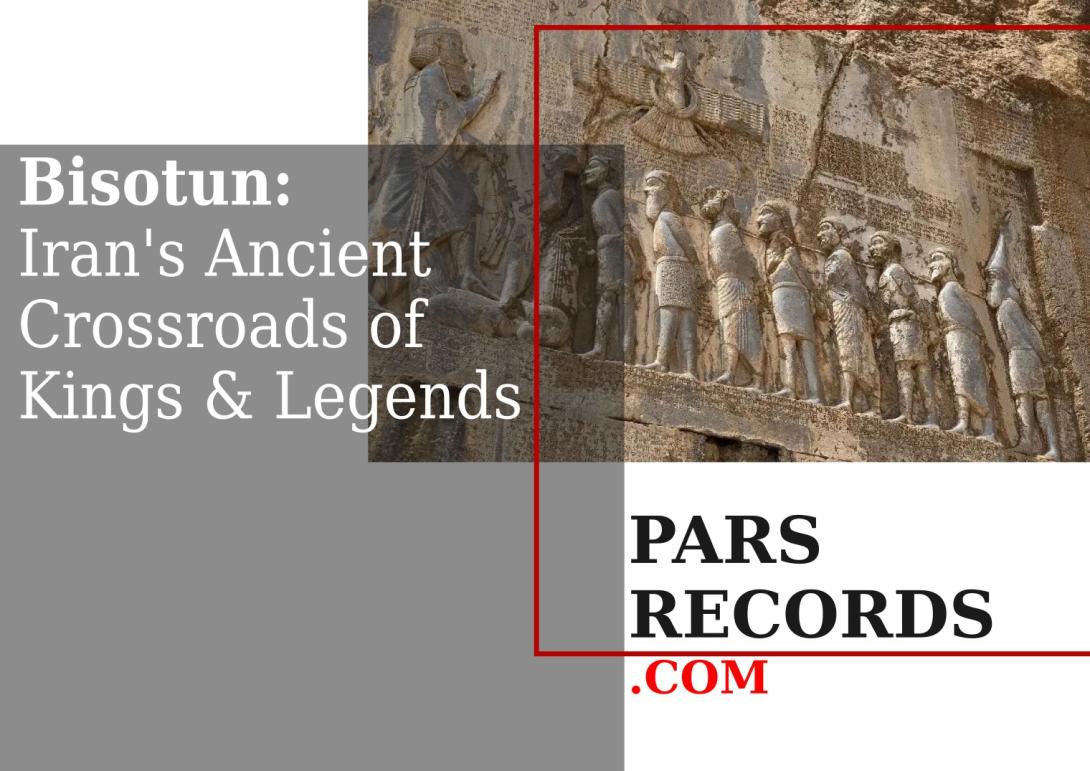
Carved approximately 100 meters above the ground, the inscription tells the dramatic story of Darius's rise to power after suppressing numerous rebellions across his empire. It is accompanied by an impressive rock relief depicting the king standing triumphantly over defeated enemies while receiving divine approval from Ahura Mazda.
The inscription was written in three ancient languages:
- Old Persian
- Elamite
- Babylonian (Akkadian)
This multilingual text eventually became the key to deciphering ancient cuneiform writing, much like the Rosetta Stone unlocked Egyptian hieroglyphs. In the nineteenth century, British officer and scholar Henry Rawlinson painstakingly copied the inscription by climbing the dangerous cliff face. His work revolutionized the study of ancient Mesopotamian history and languages.
A Living Museum of Multiple Empires
Although the Achaemenid inscription attracts the most attention, Bisotun represents much more than one historical period. Successive civilizations added their own monuments to the landscape.
Prehistoric Heritage
Archaeologists have discovered caves and evidence of human occupation dating back tens of thousands of years. These prehistoric sites reveal that the region served as an important refuge for early humans long before organized states emerged.
Seleucid and Parthian Periods
Following Alexander the Great's conquest of Persia, Bisotun remained an important administrative and religious center. Sculptures and architectural remains from the Seleucid and Parthian eras demonstrate the blending of Greek and Persian artistic traditions.
Sasanian Contributions
During the Sasanian Empire (224–651 CE), Bisotun continued to flourish. Bridges, palaces, reliefs, and other architectural remains reflect the region's ongoing strategic importance as a link between western and central Persia.
The Legend of Farhad and Shirin
Beyond history, Bisotun occupies a cherished place in Persian literature.
According to the famous romance retold by the Persian poet Nizami Ganjavi, the gifted sculptor Farhad fell deeply in love with Princess Shirin. Her royal admirer, King Khosrow II, assigned Farhad an impossible task: carving a road through Mount Bisotun before he could marry her.
Farhad devoted years to cutting into the mountain with extraordinary determination. Before he could complete his labor, however, he was falsely informed that Shirin had died. Heartbroken, he took his own life.
Whether historical or fictional, the story transformed Bisotun into a timeless symbol of devotion, perseverance, and tragic love. Even today, many visitors associate the mountain as much with poetry as with archaeology.
Archaeological Wonders
The Bisotun complex contains an impressive collection of historical monuments spread across a vast area.
Highlights include:
- The Behistun Inscription
- Achaemenid rock reliefs
- Parthian sculptures
- Remains of Seleucid temples
- Sasanian bridges
- Caravanserais from the Safavid period
- Ancient water systems
- Historic roads following centuries-old trade routes
Together, these monuments illustrate nearly four millennia of continuous human activity.
UNESCO World Heritage Site
In 2006, UNESCO recognized Bisotun as a World Heritage Site because of its exceptional historical, archaeological, and linguistic significance.
The organization highlighted the site for several reasons:
- Its outstanding testimony to the Achaemenid Empire.
- Its crucial role in deciphering cuneiform writing.
- Its remarkable preservation of monuments from multiple historical periods.
- Its influence on the understanding of ancient Near Eastern civilizations.
Today, conservation efforts continue to protect the fragile carvings from natural erosion and environmental damage.
Visiting Bisotun Today
Modern visitors can easily access Bisotun from the city of Kermanshah. Walking through the archaeological landscape provides an opportunity to encounter monuments from vastly different historical eras within a single location.
The dramatic cliffs, green surroundings, natural springs, and mountain scenery create an atmosphere unlike many archaeological sites, where nature and history exist side by side.
Photographers often visit during sunrise or sunset, when warm light illuminates the towering limestone cliffs and reveals the intricate details of the ancient carvings.
Why Bisotun Matters
Bisotun is far more than an ancient monument. It is a place where language, politics, religion, literature, archaeology, and geography converge.
Its inscriptions unlocked forgotten languages. Its legends inspired generations of poets. Its strategic position connected civilizations. Its monuments preserve the ambitions of emperors who ruled one of history's greatest empires.
Whether viewed as an archaeological wonder, a literary landmark, or a masterpiece of ancient engineering, Bisotun remains one of Persia's most remarkable cultural landscapes—a place where the voices of the ancient world continue to echo from the mountainside after more than two thousand years.
Page Term Reference
Comments