

Introduction
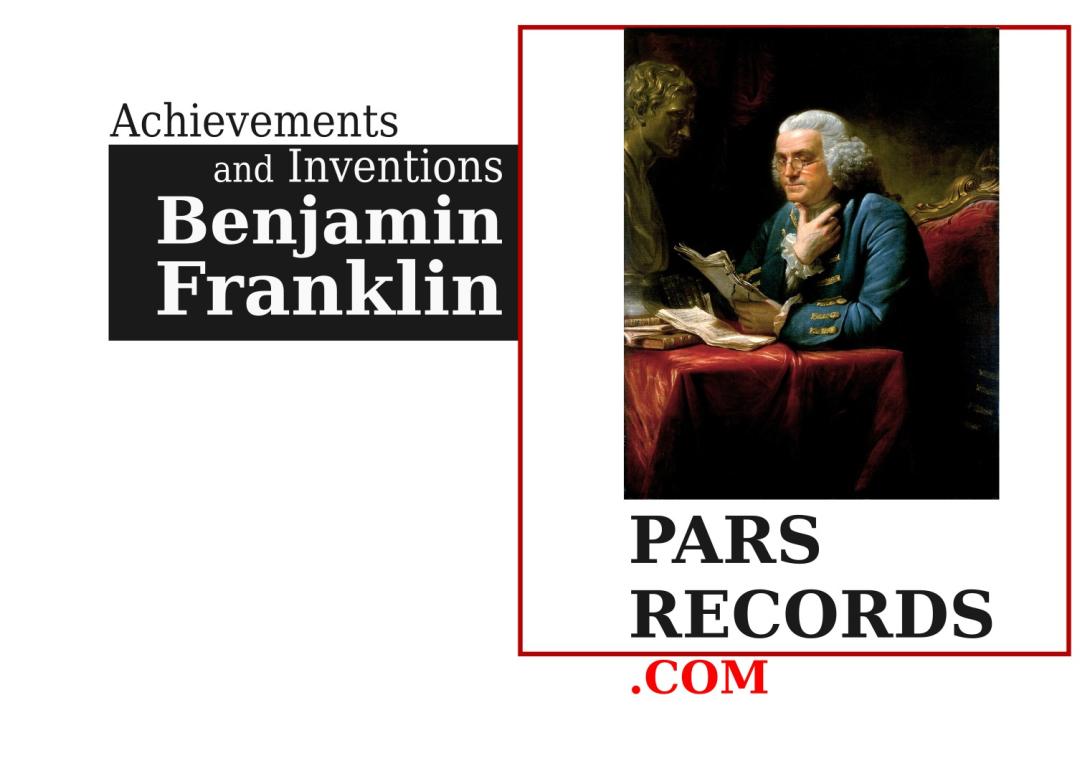
Benjamin Franklin (1706–1790) was one of the most influential figures of the eighteenth century and a key contributor to the intellectual, scientific, and political development of the United States. Known as a polymath, Franklin excelled in many fields, including science, invention, literature, diplomacy, and public service. His curiosity, dedication to experimentation, and commitment to improving society led to discoveries and innovations that had a lasting impact on the modern world. From his groundbreaking research on electricity to his role in shaping American political ideals, Franklin’s achievements demonstrate the power of knowledge, creativity, and practical problem-solving. This article explores Franklin’s major inventions, scientific discoveries, and contributions to society, highlighting his importance as a scientist, inventor, and historical figure.
Scientific Achievements
One of Benjamin Franklin’s greatest achievements was his research into electricity. During the eighteenth century, electricity was poorly understood, and Franklin conducted numerous experiments to investigate its properties. His famous kite experiment in 1752 demonstrated that lightning was a form of electrical energy. By attaching a metal key to a kite string during a thunderstorm, Franklin proved that electricity could be drawn from storm clouds. This discovery greatly expanded scientific understanding of electricity and contributed to the development of electrical science.
Franklin also introduced important concepts related to electrical charges. He proposed the idea that electricity consisted of a single type of fluid that could exist in excess or deficiency, leading to the terms “positive” and “negative” charges that are still used today. His experiments and theories influenced later scientists and helped establish the foundations of modern electrical engineering.
Major Inventions
Benjamin Franklin was not only a scientist but also a practical inventor who created devices designed to improve everyday life. One of his most famous inventions was the lightning rod, developed in the 1750s. After studying electricity and lightning, Franklin designed a pointed metal rod that could be placed on buildings to safely conduct lightning strikes into the ground. This invention significantly reduced the risk of fires caused by lightning and became widely adopted around the world.
Another important invention attributed to Franklin is the Franklin stove, a metal-lined fireplace designed to provide more heat while using less fuel than traditional fireplaces. The stove improved indoor heating efficiency and reduced smoke inside homes. Although later modified by others, Franklin’s original design demonstrated his interest in creating practical solutions to common problems.
Franklin also invented bifocal glasses to help people see clearly at both near and far distances. As he grew older and experienced difficulties with his vision, he developed glasses with lenses divided into two sections, allowing users to read and view distant objects without changing glasses. This innovation continues to benefit millions of people today.
Additional inventions and improvements associated with Franklin include the glass harmonica, an instrument made from rotating glass bowls that produced musical tones when touched with wet fingers, and the flexible urinary catheter, which he developed to help his brother with a medical condition.
Contributions to Society and Public Life
Beyond his scientific achievements, Franklin made significant contributions to public institutions and civic development. He established the first successful American lending library, the Library Company of Philadelphia, in 1731. This organization promoted education by allowing members to borrow books and share knowledge.
Franklin also helped create the first volunteer fire company in Philadelphia and supported the establishment of institutions such as the University of Pennsylvania and the Pennsylvania Hospital. These efforts reflected his belief that knowledge and cooperation could improve communities.
In politics, Franklin played an important role in the founding of the United States. He participated in the drafting and signing of key documents, including the Declaration of Independence and the U.S. Constitution. As a diplomat in France during the American Revolutionary War, he helped secure French support for the American cause, which was crucial to the success of the revolution.
Literary and Educational Contributions
Franklin was also a respected writer and publisher. Through his newspaper, the Pennsylvania Gazette, and his famous work Poor Richard’s Almanack, he shared practical advice, moral lessons, and scientific ideas with the public. His writing promoted values such as hard work, self-improvement, and education.
Poor Richard’s Almanack became one of the most popular publications in colonial America and helped spread Franklin’s ideas about personal responsibility and success. His autobiography, written later in life, became one of the earliest and most influential examples of American autobiographical literature.
Conclusion
Benjamin Franklin’s achievements and inventions represent a remarkable combination of scientific curiosity, practical creativity, and dedication to public service. His discoveries in electricity transformed scientific understanding, while his inventions improved safety, health, and daily life. In addition to his scientific work, Franklin’s contributions to education, literature, and American independence established him as a central figure in history. His legacy continues to inspire scientists, inventors, and leaders around the world, demonstrating the lasting influence of innovation and a commitment to improving society.
Page Term Reference
Comments