
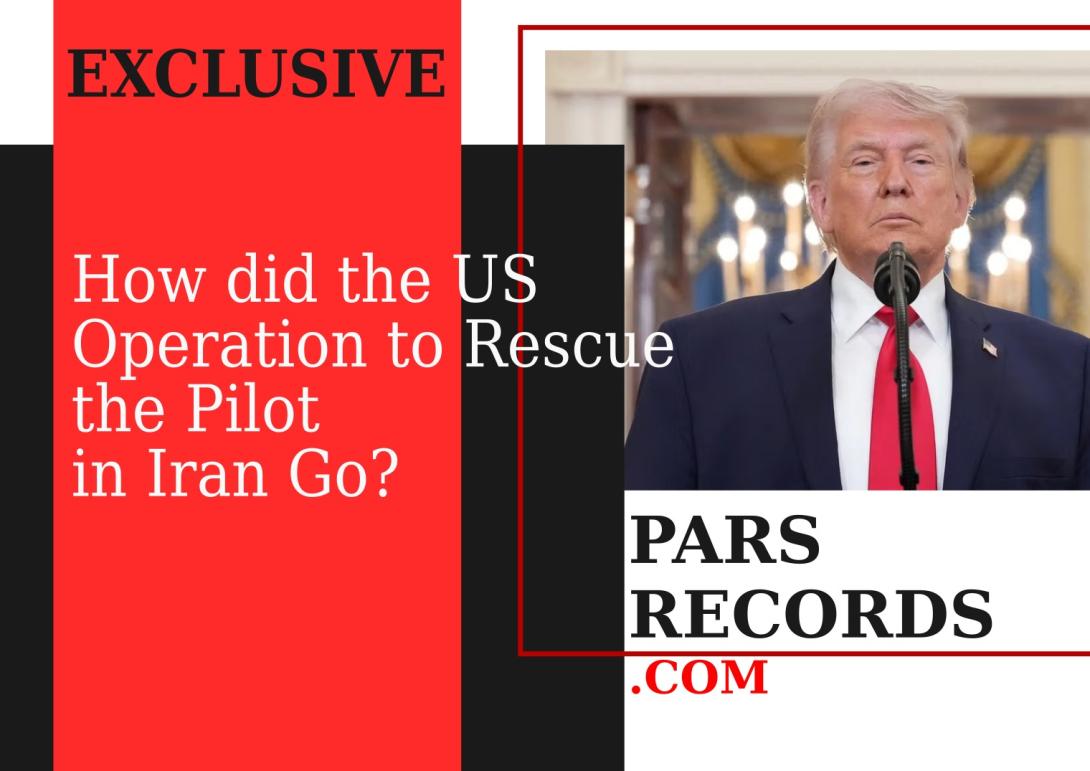
According to US officials and many international news outlets, it is considered one of the most complex and dangerous special operations missions in the history of the US military.
Immediately after the F-15E was hit by Iranian fire and crashed in Iranian territory, two crew members were forced to parachute. One of them was rescued only a few hours later. The other - a Weapon Systems Officer (WSO) - was injured and trapped in the rugged mountains of southwestern Iran.
The pilot used SERE (Survival; Evasion; Resistance; and Escape) survival skills, hiding in rocky terrain and communicating via an emergency locator. Real-time location data from the device became a key element in helping the U.S. military develop a rescue plan.
A U.S. MC-130J aircraft was shot down by U.S. forces before it could withdraw from Iranian soil.
The operation quickly became a race against time. While the United States deployed search and rescue forces, Iran’s Islamic Revolutionary Guard Corps (IRGC) simultaneously began searching for the pilot.
The two sides moved closer to the same area. The United States used airstrikes to prevent Iranian convoys from approaching and to create a safe corridor for the operation. One official described the operation as a “heavy barrage of fire” aimed at cutting off the other side’s access.
Meanwhile, a multi-disciplinary intelligence system—including satellites, electronic surveillance, and cybersecurity—continuously updated target locations to command centers in Washington, where President Donald Trump was closely monitoring developments.
CIA Deception and Massive Raid.
One of the determining factors was the CIA’s disinformation campaign.
The CIA spread false information inside Iran that the pilot had been found and was being flown out of the country by land. This misinformation left Iranian forces scattered and confused in their search.
One U.S. official described the search for the pilot as “finding a needle in a haystack,” as he was hidden in a valley and would have been nearly impossible to find without intelligence support.
After pinpointing his location, the U.S. military launched a rescue operation involving hundreds of Special Forces soldiers and dozens of aircraft and helicopters.
The Special Forces units were deployed on Iranian soil for two consecutive days. As they approached their target, they encountered Iranian forces, and a brief but intense gun battle ensued.
MQ-9 Reaper drones were used to neutralize threats near the evacuation area. A-10 Thunderbolt IIs also provided support, although one was later damaged and crashed in Kuwait, with the pilot surviving.
The operation lasted nearly 36 hours, and the decision was made to destroy the aircraft.
The United States established a temporary base to support the operation. Here, two MC-130J special transport aircraft developed technical problems and were unable to fly.
Faced with this situation, the US military deployed additional replacement aircraft and decided to destroy the damaged aircraft to prevent them from falling into Iranian hands. This decision reflects the technological sensitivity and top-secret nature of the operation.
The trapped pilot escaped captivity for about 36 hours before being rescued safely. President Donald Trump confirmed that the pilot had sustained injuries, but they were not life-threatening.
The rescue of the first pilot had previously been kept secret so as not to affect the second mission.
Trump called the operation “one of the most daring search and rescue operations in American history,” and stressed that no American service members were killed or injured.
The operation came amid escalating tensions between the United States and Iran. Iranian media claimed that several American aircraft had been shot down. A local Iranian official said at least five people had been killed in airstrikes in the mountainous Kohgiluyeh region.
Military experts see the operation as a prime example of modern warfare, a combination of real-time intelligence, electronic warfare, airstrikes, ground special forces, and information warfare.
The rugged terrain, relentless pursuit by the opposing side, and the fact that the operation continued until daylight significantly increased the level of risk.
Nevertheless, the United States successfully achieved its goal of safely returning all personnel. It is one of the few successful rescue operations conducted under conditions of direct combat on the opposing side's territory.
Comments