

As long as we are discussing language policy, we must deal with realities, not dreams and fantasies, nor with regrets and unfulfilled aspirations. And if we look at the condition of local languages in Iran through the lens of reality—which is sometimes brutally explicit—we are compelled to acknowledge that mother-tongue education, although a sweet dream, would bring nothing but loss and disadvantage. The inevitable consequence of the theory of education in the mother tongue would be the complete isolation of those educated through it from Iran’s academic community and, in the longer term, from the global academic community. At a time when many university scholars and academics, despite their deep love for Persian and their recognition of it as one of the pillars of national identity, do not even consider Persian sufficient or adequately useful for their academic needs and support granting English official status at higher academic and research levels so that they can join the free global flow of knowledge without impediment, what benefit would promoting education in local languages bring to their speakers? Other than taking them several steps backwards and producing a clear separation from the global scientific community, what would they gain?
Let us suppose that this imaginary programme became reality and that mother-tongue education were legally implemented. It is difficult even to imagine the enormous national cost of establishing such institutions for Iran’s numerous ethnic communities, compared with the limited return they would provide. Buildings, equipment, teachers, libraries, textbooks, courses and academic units, and so on. Even if all these were provided, that would only be the beginning: scientific and technical texts would have to be produced in these languages. But do these languages possess the capacity for scientific terminology and technical coinage? Is the number of educated specialists who speak these languages even sufficient to meet such a demand? Would, for example, a Kurdish speaker be willing to graduate from a local Kurdish-language university knowing that afterwards they would necessarily have to work within the confines of the same province? How could such graduates go on to universities in developed countries? How would they write their research? How would they participate in conferences and seminars when even their fellow citizens could not benefit from the results of their research?
To the circle of “intellectuals” who champion local languages, one should ask: why have they themselves so far preferred to write poetry, articles and speeches in Persian, when nobody has prevented them from publishing their scholarly and literary works in their mother tongues? Shahriar, for instance, could have written another ten pieces like Heydar Babaya Salam in Azerbaijani Turkish. Who would have stopped him? Yet compare the volume of Persian poetry in Shahriar’s collected works with his Turkish poetry. Nima Yushij could have compiled another ten volumes of his poetry in Tabari. Who prevented him? Why did Reza Baraheni not teach, write criticism or compose poetry in Turkish? The reason is obvious: like any other creative artist, they wanted as many readers as possible and the widest possible sphere of influence.
Even today, these languages have provincial media, newspapers and magazines; books are published in them; musical concerts are held; and they have radio stations, channels and countless other platforms. Their speakers can produce and publish artistic works in their mother tongues. In fact, this is precisely where the subtlety lies: artistic production in the mother tongue. What has saved these languages from extinction, and what will continue to save them in the future, is not education in schools but artistic production: songs, stories, lullabies, poetry and so forth. In principle, local languages can assert themselves through artistic works.
Even Persian itself has been protected from the danger of extinction through the strength of its artistic and literary heritage, because the language of scholarship in our world was, for much of history, the shared language of the Islamic world—that is, Arabic. Saadi studied in Arabic at the Nizamiyya in Baghdad, yet composed his poetry in Persian. It was precisely this poetry that provided the foundation and guarantee for the survival of the Persian language throughout the centuries. It would be wise for Iran’s various ethnic communities to understand this reality: their limited energy should be devoted to producing outstanding literary works and enduring artistic creations, so that this wheel does not cease to turn—as, indeed, it never has.
Local languages—both Iranian and non-Iranian—have their rightful place. Persian is neither an obstacle to the growth and development of these languages, nor are they harmful to Persian. On the contrary, these languages make a significant contribution to enriching the common language of all Iranians. Throughout the centuries, Persian has drawn upon the cultural and linguistic resources of these languages and has been nourished by their sources.
Let us not turn this blessed coexistence into hostility, because the unequivocal losers would be the local languages themselves.
✍️ Sayeh EghtesadiNia
Vohu Manah (Avestan: 𐬬𐬊𐬵𐬎⸱ 𐬨𐬀𐬥𐬀𐬵 vohu manah) is the Avestan language term for a Zoroastrian concept, generally translated as "Good Purpose", "Good Mind", or "Good Thought", referring to the good state of mind that enables an individual to accomplish their duties. Its Middle Persian equivalent, as attested in the Pahlavi script texts of Zoroastrian tradition, is 𐭥𐭤𐭥𐭬𐭭 Wahman, which is a borrowing of the Avestan language expression and has the same meaning, and which continues in New Persian as بهمن Bahman and variants. Manah is cognate with the Sanskrit word Manas suggesting some commonality between the ideas of the Gathas and those of the Rigveda. The opposite of Vohu Manah is akem manah or Aka Manah, "evil purpose" or "evil mind".
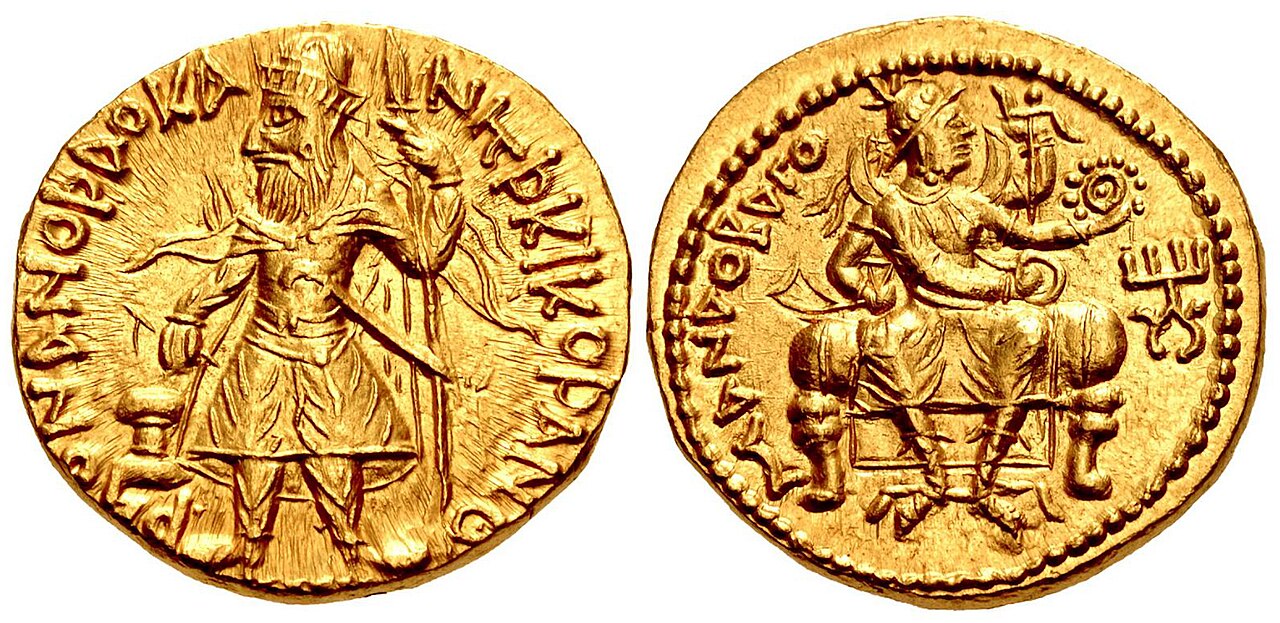
The term is a compound of the words vohu "good" and manah "mind, thought, purpose", cognate with the Vedic words vásu and mánas, both with the same meaning. Both of these derive from Proto-Indo-Iranian *Hwásuš and *mánas, in turn from Proto-Indo-European *h₁wésus and *ménos.
In the Gathas, the oldest texts of the Avesta and considered to be composed by Zoroaster, the term 'Vohu Manah' is not unambiguously used as a proper name and frequently occurs without the "Good" (Vohu-) prefix.
In the post-Gathic texts that expound the principles of Zoroastrian cosmogony, Vohu Manah is an Amesha Spenta, one of seven emanations of Ahura Mazda that each represent one facet of creation. In the case of Vohu Manah, it is the animal creation, in particular cattle. Vohu Manah is of neutral gender in Avestan grammar but in Zoroastrian tradition is considered masculine.
In the Zoroastrian calendar, the second day of each month as well as the eleventh month of each year are dedicated to Vohu Manah. In the Iranian civil calendar, which inherits the names of the months from the Zoroastrian calendar, the 11th month is likewise named Bahman.
The Achaemenid emperor Artaxerxes II (as it is rendered in Greek) had "Vohu Manah" as the second part of his throne name, which when "translated" into Greek appeared as "Mnemon". New Persian Bahman remains a theophoric in present-day Iranian and Zoroastrian tradition.