

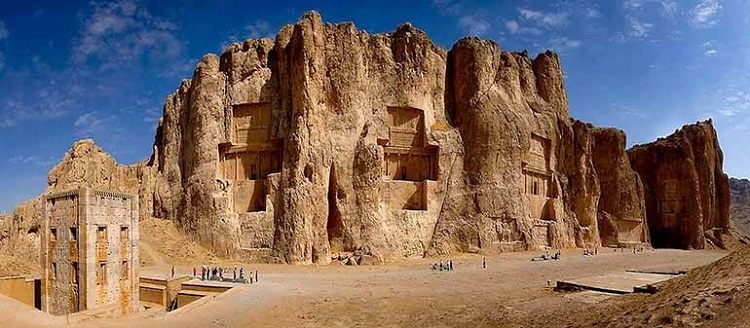
Shiraz, Iran – Nearly 20 years after its nomination for UNESCO World Heritage status was first proposed, the ancient archaeological complex of Naqsh-e Rostam remains on Iran’s tentative path to inscription, with heritage experts calling for renewed government commitment to advance the long-delayed application.
Mostafa Rakhshandeh-Khoo, a senior specialist in the conservation and restoration of historical monuments and the site’s administrative manager, said the globally significant complex has been awaiting World Heritage recognition since 2007 despite its exceptional historical and cultural value.
Naqsh-e Rostam, located near Persepolis in Iran's Fars Province, preserves monuments spanning three major periods of Iranian history—the Elamite, Achaemenid, and Sasanian eras. The site includes the rock-cut tombs of four Achaemenid kings, the Ka'ba-ye Zartosht monument, numerous Sasanian rock reliefs, and earlier Elamite remains, representing more than two millennia of Iranian civilization.
According to Rakhshandeh-Khoo, although Iran has secured UNESCO inscriptions for several heritage sites in recent years, the Naqsh-e Rostam nomination has seen little tangible progress. He suggested that the dossier no longer appears to be among the Ministry of Cultural Heritage’s highest priorities.
He noted that many countries spend years conducting archaeological research, preparing technical documentation, and engaging in international consultations to support World Heritage nominations. In contrast, he argued, one of Iran’s most significant archaeological landscapes remains stalled by administrative delays and a lack of sustained institutional attention.
Describing Naqsh-e Rostam as a "living museum" of Iranian history, Rakhshandeh-Khoo emphasized that the site's outstanding combination of royal tombs, inscriptions, and rock reliefs makes it one of the country's most important cultural landmarks. He warned that inconsistent planning, shifting priorities, and insufficient follow-up have left the nomination without meaningful progress.
He also questioned the criteria used to prioritize Iran's World Heritage nominations, asking why one of the country's—and the Middle East's—most significant archaeological sites continues to wait for inscription.
Rakhshandeh-Khoo stressed that UNESCO recognition would offer benefits beyond international prestige, including stronger conservation efforts, greater access to expert funding, expanded cultural tourism opportunities, enhanced academic collaboration, and broader global recognition of Iran's historical heritage.
He called on the Ministry of Cultural Heritage, Tourism and Handicrafts to provide greater transparency regarding the status of the nomination, explain the reasons behind the prolonged delay, and place the World Heritage inscription of Naqsh-e Rostam among its highest priorities.
The site has been considered for UNESCO World Heritage status since 2007, but its nomination has yet to be finalized for inscription. Heritage specialists argue that advancing the application would strengthen both the protection of the monument and international appreciation of one of Iran's most significant archaeological treasures.
Page Term Reference
Comments