

Ardashir Pavilion: A Sasanian Historical Monument in Bushehr
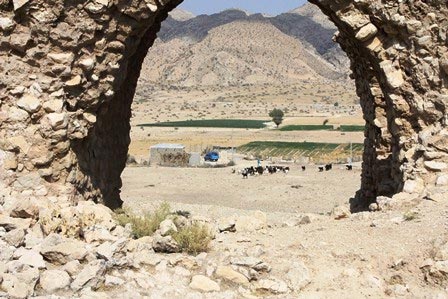
Ardashir Pavilion, located in Dashtestan County, is one of the historical monuments and notable tourist attractions of Bushehr Province in southern Iran.
The Ardashir Pavilion is an ancient Sasanian palace whose architecture bears a striking resemblance to the Palace of Ardashir at Firuzabad in Fars Province. The structure was built from relatively rough stone blocks, which were bonded together with saruj, a traditional waterproof mortar. The pavilion features a cruciform plan and is characterised by barrel-vaulted chambers.
At the upper section of the pavilion stands a stone column, which is believed to have been used for lighting fires, signalling, or as a lookout point. The monument, situated in Tang-e Eram in Dashtestan, Bushehr, is widely thought to have served as a hunting retreat and a place of recreation for members of the Sasanian court in the Dasht-e Bazpar region.
In Farvardin 1390 (March–April 2011), parts of the structure collapsed as a result of flooding, rainwater, moisture in the surrounding agricultural land, and a lack of proper maintenance and conservation.

We respectfully call upon the leaders of Iran, Tajikistan, Afghanistan, Uzbekistan, Kyrgyzstan, Kazakhstan, Turkmenistan, and the leaders and representatives of other Persian-speaking and culturally connected regions to support a peaceful, inclusive, and internationally legitimate political transformation in Afghanistan.
For decades, the people of Afghanistan have endured war, displacement, poverty, political instability, terrorism, and profound human suffering. The Afghan people deserve an end to this cycle of pain and the opportunity to build a stable future based on peace, dignity, justice, national unity, and respect for fundamental rights.
We therefore invite the countries of the region to work together towards a governing system in Afghanistan that:
-
Enjoys genuine domestic legitimacy and broad acceptance among the Afghan people;
-
Is inclusive of Afghanistan's diverse ethnic, linguistic, religious, and political communities;
-
Respects the fundamental rights and dignity of all Afghan citizens;
-
Provides equal protection under the law;
-
Enables women and men to participate meaningfully in the political, social, educational, and economic life of the country;
-
Guarantees the security and sovereignty of Afghanistan and prevents its territory from being used to threaten other countries;
-
Is compatible with the principles and obligations of the United Nations Charter and international law;
-
Can establish constructive and recognised relations with the international community; and
-
Creates the conditions for sustainable economic development, reconstruction, education, trade, and regional cooperation.
We believe that Afghanistan's future should not be determined through endless conflict or imposed through military force. A sustainable solution must emerge through dialogue among Afghans themselves, supported by responsible regional diplomacy and constructive engagement with the wider international community.
The countries of the region share deep historical, cultural, linguistic, economic, and civilisational ties with Afghanistan. This shared heritage creates a special opportunity—and a special responsibility—to help facilitate a peaceful political settlement that places the welfare of the Afghan people above geopolitical rivalry.
We call upon the regional leaders to initiate consultations aimed at developing a clear roadmap for an inclusive and legitimate Afghan political order, while respecting Afghanistan's independence, sovereignty, territorial integrity, and the right of its people to determine their own future.
The objective should not be to isolate Afghanistan, nor to impose a foreign model upon it. The objective should be to help create a system of governance that is legitimate in the eyes of the Afghan people, responsible under international law, acceptable to the international community, and capable of bringing lasting peace and stability to the country.
After decades of suffering, the people of Afghanistan deserve the opportunity to live in peace, rebuild their country, educate their children, participate in their nation's future, and establish normal relations with the world.
We therefore urge the leaders of the region to seize this historic opportunity and work collectively, peacefully, and responsibly towards a new chapter for Afghanistan—one founded on legitimacy, inclusion, sovereignty, justice, human dignity, and lasting peace.
The future of Afghanistan should be a future of peace, not another generation of war
On 24 Mordad 1400 (15 August 2021), Kabul fell — the day when, after months of Taliban advances across Afghanistan, the country’s capital was taken by the Taliban and the government of the Islamic Republic of Afghanistan collapsed. The images of that day — people fleeing, the crowds at Kabul airport and the Taliban’s return to power — confronted the world with one of the most significant political and humanitarian developments of the past two decades.
Now, on the anniversary of that event, many international media outlets have once again turned their attention to Afghanistan — from the fate of the Taliban government to the situation of the Afghan people and the rights of women and girls. Yet in Iran, despite the country’s geographical proximity and deep historical and cultural ties with Afghanistan, the event has received relatively little attention.
This media silence raises a serious question: Why has Afghanistan become so marginal in our view to such an extent?
The issue is not merely an anniversary or a news event. It concerns the way we look at Afghanistan — a country that, in Iran’s official politics and media discourse, is often defined through issues such as border security, migration, narcotics, water and political developments. Yet for Iran, Afghanistan is far more than an eastern neighbour.
Afghanistan today is an independent country with its own national and political identity, and its people have the right to determine their own political and social future. At the same time, however, this land is one of the major centres of the Iranian cultural sphere and the civilisation of Nowruz — a sphere that, centuries before the emergence of today’s political borders, connected the peoples of this region through language, literature, knowledge, art, traditions and historical memory.
From this perspective, “Iranian cultural sphere” is neither a political nor a territorial concept. It refers to a civilisational space, parts of which are today located within several independent countries.
The Persian language is one of the most important pillars of this connection. Writing and the literary heritage, Nowruz, Persian literature, knowledge and art are among the threads that connect present-day Iran with Afghanistan and other lands belonging to this cultural sphere.
This connection becomes even clearer when we look at the literary and intellectual history of the region. Jalal al-Din Muhammad Balkhi Rumi, Khwaja Abdullah Ansari of Herat, Al-Biruni, Nasir Khusraw Qubadiyani, Unsuri and dozens of other poets, scholars and thinkers form part of the shared heritage of this civilisational sphere. The Herat school of art, meanwhile, stands among the most brilliant chapters in the history of art in the region — a heritage that cannot be confined within the political borders of today.
Perhaps no work demonstrates the depth of this connection more clearly than Ferdowsi’s Shahnameh. Modern-day Afghanistan can recognise important parts of its geographical landscape within Ferdowsi’s epic. Kabul, Zabul, Samangan, Balkh, the Helmand, Sistan, Nimruz, Alborz, Nawbahar and many other historical names associated with this land have been preserved in the Shahnameh and alongside it.
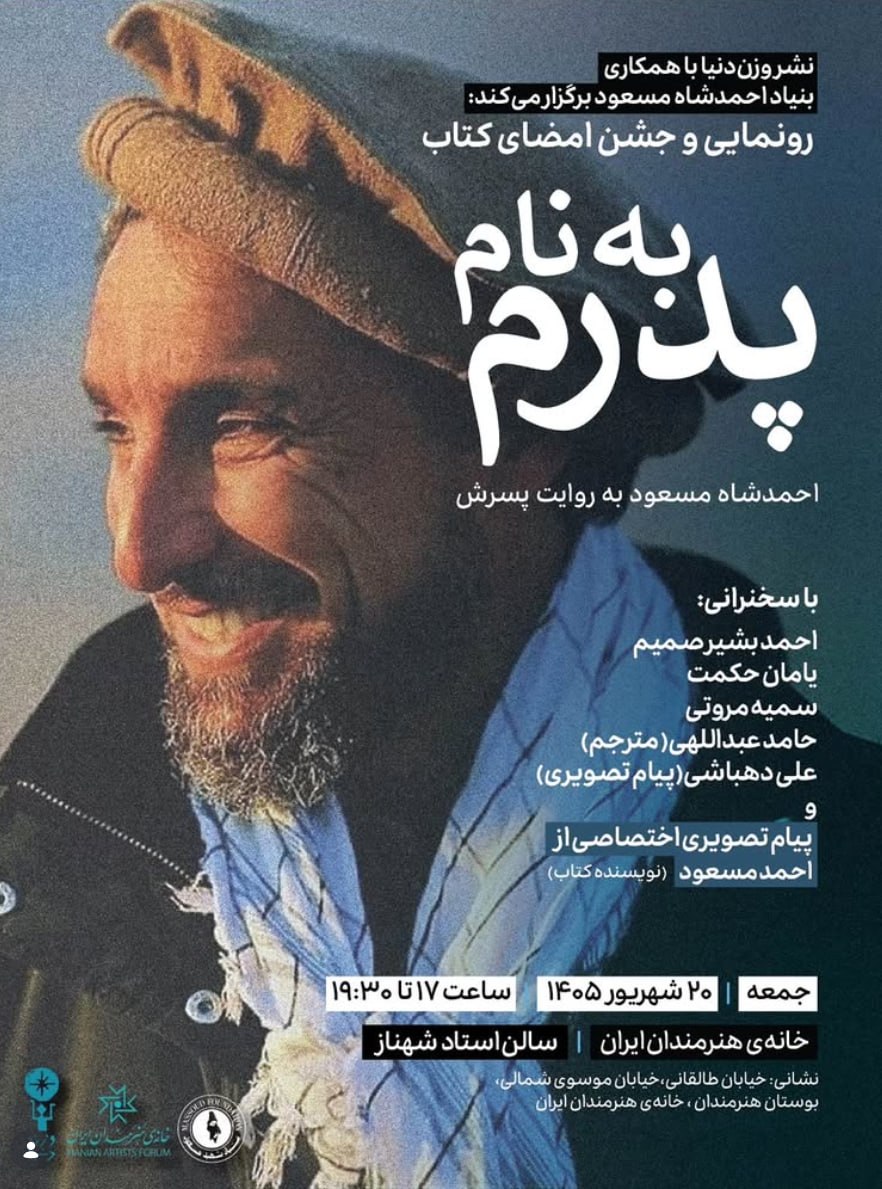 |
Specialized Session and Book Launch Ceremony for In the Name of My Father Topics of the Session:
All professors, researchers, students, and those interested in cultural and historical subjects are invited to attend this ceremony, including the speeches and book-signing event. |
Even in Ferdowsi’s time, the historical geography of the period cannot be measured against today’s political map. Balkh and Ghazni were not separate worlds from “Iran” in its historical and cultural sense at the time. The Ghaznavid dynasty was itself one of the political powers ruling over parts of this same historical geography — a geography that was later divided among different states as a result of political and historical developments.
From this perspective, the Shahnameh is not merely a literary epic; it is part of the map of historical memory belonging to this cultural sphere. Takht-e Rostam and the stories of Sohrab in Samangan, the fortress of Zal and the ancient citadel, Zabulistan, Sistan and Nimruz, the Helmand, Kabul and Kabulistan, Balkh and Nawbahar all connect us to a world that today’s political borders cannot remove from historical memory.
For an Iranian who has lived with the Shahnameh, Kabul, Balkh and Ghazni are not simply names on the other side of a political border. They are part of their historical geography of memory.
Yet this historical and cultural Afghanistan is now facing profound suffering. Since the Taliban’s return to power, the lives of millions of Afghan citizens have been subject to extensive political, social and economic restrictions. Women, girls and children have been among those most severely affected. The exclusion of girls from education and universities is not merely a violation of a fundamental human right; it can also create a generational rupture in the transmission of knowledge, culture and historical heritage.
A society that prevents its women and girls from participating in education and public life also loses part of its ability to transmit knowledge and culture to future generations.
The issue of the Persian language is important within this same framework. Persian in Afghanistan is not merely a means of communication; it is the language of a substantial part of the country’s literature, knowledge, history and cultural memory. Any weakening of this heritage could ultimately widen the distance between a new generation of Afghans and part of their own cultural past.
The suffering of Afghanistan, therefore, is not merely the suffering of a neighbouring country. It is also part of the cultural and civilisational pain of a wider region of which Iran considers itself a member.
The fundamental question, however, concerns us: Why has an Afghanistan with such profound historical and cultural depth become so diminished in our contemporary outlook?
Perhaps one answer lies in the dominance of narrow and ideological perspectives over our understanding of the world around us. When we view a country solely through the lenses of security, borders, migration or political conflict, it is natural that we lose sight of a large part of its reality.
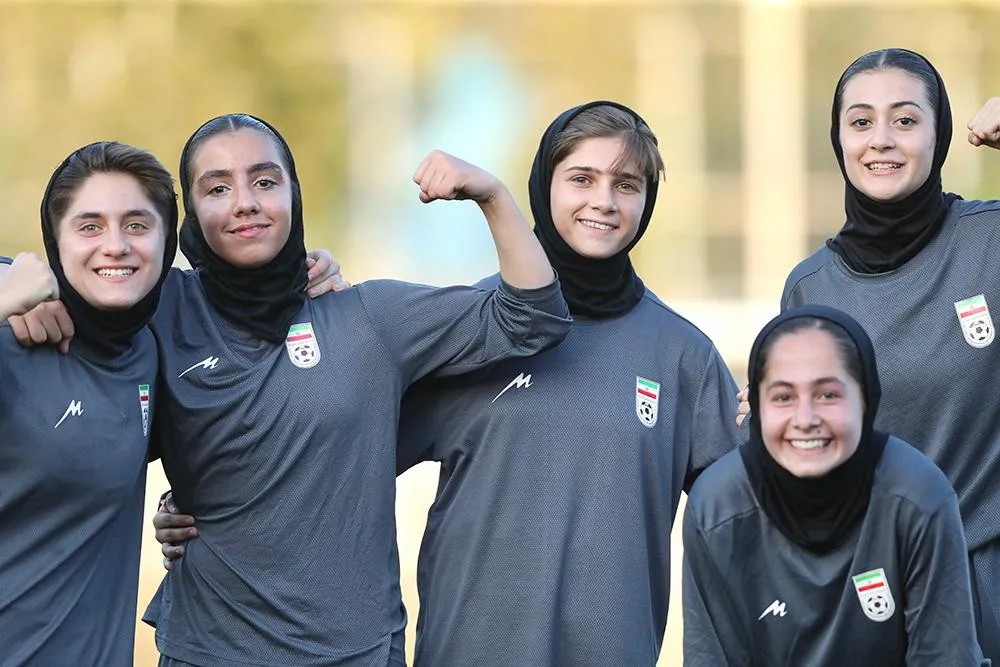
Afghanistan is not merely the Taliban — just as Iran is not merely its government and official politics. Afghanistan is the Afghan people: women and men who live, create and suffer. Afghanistan is Balkh, Herat, Kabul, Ghazni and Mazar-i-Sharif. It is Rumi, Khwaja Abdullah, Al-Biruni and Nasir Khusraw. It is the Shahnameh, the Persian language and Nowruz. It is the Herat school of art and thousands of pages of written and oral heritage.
For this reason, Iran needs a new and comprehensive perspective on Afghanistan — one that respects Afghanistan’s independence and national identity while also taking seriously the historical and cultural ties between the two peoples.
We should not remember Afghanistan only when a crisis erupts along the border, a wave of migration develops or a security-related development affects our interests. Afghanistan should have a place in Iran’s foreign policy, cultural diplomacy, media, universities and cultural institutions that reflects its historical and geopolitical importance.
The anniversary of the fall of Kabul can provide an opportunity for us to reconsider how we engage with one of the closest cultural and civilisational spheres to our own.
Political borders deserve respect, but culture knows no borders. Afghanistan today is an independent country; yet historical and cultural Afghanistan remains part of our shared memory. If we forget this truth, we do not merely lose sight of Afghanistan — we also consign a part of ourselves to oblivion.
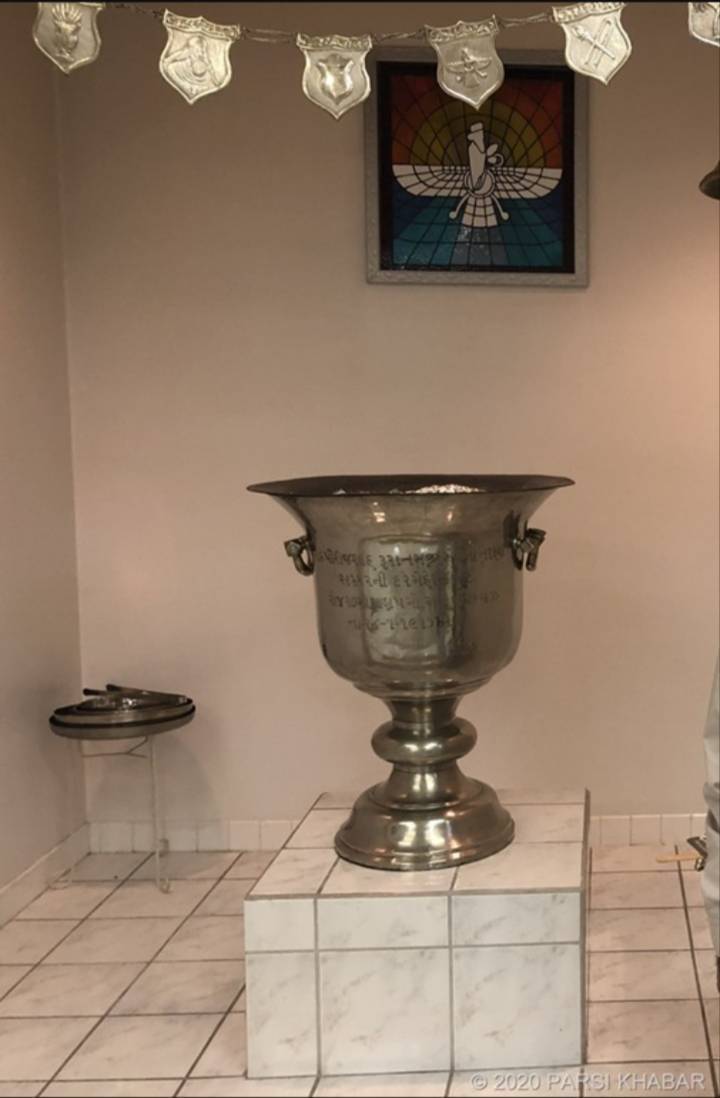
The Afrinagan That Reached Houston
Years before the beginning of this legal case, one of the most valuable historical objects from the Sakhar Fire Temple was taken abroad. The Afrinagan — a special silver vessel used for holding the sacred fire — had been donated in 1917 by the railway engineer Seth Firozeshah Rustamji Mehta. Following the migration of the Zoroastrian community from Sakhar, the vessel remained unused for decades, abandoned inside the fire temple.
In the late 1990s, with the permission of the legal custodian of the building, the Parsi Anjuman of Quetta, and after administrative obstacles with the Government of Pakistan had been resolved — which had initially opposed the removal of the historic object from the country — the vessel was transferred from Sakhar to Karachi. It was polished and subsequently sent to Houston, Texas, in the United States.
In 1998, the artefact was installed in the prayer room of the Zoroastrian Heritage and Cultural Center, where it remains today: a tangible reminder of a community that is no longer present in Sakhar, but whose memory continues to live on among the Parsi diaspora.
Why Does This Case Matter?
The Mama Parsi Fire Temple in Sakhar is one of the few remaining signs of the historic presence of Zoroastrians in Pakistan’s Sindh province — a community that once played an important role in the region’s commerce and civic life, but which has now almost entirely disappeared from the city.
Although the owners of the complex live in Quetta and the property is cared for by an unpaid guard, the stay order issued by the court does not resolve the principal concerns raised in the petition, including alleged unlawful occupation, the deterioration of the building, and the uncertain status of its registration as a cultural heritage site.
Nevertheless, under the present circumstances, the court order has at least provided additional time and an opportunity to preserve the complex. Whether this opportunity will lead to restoration, formal registration on the list of historic monuments, or simply the continuation of the current situation with minimal maintenance will depend on subsequent decisions by the Sindh High Court and the institutions responsible for protecting the province’s cultural heritage.
Page Term Reference
Comments