

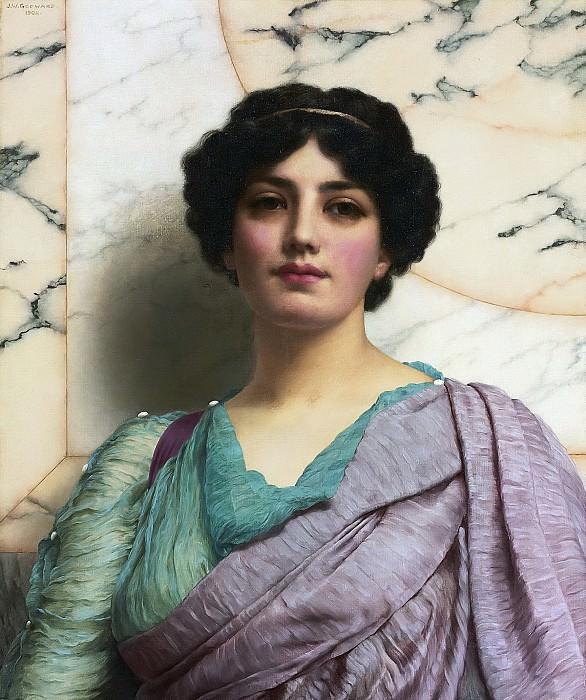
The Daughter of the Caesar of Rome, Wife of Goshtasp, and Mother of Esfandiyar
Kayāun, known as Katayoun, is the daughter of the Caesar of Rome, the wife of Goshtasp, and the mother of Esfandiyar and Farshidvard (Farsh-Āvard). According to a precise reference in the Shahnameh, her original name was Nahid:
“After the illustrious Caesar’s daughter,
whose name was Nahid,
the noble king called her Katayoun;
she bore two sons, radiant as the moon:
one, the renowned and fortunate Esfandiyar…
the other, Farsh-Āvard, the sword-wielder.”
(Shahnameh, vol. III, “Goshtasp”, 40:30–33).
Katayoun is portrayed as a free, independent, wise, devoted, resolute, tireless, patient, farsighted, and self-reliant woman. She first appears in the Shahnameh through a dream, and is described as possessing gentleness, propriety, worthiness, wisdom, enlightenment, and happiness:
“There were three renowned daughters in the world,
distinguished in stature, appearance, and composure,
in propriety and in worthiness.
The eldest was named Katayoun,
wise, clear-minded, and joyful.”
(Shahnameh, vol. III, “The Reign of Loharasp”, 10:236–238).
Katayoun’s roles and actions in the Shahnameh are closely intertwined with the events that shape her life. Without taking these episodes as the foundation of the analysis, it would be difficult to understand her character and examine her conduct fully and accurately. For this reason, Katayoun’s character can be better understood through seven stages of her life:
- Katayoun as the daughter of the Caesar;
- Katayoun after meeting Goshtasp and choosing him;
- Katayoun as a newlywed;
- Katayoun as the wife of a warrior whose identity is unknown;
- Katayoun during her married life before departing for Iran;
- Katayoun after arriving in Iran, as the wife of King Goshtasp;
- Katayoun as the mother of Esfandiyar.
1. Katayoun as the Daughter of the Caesar
When we consider Katayoun as an unmarried young woman, before she becomes the wife of a man, we encounter the eldest daughter of the Caesar of Rome. According to a custom prevailing in their land, she has the right to choose her future husband—the man she wishes to marry—at an assembly arranged by her father, where men of different ranks are present. Since the man she chooses appears to her in a dream, the dream may in fact be understood as an attempt by her mind to resolve an issue that has occupied her thoughts and, most probably, caused her anxiety and deep contemplation: in the days ahead, she must choose her husband from among those present at the gathering.
Thus, the world of dreams and Katayoun’s unconscious mind provides the first setting in which we encounter her character. In the dream, an unfamiliar yet wise and handsome man draws her towards him and presents her with a bouquet of flowers, thereby changing the course of her life:
“Katayoun dreamed one night
that the land was bright with sunlight.
An assembly of men appeared,
so numerous they seemed like the Pleiades.
At the head of the assembly was a stranger,
an unfamiliar, yet wise and gracious man,
tall as a cypress and fair as the moon,
seated in his place like a king.
He gave Katayoun a bouquet,
and she accepted the fragrant flowers from him.”
(Shahnameh, vol. III, “The Reign of Loharasp”, 10–11:239–243).
Katayoun’s dream also reveals part of her inner unconscious world, indicating that in her mind there existed an individual different from the men she had known in Rome. The Shahnameh clearly emphasises Goshtasp’s superiority over the other men present at the assembly. In Tha‘alibi’s account, too, the man Katayoun sees in her dream is portrayed as markedly superior to the others: he is described as the most handsome, the best-proportioned, and the wisest, although unknown and a stranger.
The time comes for Katayoun to make her choice. On the first day, she enters the assembly accompanied by sixty attendants, each carrying a bouquet. Her first attempt, however, proves unsuccessful because she does not find the man from her dream. The Caesar therefore summons everyone once again, hoping that his daughter may finally choose her match.
This time, Katayoun’s eyes fall upon a stranger. She declares that he is the man she saw in her dream and places her precious crown upon the young man’s head as a sign of her choice:
“When Katayoun saw Goshtasp from afar, she said,
‘That dream has now emerged from concealment.’
And at once she adorned his head
with the precious, illustrious crown.”
(Shahnameh, vol. III, “The Reign of Loharasp”, 11:260–261).
Here, Katayoun appears as a young woman who boldly and without hesitation chooses her future husband. She is the kind of woman who accepts what accords with her inner wishes; in marriage, what her heart and inner self desire matter more to her. She remains firm and decisive in her choice to the very end. She certainly knows that by choosing a non-Roman man who is both unknown and newly arrived, she will face a difficult path and serious challenges, including a harsh reaction from her father. Nevertheless, she is not afraid of what lies ahead and willingly accepts all the hardships that follow.
2. Katayoun after Meeting Goshtasp and Choosing Him
Because Katayoun has chosen the man she favours—“Now she sought the one whom she liked”—and because, in her father’s eyes, she has brought shame upon the nobles, both she and the foreign newcomer she has chosen are deemed worthy of execution.
Even when, through the intervention of the bishop, she escapes death and her father is forced, against his wishes, to accept the marriage, Katayoun receives neither financial nor emotional support, nor a dowry. She is also deprived of her paternal inheritance and expelled from the palace so that she may live with the man she has chosen:
“Go with him, then, and be content;
you shall receive from me neither treasure, crown, nor jewels.”
(Shahnameh, vol. III, “The Reign of Loharasp”, 12:276).
Tha‘alibi similarly relates that she is handed over to her husband in ordinary, inexpensive clothing and that the two are sent outside the city. At the same time, the bishop’s words and Goshtasp’s own statements in the Shahnameh indicate that Katayoun had followed a proper course in accordance with custom, while her father, despite reluctantly consenting to the marriage, failed to respect his daughter’s wishes and treated her unjustly.
Goshtasp, deeply concerned by the Caesar’s violent reaction and by Katayoun’s rejection by her father, initially attempts to make her aware of the hardships awaiting her, perhaps hoping that the pampered princess will reconsider her choice:
“Why have you chosen me, a stranger,
when you shall find neither treasure nor comfort with me?
Choose instead one of these illustrious men,
one who will preserve your honour before your father.”
(Shahnameh, vol. III, “The Reign of Loharasp”, 12:277–281).
Katayoun’s determination, however, is so strong that she reassures Goshtasp that power and status hold little importance for her. She is content with what destiny has revealed to her through her dream:
“Katayoun said to him, ‘O doubter,
do not rage against the turning heavens.
If I am content with you and with my fate,
why should you seek crown and throne?’”
(Shahnameh, 12:282–283).
3. Katayoun as a Newlywed
Katayoun, the newlywed daughter who had been raised in luxury and comfort, now becomes an ordinary and contented woman at the beginning of her married life. Instead of living in a palace, she begins her new life with her husband in a house prepared for them by the village headman:
“Katayoun and Goshtasp departed from the Caesar’s palace in sorrow…
The village headman prepared a dwelling for them,
with food and all that was needed for their household.”
(Shahnameh, vol. III, “The Reign of Loharasp”, 12:284–286).
Their married life begins without any initial capital. Katayoun’s partnership and cooperation with her husband begin precisely at this point. Understanding their circumstances, she takes one of her own precious jewels to a jeweller with Goshtasp and sells it for six thousand dinars, using the proceeds to purchase what they need. This rational and self-sacrificing act recalls the economic participation of women in family affairs in earlier periods, examples of which can also be found in the Shahnameh.
According to Tha‘alibi, the money they receive transforms the couple’s circumstances. They leave the house outside the city in accordance with the Caesar’s command and begin a life based on mutual sympathy, affection, assistance, and cooperation.
The continuation of Ferdowsi’s verses is particularly noteworthy: despite the ups and downs, joys and sorrows of their life—“Thus they lived as life came to them, sometimes rejoicing, sometimes weeping”—Katayoun firmly assumes responsibility for managing their life and remains consistently supportive, companionate, and loyal to her husband.
4. Katayoun as the Wife of a Warrior of Unknown Identity
Some time passes in the married life of Goshtasp and Katayoun, yet Katayoun still does not know her husband’s true identity. During this period, there are indications that she closely observes her husband’s condition and behaviour:
“When he came from the sea, troubled and restless,
perceptive Katayoun went to him
and asked, ‘Where did you find the armour
with which you hastened from here to the hunt?’”
(Shahnameh, vol. III, “The Reign of Loharasp”, 18:436–437).
The description that follows Goshtasp’s response also reveals the intimacy of the couple after some time together. Katayoun brings wine, drinks with her husband until bedtime, and the two sleep together in happiness. Once again, Katayoun notices her husband’s unrest and asks why he has been unable to sleep.
At this point, Katayoun realises that Goshtasp is of royal lineage, although she still does not know his precise identity. When the Caesar later asks his daughter about Goshtasp’s identity, Katayoun refers to her husband’s secrecy:
“I questioned him as much as I could,
yet I found no truth upon his lips.
He does not reveal his secrets to me,
nor does he disclose his affairs to anyone.
I do not know his land, city, or lineage;
he calls himself Farrokhzad.
I suspect that he is of noble birth,
for he is a mighty, formidable warrior.”
(Shahnameh, vol. III, “The Reign of Loharasp”, 27:657–660).
When Katayoun understands that Goshtasp is of royal descent but still does not know the details, he proposes that they leave for Iran. Katayoun initially rejects the proposal. Her tone indicates that, at this stage of their marriage, she exercises considerable influence over her husband and acts with greater political and practical prudence than he does. Their life together appears to progress largely through Katayoun’s judgement and efforts. Nevertheless, she wisely advises Goshtasp to travel to Iran by sea with Hishuy and assures him that she will remain behind and await his return:
“When you set your face towards departure,
join Hishuy on the way;
perhaps he can take you by ship.
The world will become new once you have crossed.
I shall remain here through long hardship;
I do not know when I shall see you again.”
(Shahnameh, 19:451–453).
5. Katayoun during Married Life before Departing for Iran
Katayoun’s wisdom and awareness of circumstances continue to reveal themselves throughout their married life. Having realised that her husband is of royal lineage and highly skilled in warfare and combat, she encourages him, before his departure for Iran, to watch the martial contests of the Caesar’s two sons-in-law and, in effect, to participate in the excitement and masculine competition:
“Thus the days passed until
wise Katayoun came to him.
She said to Goshtasp, ‘Why do you sit sorrowful?
Why burden your heart with anxiety? …
Go and watch where the Caesar is,
and see whether your heart becomes less troubled.’”
(Shahnameh, vol. III, “The Reign of Loharasp”, 26:616–622).
This wise and instructive suggestion demonstrates Katayoun’s awareness of her husband’s inner state. She understands his sorrow as a stranger in Rome and the humiliation he has suffered through his father-in-law’s rejection. She therefore attempts to restore his hope and, to some extent, recover his wounded masculine pride before the Caesar while alleviating his mental burdens. More importantly, her suggestion demonstrates her foresight: this single intervention transforms the course of their lives, ultimately leading the Caesar to apologise to them, place Goshtasp upon the golden throne, and restore to Katayoun the rights and possessions she had lost.
Although Goshtasp is reluctant to participate because of his previous experiences with the Caesar, he respects Katayoun’s judgement:
“Yet if this is your wish,
I shall not turn away from your counsel, O guide.”
(Shahnameh, vol. III, “The Reign of Loharasp”, 26:623–625).
6. Katayoun after Arriving in Iran as the Wife of King Goshtasp
Katayoun’s married life and actions alongside Goshtasp can broadly be divided into two important and markedly different stages: before their departure for Iran and after their arrival in Iran.
When we examine her presence in the narrative, we find that from the beginning of her marriage until her arrival in Iran, Katayoun plays a prominent and highly significant role in Goshtasp’s life. Her judgement often carries greater weight than her husband’s, and Goshtasp listens to her to a considerable extent. Even in their earliest encounters, Katayoun speaks to him in a firm and sometimes sharp manner, displaying self-respect and expressing her views decisively.
Their emotional relationship is also repeatedly presented as loving, intimate, and close before their arrival in Iran. After Goshtasp proposes travelling to Iran and Katayoun advises that he should initially go alone, the Shahnameh describes their emotional attachment:
“Before they parted, they wept in their garments,
burning with grief like fire.”
(Shahnameh, 19:454).
Tha‘alibi likewise describes their close marital relationship, stating that Goshtasp took Katayoun by the hand, brought her into his house, and showed her all the affection he was capable of giving; the two became deeply attached to one another.
After their arrival in Iran and Katayoun’s entry into Goshtasp’s palace, however, the situation changes completely. She bears him children, yet the former warmth and intimacy disappear. Katayoun is no longer the passionate young bride she once was, nor is Goshtasp the husband who once shared her feelings and responded to her counsel. Apart from the reference identifying her as the daughter of the Caesar of Rome and the mother of Esfandiyar and Farshidvard, there is virtually no further mention of Katayoun or her role during Goshtasp’s reign until the Esfandiyar episode.
The conversations between Katayoun and her son further reveal the emotional distance that has developed between husband and wife. There is no meaningful interaction between Katayoun and Goshtasp; instead, she communicates what she considers necessary to her son, without dialogue, suggestion, or even protest directed towards Goshtasp himself.
Katayoun can therefore be seen as having become a lonely and isolated, yet mature, woman who continues to attempt to manage her life, though unlike her earlier decisive efforts, her actions have now become characterised by endurance and vulnerability. Her husband’s coldness and lack of affection have overshadowed their former intimate relationship, marginalising her within the marriage and even in relation to her children. Esfandiyar not only disregards his mother’s advice but also criticises her as a woman.
It appears that the courage and strength of the Roman princess gradually give way, after her arrival in Iran and particularly under the influence of a power-seeking husband, to endurance, withdrawal, and silence. As a result, she no longer possesses the same freedom to express her views before Goshtasp or the same influential position she once held.
Most strikingly, even after learning of Esfandiyar’s death, Katayoun does not direct any protest, anger, or reproach towards Goshtasp, whereas her daughters-in-law, Beh-Āfrid and Homay, go before their father and sharply condemn him.
Nevertheless, Katayoun remains strong, steadfast, mature, and loyal to Goshtasp in both word and deed. She also encourages Esfandiyar to obey his father:
“What could be better than a raging lion
girding himself before his father?”
(Shahnameh, 136:39).
7. Katayoun as the Mother of Esfandiyar
Katayoun is a farsighted and prudent woman, and these qualities are evident not only in her relationship with her husband but also in her role as a mother. Patiently, she attempts to dissuade her son Esfandiyar from the path he has chosen.
She counsels him twice. The first occasion comes when Esfandiyar visits his mother on a dark night and criticises his father’s behaviour and broken promise. The king had promised that once Esfandiyar had avenged Loharasp’s death against Arjasp, he would hand the crown and throne over to his son. Esfandiyar tells his mother that when the sun rises and the king awakens, he will speak to him, and if his father again refuses, he will place the crown of Iran upon his own head and make Katayoun the queen of Iran.
Esfandiyar expects his mother to support him and perhaps speak to Goshtasp and persuade him. Katayoun, however, understands that Goshtasp will not relinquish power while he is alive. With sorrow, she therefore advises her son to abandon his excessive ambition and wait until the king dies. In this way, by calming Esfandiyar and exercising foresight, she attempts to preserve the relationship between father and son and prevent future calamity.
Her maternal concern is met with a cold and harsh response from her son. Esfandiyar regards women as incapable of keeping secrets and lacking wisdom. His response and his view of women—as people who should remain on the sidelines and merely observe—reflect certain social attitudes towards women and a patriarchal outlook. Tha‘alibi similarly records Katayoun’s response to Esfandiyar’s distrust of women: if he refuses her counsel because she is a woman, she tells him to consult experienced men and wise elders instead, rather than proceeding blindly into danger.
Interestingly, despite his treatment of his mother, Esfandiyar elsewhere acknowledges the political participation of Rodabeh and respects her presence in a family council:
“Now the whole family must sit together
to deliberate and take counsel over this matter:
Zowara, Farāmorz, and Dastan, son of Sām,
and the wise and renowned Rodabeh,
experienced in the affairs of the world.”
(Shahnameh, vol. III, “Goshtasp”, 146:284–285).
This contradiction suggests that Goshtasp has failed to accord Katayoun the status she deserves, with the result that their son now speaks to his mother with similar disrespect and attaches little value to her concern and counsel. Esfandiyar’s harsh response causes an immediate internal collapse in his mother, to the point that Katayoun becomes ashamed and regretful of having offered her loving advice.
When Katayoun learns that Goshtasp has made the capture of Rostam a condition for granting Esfandiyar the crown, and that Esfandiyar has accepted this demand, she approaches her son once more. This time she is angry and tearful and attempts to prevent him from fighting Rostam. She warns him against rushing into danger and reminds him of Rostam’s extraordinary strength and heroic record.
Her condemnation of the crown and throne, together with her repeated advice and pleas, embodies the efforts of a caring mother to prevent her son from acting out of immaturity and excessive ambition. She warns him of the grave consequences that await him, although once again she fails to persuade him.
This time Esfandiyar opposes her somewhat more gently, but his negative attitude towards women remains apparent:
“When a young man remains behind the curtain with a woman,
his character becomes base and his spirit dark.”
(Shahnameh, 142:194).
Despite this attitude, Esfandiyar takes pride in his Roman mother when speaking to Rostam:
“My mother is the daughter of the Caesar,
she who wears the crown over the Romans.”
(Shahnameh, 162:693).
His emotional attachment to his mother is also evident at the moment of his death, when Ferdowsi beautifully portrays him asking that a message be conveyed to her.
The final scenes in which Katayoun appears occur after she receives news of Esfandiyar’s death. She weeps, tears her garments, and eventually loses consciousness upon seeing her son’s body. When she regains consciousness, she sorrowfully and helplessly scatters dust upon Esfandiyar’s black horse, believing that the king has been killed upon that ill-fated animal. She then addresses the horse, asking whom it will now carry into battle and to whom it will deliver prey to the lion.
Katayoun even respects her son’s final wishes. Esfandiyar had sent her a message through Pashtun:
“After me, come swiftly, O loving one;
do not grieve over me, nor burden your soul.
Do not uncover your face before the assembly,
nor look upon my face within the shroud;
seeing me will only increase your grief,
and the wise will not praise such mourning.”
(Shahnameh, 194:1492–1494).
Accordingly, when Pashtun speaks with Katayoun, the grieving mother ultimately accepts divine fate:
“The mother accepted the counsel of the devout,
and accepted it as the decree of God.”
(Shahnameh, 198:1602).
Notes
1. This custom changes after Katayoun. The Caesar, dissatisfied with what has happened, declares that he will no longer marry his daughters off in the manner of Katayoun.
2. In Tha‘alibi’s History, Goshtasp is said to have preferred the Caesar’s daughter above the others and entrusted her with authority over his palaces. Katayoun is described as having been given the titles of “Queen of Queens” and “mistress of the palaces”.
Sources
Ferdowsi, Shahnameh (2019), edited by Jalal Khaleghi-Motlagh, Vol. III, 4th edition, Tehran: Sokhan Publishing.
Tha‘alibi Nishapuri, Abd al-Malik ibn Muhammad ibn Isma‘il, Tarikh Tha‘alibi (1989), with a foreword by Mojtaba Minovi and introduction and translation by Mohammad Fazaili, Tehran: Nashr-e Noghre.
Page Term Reference
Comments