
Dr. Hassan Fazeli Nashli is a full professor of the Department of Archaeology at the University of Tehran. He was born in the village of Nashli, Amol County, Mazandaran Province. He holds a PhD in Prehistoric Iranian Archaeology from the University of Bradford, England, and has explored important archaeological sites in Iran over the past thirty years, such as the Silk Hill of Kashan, the Cheshme Ali Hill, the Zagheh Hill, the Hutto Caves, and the Belt. He has also published many articles in the field of archaeology and interdisciplinary sciences in prestigious scientific journals such as Nature. Dr. Hassan Fazeli Nashli has been most active in the field of international joint research in Iran after the Islamic Revolution and has carried out joint archaeological projects with various universities in the United Kingdom, the United States, Germany, Italy, and China.
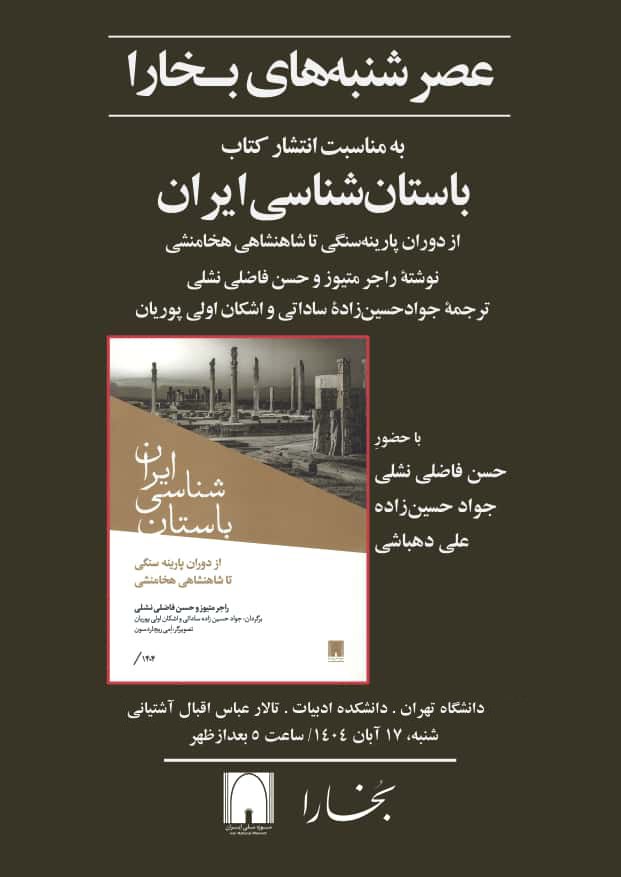
He recently published a book entitled "Archaeology of Iran from the Paleolithic to the Achaemenid Empire" in the Routledge World Series in 2022, jointly with Professor Roger Matthews, a professor at the University of Reading, England. This book has now been translated into Persian by Dr. Javad Hosseinzadeh, published by the National Museum of Iran, and made available to interested parties. With nearly 900 pages and numerous illustrations, this book describes a new narrative of the birth of a country called Iran. This work, which has been exquisitely printed in Iran and England, depicts a precise and comprehensive description from the Paleolithic period to the rise of the first international empire in the Achaemenid era. It also attempts to familiarize interested parties with the depths of societies before the era of Iranian empires by utilizing the latest archaeological achievements in Iran. The book has a wide range of themes and topics, and it is perhaps safe to say that, apart from its archaeological values, this book has made a great effort to explain the relationship between climate change and the collapse of Iranian cultures and civilizations in the context of time and space. The main audience for this book is students of Iranology, history, and archaeology, who will shape the future of Iran.
Page Term Reference
Comments