
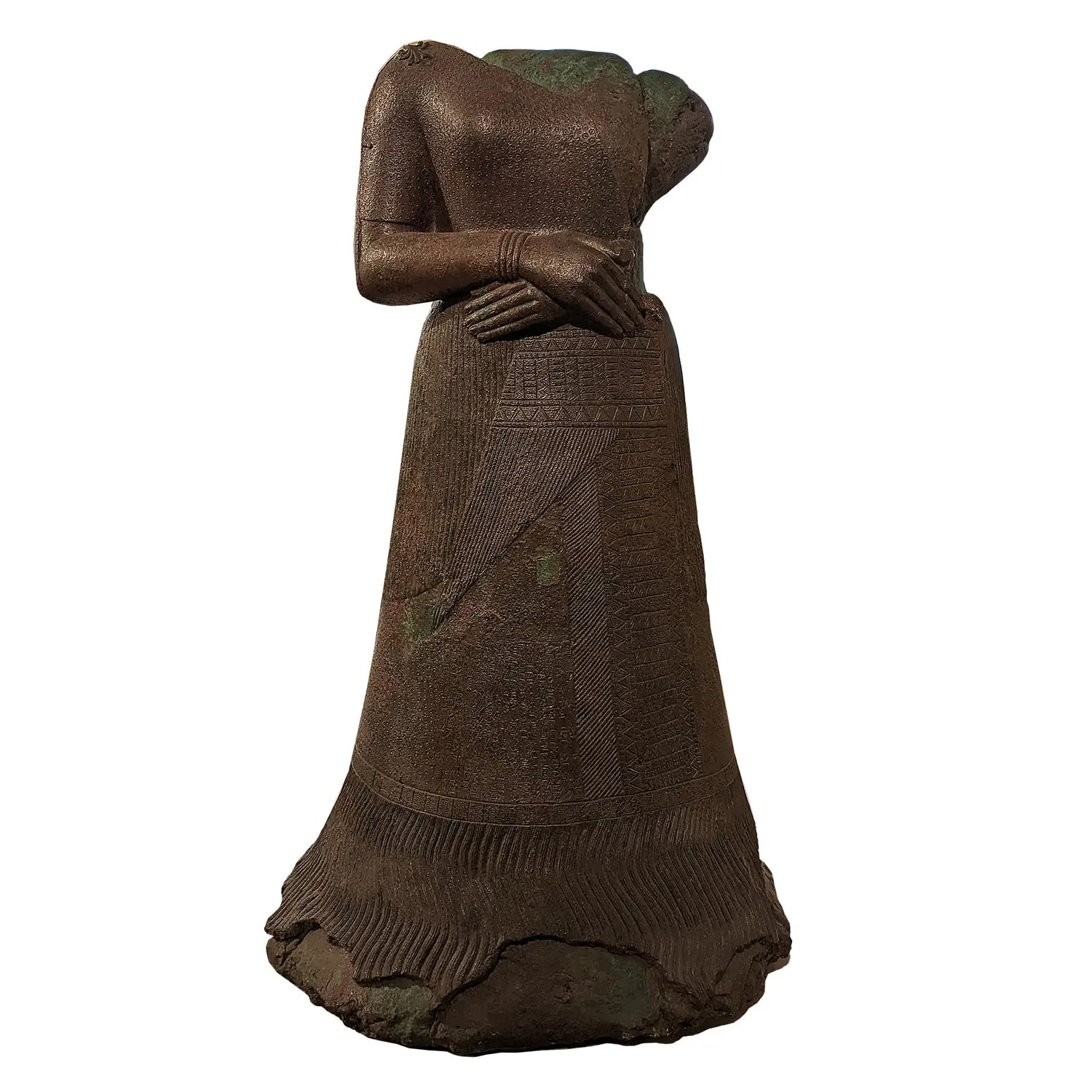
The Napirasu Statue is one of the works left by the Elamite civilization in ancient Iran. Queen Napirasu was the wife of Untash Napirisha, the king of Elam. The work dates back to 1250 BC. The statue, which was made with a layer of copper and gold on a bronze mold, is about 130 centimeters high, 70 centimeters wide, and weighs 1,750 kilograms. Dr. Pierre Amiet, an expert on Elamite civilization at the Louvre, said the following about this statue:
"This statue is not only a work of art but also a peak in the art of bronze casting, which shows the presence of extremely skilled and masterful craftsmen in the land of Elam. This statue is the largest metal work belonging to the ancient East, which has not been seen even in Egypt, Babylon, and Anatolia. This statue is a very important work of art that was made to honor and honor the Elamite queen and actually shows the value and prestige of women in the ancient Elamite civilization."
On the fringed skirt of this statue, the name of the queen and the great gods of Susa, Inshushinak, is engraved in Elamite cuneiform. On the queen's left hand is a ring that is probably her wedding ring. According to some archaeologists, this ring is the first wedding ring in the world, belonging to the ancient Elamites. The statue of Napirasu is kept in the Louvre Museum. The statue was discovered by the French archaeologist Jacob de Morgan in 1903. On the fringe of the skirt of this statue, in the words of the queen, it is written: "I am Napirasu, the wife of Ontash Napirisha. Whoever wants to take possession of my statue, whoever wants to break it, whoever destroys this inscription or erases my name, may the wrath of the gods Inshushinak, Nep Irisha and Kiririsha be wiped out, and may his name and lineage be wiped out."
Page Term Reference
Comments