

The Achaemenid Empire (c. 550–330 BCE), founded by Cyrus the Great and expanded by Darius I, developed one of the ancient world's most sophisticated monetary and taxation systems. It helped govern an empire stretching from the Balkans to the Indus Valley.
 |
|
 |
 |
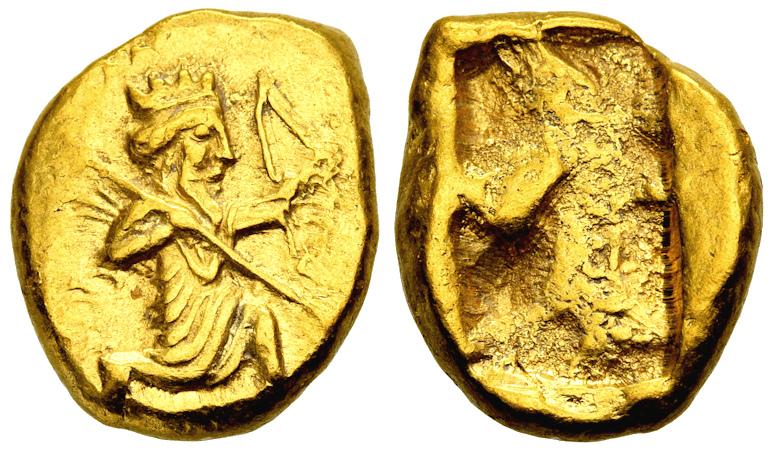
Gold Daric
The Daric was the empire's principal gold coin.
- Introduced around 515 BCE under Darius I.
- Weighed approximately 8.4 grams of high-purity gold.
- Featured the famous image of the Persian king (or royal hero) holding a bow and spear or dagger, symbolizing royal authority.
- It became one of the most trusted currencies in the eastern Mediterranean.
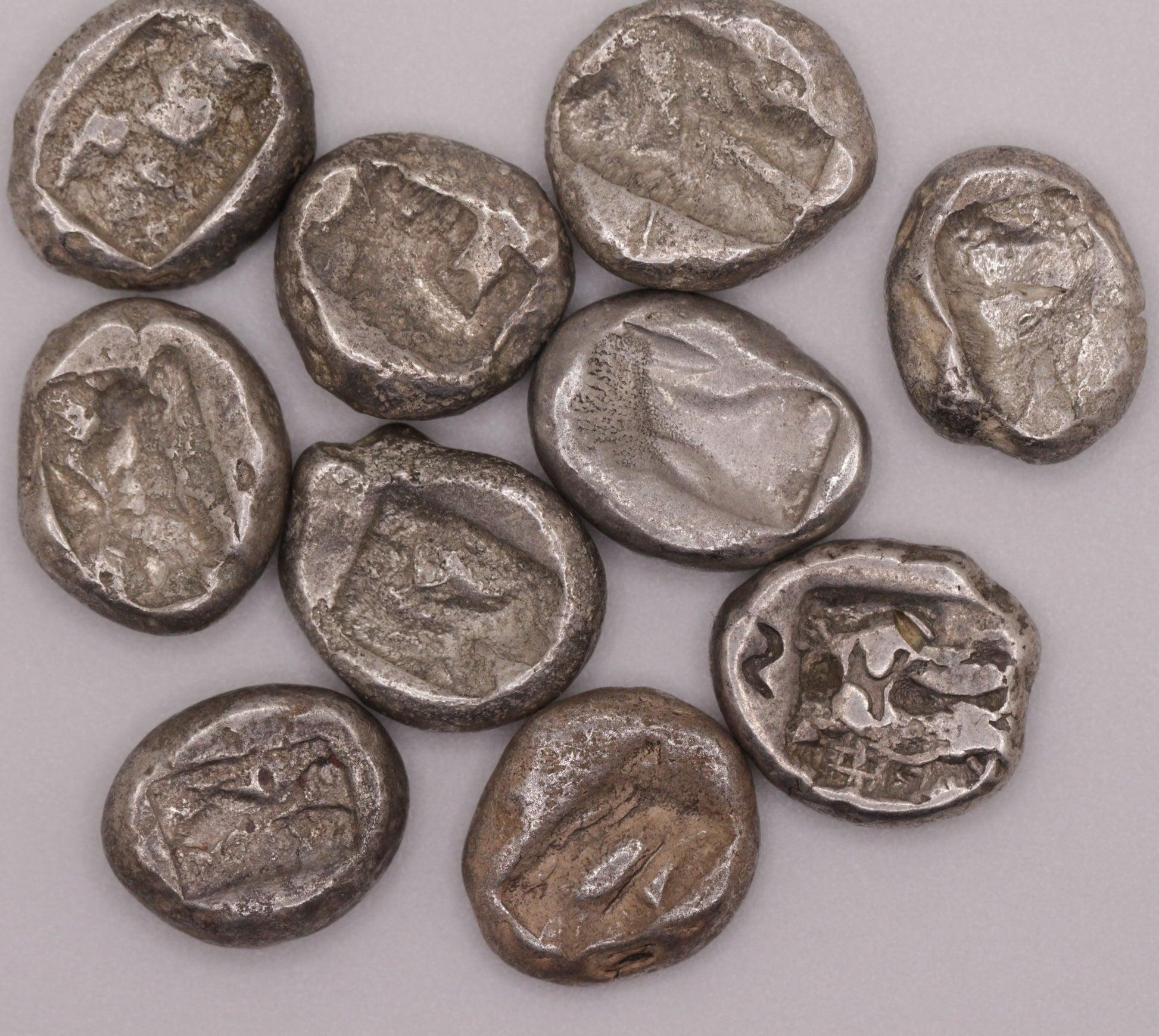
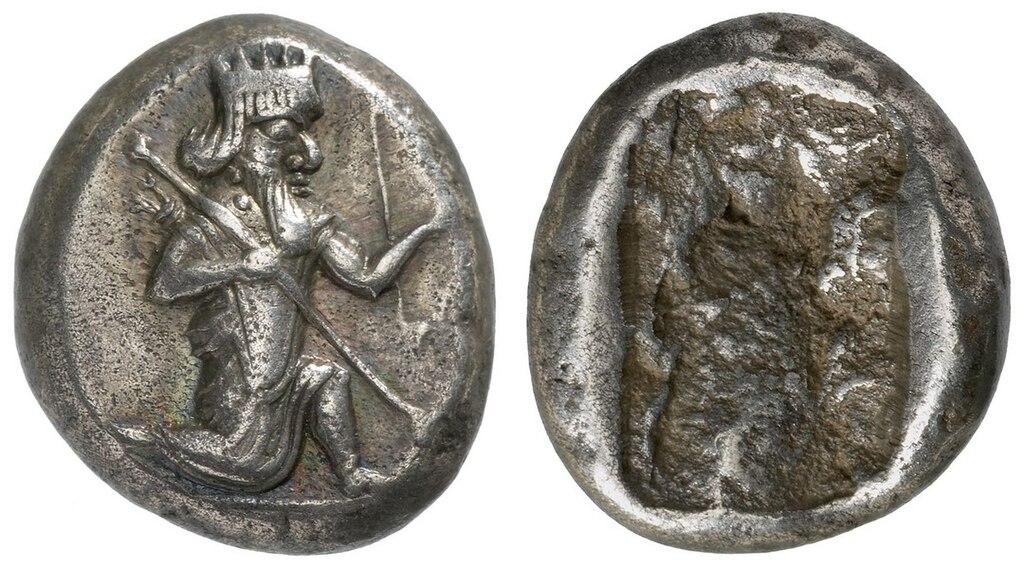
Silver Siglos
The Siglos served as the standard silver coin.
- Weighed roughly 5.4–5.6 grams.
- Usually exchanged at about 20 silver sigloi = 1 gold daric, although market conditions could cause variations.
- Used for regional trade, military payments, and taxation.
Local Coinage
The empire generally allowed conquered regions to continue minting local coins.
Examples include:
- Greek city-states in Ionia.
- Phoenician cities.
- Cilicia.
- Cyprus.
This policy reduced resistance while integrating local economies into imperial trade.
Taxation System
Satrapies
The empire was divided into approximately 20–30 satrapies (provinces), each administered by a governor called a satrap.
Each satrapy owed an annual tribute based on:
- Agricultural productivity
- Population
- Natural resources
- Commercial activity
The assessments were fixed under Darius I and became remarkably stable.
Tribute
Tribute was collected in various forms:
- Gold
- Silver
- Grain
- Horses
- Livestock
- Textiles
- Timber
- Precious stones
- Military equipment
Not every province paid in precious metals.
Examples:
- Egypt supplied grain.
- India supplied gold dust.
- Armenia supplied horses.
- Phoenicia contributed ships and naval support.
Royal Treasury
Major treasuries existed at capitals such as:
- Persepolis
- Susa
- Ecbatana
Taxes and tribute were stored there before being redistributed to fund:
- The royal court
- Construction projects
- Garrisons
- The Royal Road
- Administrative salaries
- Military campaigns
Administration and Accountability
Darius introduced multiple safeguards against corruption.
- Satraps collected taxes.
- Royal treasurers controlled the money.
- Military commanders operated independently.
- Royal inspectors—often called the "King's Eyes and Ears"—audited provincial officials and reported directly to the king.
This separation of authority reduced the likelihood of provincial governors becoming too powerful.
Economic Policy
The Achaemenid economy was not entirely monetized.
Many people, particularly farmers, paid obligations through:
- Produce
- Labor
- Livestock
Coins were especially important for:
- International trade
- Paying soldiers and officials
- Long-distance commerce
The empire also benefited from standardized:
- Weights and measures
- Road infrastructure (especially the Royal Road)
- Administrative languages (primarily Imperial Aramaic)
These standards lowered transaction costs across a vast territory.
Historical Sources
Much of what we know comes from:
- Histories, which lists the tribute obligations of different satrapies (though his figures may be exaggerated).
- The Persepolis Fortification Tablets, which reveal detailed records of rations, wages, and state administration.
- The Persepolis Treasury Tablets, documenting payments to workers and officials.
Significance
The Achaemenid fiscal system was innovative because it combined:
- A standardized imperial gold currency (the daric).
- Regional flexibility through local coinage.
- Regular, assessed provincial taxation rather than arbitrary tribute.
- A centralized treasury with extensive auditing and record-keeping.
These institutions enabled the empire to finance one of the largest bureaucracies and military forces of the ancient world, and many later empires—including aspects of the Hellenistic kingdoms and, indirectly, the Roman Empire—adopted similar principles of provincial taxation, standardized currency, and administrative oversight.